A zone 4 planting schedule runs on a short clock: start onions indoors in February, peppers and tomatoes in March and April, sow peas and spinach outdoors in late April, then wait until late May or early June to plant tomatoes, squash and beans. With roughly 110-140 frost-free days, fast varieties and a few season-extension tricks make the biggest difference.
Quick answer
- Typical last spring frost: early to late May. Typical first fall frost: mid to late September. These are typical ranges for zone 4; check your local dates.
- Frost-free season: about 110-140 days, so pick varieties that mature in 75 days or less for warm-season crops.
- Start indoors: onions in early February, cabbage family in early March, peppers and eggplant in mid to late March, tomatoes in early to mid April.
- Plant outside: peas, spinach and radishes in late April; tomatoes, beans, squash and corn from late May into early June.
- Fall: sow fall carrots and beets by mid-July, lettuce and spinach by mid-August, and plant garlic from late September to mid-October.
In this guide
Want every planting date for your region in one place? Get The Year-Round Vegetable Garden (225 pages, $27).
Where is zone 4?
On the 2023 USDA Plant Hardiness Zone Map, zone 4 has an average extreme winter low of -30°F to -20°F. It covers much of North Dakota, northern South Dakota, central and northern Minnesota, northern Wisconsin, high-elevation parts of Colorado, Wyoming and Montana, and northern New England, including Aroostook County in Maine.
Example cities include Fargo and Bismarck, North Dakota (4a), Aberdeen, South Dakota (4a), St. Cloud and Rochester, Minnesota (4b), Wausau, Wisconsin (4b), and Laramie, Wyoming (4b). Not sure about your spot? Our USDA hardiness zones guide shows how to look it up by ZIP code.
The schedule below assumes a last frost around mid-May and a first frost around mid to late September. Mountain gardens in zone 4 can have far shorter seasons, so look up your local frost dates and shift the plan to match.
Zone 4 planting schedule month by month
Timings are based on University of Minnesota Extension calendars, adjusted to a typical zone 4 frost window. Check your local frost dates or county extension office, because microclimates vary.
| Month | Start indoors | Sow or transplant outdoors | Harvest | Key tasks |
|---|---|---|---|---|
| January | Nothing yet (microgreens on a windowsill if you like) | Nothing | Stored potatoes, onions, squash | Order seeds early; choose short-season varieties; check grow lights |
| February | Onions and leeks (early Feb); celery (mid to late Feb) | Nothing | Stored crops | Set up seed-starting shelf; order seed potatoes |
| March | Broccoli, cabbage, cauliflower, kale (early to mid March); peppers and eggplant (mid to late March) | Nothing; soil is still frozen | Microgreens indoors | Pot up onions; trim onion tops to about 4 inches |
| April | Tomatoes (early to mid April); head lettuce (early April) | Peas, spinach, radishes, lettuce seed once soil thaws and dries (often late April) | Overwintered spinach in a cold frame | Prewarm beds with plastic; start hardening off brassicas late in the month |
| May | Squash, cucumbers, melons in pots (early May, optional) | Onions, potatoes, carrots, beets, chard (early to mid May); broccoli and cabbage transplants (early to mid May); beans and corn (late May, soil 60°F) | Radishes, spinach, baby lettuce | Harden off tomatoes and peppers; keep row covers handy for late frost |
| June | Nothing | Tomatoes (late May to early June); peppers, eggplant, cucumbers, squash, melons (early to mid June); second bean sowing | Peas, lettuce, spinach, radishes, rhubarb | Mulch once soil is warm; trellis peas and cucumbers; cut garlic scapes (late June) |
| July | Broccoli and cabbage for fall (late June to early July, optional) | Carrots, beets, kale for fall (early to mid July); last bush beans (early July) | Garlic (mid to late July), peas, zucchini, cucumbers, early potatoes, first beans | Water deeply; watch for cabbage worms; cure garlic |
| August | Nothing | Lettuce, spinach, radishes, turnips (early to mid August) | Tomatoes, peppers, sweet corn, beans, onions, cucumbers | Pinch new tomato flowers late in the month so plants ripen existing fruit |
| September | Nothing | Garlic (late September onward); cereal rye cover crop | Winter squash, pumpkins, potatoes, carrots, last tomatoes | Cover tender crops on frosty nights; pick green tomatoes before a hard freeze |
| October | Nothing | Finish garlic by mid-October; shallots | Kale, cabbage, Brussels sprouts, carrots, leeks | Clean up diseased plants; add shredded leaves to beds |
| November | Nothing | Nothing | Stored crops | Mulch garlic and strawberries with 3-4 inches of straw once soil starts to freeze |
| December | Nothing | Nothing | Stored crops | Review notes; browse catalogs; test-germinate leftover seed |
Gear that helps
- Seed starting kit with heat mat and grow light: Zone 4 depends on indoor starts for onions, peppers and tomatoes
As an Amazon Associate we earn from qualifying purchases. Check current prices and reviews on Amazon.
When to plant vegetables in zone 4: crop chart
Use this chart for about 20 common crops. “Plant outside” means direct sowing or transplanting in spring; “Fall planting” covers a second sowing for fall harvest or planting for next year.
| Crop | Start indoors | Plant outside | Fall planting |
|---|---|---|---|
| Tomatoes | Early to mid April (5-6 weeks before transplant) | Late May to early June, nights above 50°F | No |
| Peppers | Mid to late March | Early to mid June | No |
| Eggplant | Mid to late March | Early to mid June | No |
| Cucumbers | Optional: early May in pots | Early June (soil 70°F) | No |
| Summer and winter squash | Optional: early May in pots | Early June | No |
| Beans | No | Late May to late June | Last sowing early July |
| Sweet corn | No | Late May to early June (soil 60°F) | No |
| Peas | No | Late April to mid May | Rarely worth it; early July for a small crop |
| Lettuce | Early April (head types) | Late April to late May | Late July to mid August |
| Spinach | No | Late April to mid May | Early to mid August |
| Kale | Early to mid March | Early to mid May | Sow early July |
| Broccoli | Early to mid March | Transplant early to mid May | Transplant early July |
| Cabbage | Early to mid March | Transplant early to mid May | Transplant late June to early July |
| Carrots | No | Early to late May | Early to mid July |
| Beets | No | Early to late May | Early to mid July |
| Radishes | No | Late April to late May | Early August to early September |
| Onions | Early February (from seed) | Sets or transplants late April to mid May | Bulb onions no; walking or bunching onions in September |
| Potatoes | No (pre-sprout 2-3 weeks before planting) | Early to mid May (soil 45°F) | No |
| Garlic | No | Spring planting gives small bulbs | Late September to mid-October |
| Strawberries | No | Early to mid May, as soon as soil can be worked | Spring planting preferred |
Need help with the indoor timing? Our guide to when to start seeds indoors explains how to count back from your own last frost date.
Garden hack: Write the transplant date on every seed-starting label, not just the sowing date. In zone 4 it is easy to start tomatoes too early in a long winter, and leggy, root-bound seedlings set fruit later than compact ones started 5-6 weeks ahead.
Best short-season varieties for zone 4
With fall frost arriving as early as mid-September, the days-to-maturity number on the seed packet decides what you harvest. For warm-season crops, counted from transplant or sowing, aim for about 75 days or fewer. University of Minnesota Extension recommends checking days to harvest so long-season crops ripen before frost.
- Tomatoes: early types such as ‘Early Girl’, ‘Stupice’, ‘Glacier’ and most cherry tomatoes ripen in about 55-65 days from transplant.
- Peppers: smaller-fruited and early peppers (‘Ace’, ‘King of the North’, jalapeños) ripen more reliably than big, late bells.
- Sweet corn: early varieties of about 65-75 days, planted in blocks of at least four rows for good pollination.
- Winter squash: acorn, delicata and small butternut types listed at about 85-95 days, rather than 110-day giant pumpkins.
- Melons: short-season muskmelons and small “icebox” watermelons, ideally over black plastic.
- Onions: long-day varieties, which bulb in response to the long northern summer days.
Gear that helps
- Soil thermometer: Confirms soil has reached 60-70°F before sowing beans, corn and squash
As an Amazon Associate we earn from qualifying purchases. Check current prices and reviews on Amazon.
Season extension tips for zone 4
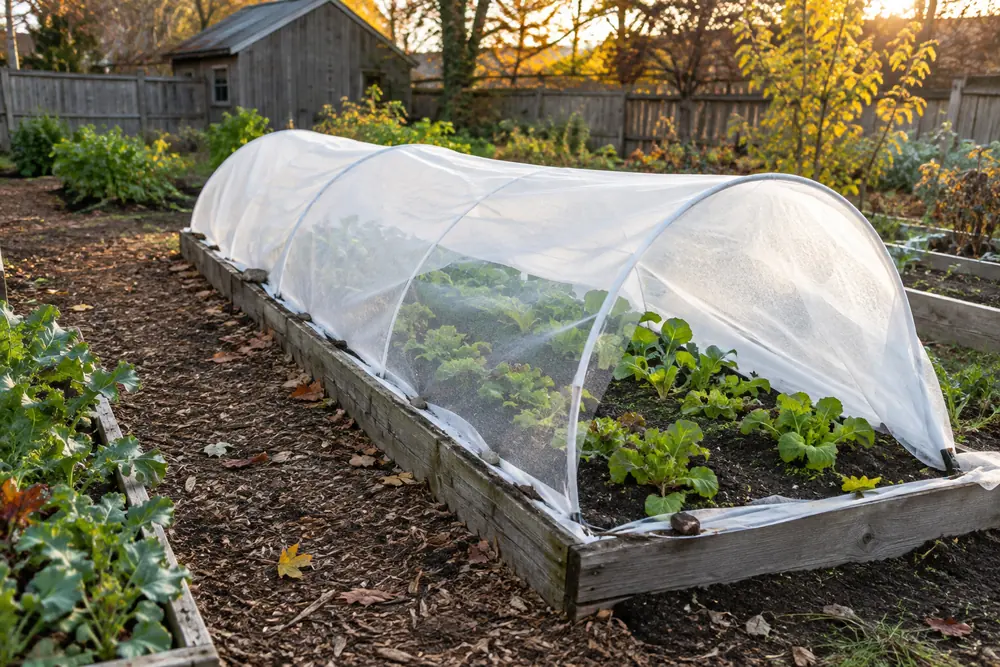
A few inexpensive tools can add two to four weeks to each end of your season. That is a big gain when you start with only about four months.
- Prewarm soil with plastic. University of Minnesota Extension notes black plastic raises soil temperature about 5°F, and clear plastic can raise it as much as 14°F. Lay it a week or two before planting squash, melons and peppers.
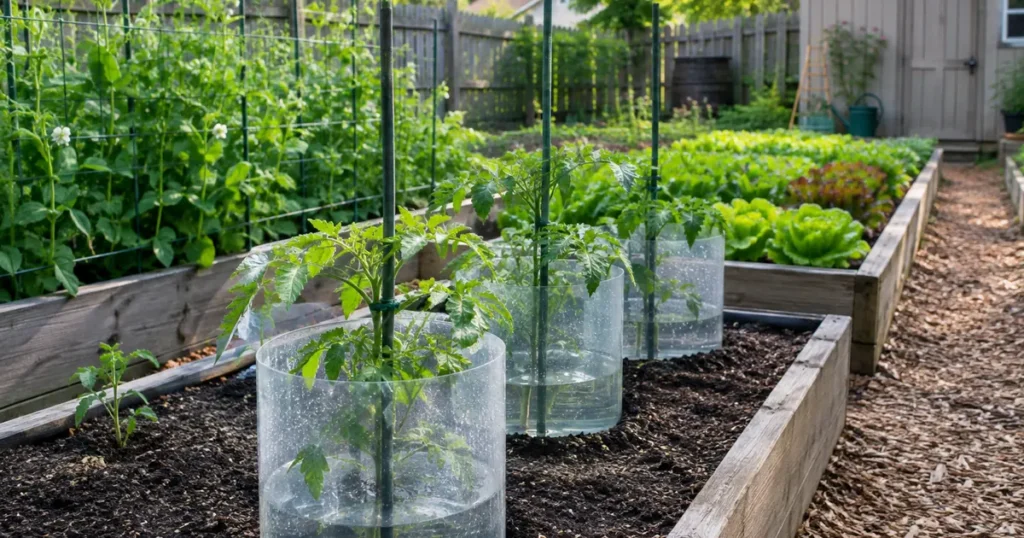
- Use water-filled plant protectors. Water-filled cones around tomatoes and peppers allow transplanting about three weeks earlier, according to UMN Extension.
- Keep row covers ready. Heavier frost fabric protects to around 20°F on frosty spring and fall nights. Our guide to protecting plants from frost covers the options.
- Build a cold frame. A cold frame lets you harden off seedlings in April and grow spinach and lettuce into November.
- Use raised beds. They drain and warm faster in spring than flat ground, so you can plant peas and spinach sooner.
Watch out: Late frosts in late May and early June are common in zone 4, even after a warm spell. Watch the 7-day forecast for two weeks after transplanting, and cover tomatoes, peppers and squash whenever a low near 32°F is predicted.
The Year-Round Vegetable Garden (2027 Edition)
Plan the whole season in one place: a 225-page month-by-month guide with calendars for six US growing regions, 50 plant profiles (tomatoes included), 5 copy-ready garden plans and 7 printable pages.
Tomato lover? Add Tomato Mastery, our seed-to-harvest tomato blueprint, for just $10 at checkout.
Get the guide ($27)Gear that helps
- Water-filled plant protectors (wall of water): Lets zone 4 gardeners set tomatoes and peppers out about three weeks earlier
- Heavy frost cloth row cover: Protects transplants during late May and September frosts
As an Amazon Associate we earn from qualifying purchases. Check current prices and reviews on Amazon.
Fall gardening in zone 4
Your fall garden starts in July, not September. Count back from your first fall frost using each crop’s days to maturity, then add about two weeks because growth slows as days shorten. UMN Extension suggests direct seeding carrots, beets and broccoli around mid-July and spinach and lettuce through mid-August.
Kale, cabbage and Brussels sprouts handle frost well and often taste sweeter after a few cold nights. Plant garlic from late September to mid-October, about one to two weeks after the first killing frost, then mulch once the soil starts to freeze. See our garlic planting guide for details, and our February planting guide when it is time to start onions.
Common mistakes to avoid
- Transplanting tomatoes in mid-May. Cold soil and nights below 50°F stall them. Late May to early June usually catches up and passes early plantings.
- Choosing long-season varieties. A 90-day tomato or 110-day pumpkin may not ripen before a mid-September frost.
- Starting seeds too early. Tomatoes started in early March get leggy long before outdoor conditions are right.
- Working wet soil in April. If a handful of soil sticks together in a muddy ball, wait a few days or plant in raised beds.
- Skipping hardening off. Zone 4 spring sun and wind are tough on seedlings. Give them 7-14 days outside before planting. Our hardening-off guide walks you through it.
- Waiting until August for fall crops. Carrots and beets need a mid-July start to size up before the cold.
FAQ
When can I plant tomatoes in zone 4?
Most zone 4 gardeners transplant tomatoes from late May to early June, after the last frost and once nights stay above 50°F. Start seeds indoors about 5-6 weeks earlier, in early to mid April.
When is the last frost in zone 4?
The last spring frost in zone 4 typically falls in early to late May, depending on location and elevation. Check NOAA data or your county extension office for your exact average.
What should I plant first in zone 4?
Peas, spinach, radishes and lettuce go in first, usually in late April once the soil thaws and dries enough to work. Onions, potatoes, carrots and beets follow in early to mid May.
Can you grow a fall garden in zone 4?
Yes, if you start it in July. Sow carrots, beets and kale by mid-July and lettuce and spinach by mid-August, then use row covers to stretch the harvest past the first frost.
When do you plant garlic in zone 4?
Plant garlic from late September to mid-October, about one to two weeks after the first killing frost. Mulch with 3-4 inches of straw once the soil starts to freeze.
Keep reading
Sources
- Planting the vegetable garden – University of Minnesota Extension
- Starting seeds indoors – University of Minnesota Extension
- Upper Midwest home garden care schedule – University of Minnesota Extension
- Planting vegetables in midsummer for fall harvest – University of Minnesota Extension
- Extending the growing season – University of Minnesota Extension
- Growing Vegetables: When to Plant Your Vegetable Garden – UNH Extension
- USDA Plant Hardiness Zone Map – USDA Agricultural Research Service