What you can plant in October depends almost entirely on your USDA zone. In zones 3-6, October is garlic, shallot and cover-crop month, plus spinach in a cold frame. In zones 7-8 you can still sow fast greens and set out onions, and in zones 9-10 October kicks off the main cool-season garden.
Quick answer
- Zones 3-4: plant garlic and shallots early in the month, then mulch; sow cereal rye on empty beds right away.
- Zones 5-6: October is prime garlic and shallot time; sow spinach for overwintering and cover crops on bare soil.
- Zone 7: plant garlic, onion sets and shallots; sow spinach, lettuce, radishes and peas early in the month.
- Zone 8: set out broccoli, cabbage and collard transplants; sow carrots, beets, turnips, spinach and lettuce; plant garlic.
- Zones 9-10: plant almost every cool-season crop, plus bulbing onions and (in Florida) strawberries.
In this guide
- How to decide what to plant in October where you live
- What to plant in October in zones 3-4
- What to plant in October in zones 5-6
- What to plant in October in zone 7
- What to plant in October in zone 8
- What to plant in October in zones 9-10
- Fall bulbs and perennials, in brief
- Your October garden to-do list
- Common mistakes to avoid
- FAQ
Want every planting date for your region in one place? Get The Year-Round Vegetable Garden (225 pages, $27).
How to decide what to plant in October where you live
Your hardiness zone tells you how cold your winters get, based on the average annual extreme minimum temperature on the 2023 USDA Plant Hardiness Zone Map. It does not tell you your frost dates. Those come from local weather records, so use your zone to pick the right section below, then fine-tune with your own average first fall frost date.
The rule of thumb is simple: anything you sow in October has to either mature before hard freezes arrive or be tough enough to sit through winter and finish in spring. Garlic, shallots, overwintering spinach and cover crops fall in the second group, which is why they work even in Minnesota. Microclimates vary a lot, so check your local frost dates with your county extension office before you plant.
| Zone | Typical first fall frost | Plant outdoors in October | Start indoors? |
|---|---|---|---|
| 3-4 | Early to late September | Garlic, shallots (early October), cereal rye cover crop | No; microgreens or herbs on a windowsill only |
| 5-6 | Early to late October | Garlic, shallots, multiplier onions, overwintering spinach, cereal rye | No |
| 7 | Late October to mid-November | Garlic, onion sets, shallots, spinach, lettuce, radishes, mâche, peas (early) | Optional: lettuce for a cold frame |
| 8 | Mid-November to early December | Brassica transplants, carrots, beets, turnips, kale, collards, lettuce, spinach, garlic, onions | Optional: lettuce and brassica transplants |
| 9-10 | December or rarely/never | Nearly all cool-season crops, bulbing onions, peas, strawberries (Florida) | Optional: broccoli, cabbage, cauliflower |
What to plant in October in zones 3-4
In the coldest zones, the growing season for new crops is over, but this is the window that sets up next summer. Your soil is still workable, and that is all garlic needs.
Garlic and shallots
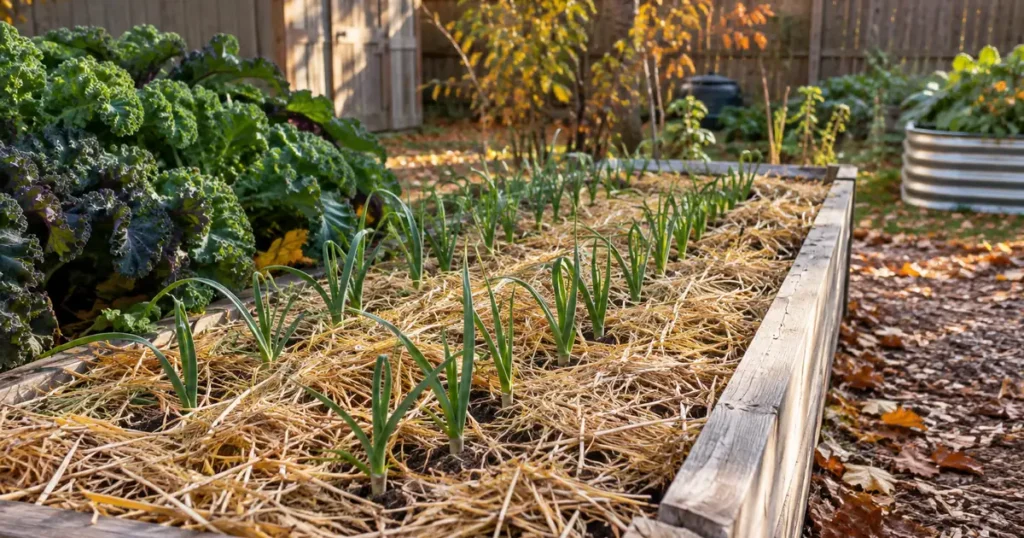
University of Minnesota Extension recommends planting garlic in fall, usually one to two weeks after the first killing frost, so roots form before the ground freezes but green shoots wait until spring. In zone 3 that often means late September to early October; in zone 4, the first half of October. Set cloves pointed side up with the base 2-3 inches deep and about 6 inches apart, then cover the bed with 3-4 inches of straw or shredded leaves. Our step-by-step guide to planting garlic covers clove selection and spacing in detail.
Shallots go in at the same time and the same depth range, set so the tips sit just below the surface.
Cover crops
Cereal rye (winter rye) is the go-to cover crop for late plantings because it germinates in soil as cool as 34°F, according to Penn State Extension. Sow it in the first days of October on any bed you cleared. It will not grow much before winter, but it holds soil and comes back in spring. Oats are a poor choice this late in zones 3-4.
Indoors
There is nothing you need to start indoors for the garden in October. If you want something green, grow microgreens or pea shoots on a sunny windowsill.
Gear that helps
- Seed garlic (hardneck): Garlic is the main October crop in cold zones; seed garlic beats grocery bulbs.
As an Amazon Associate we earn from qualifying purchases. Check current prices and reviews on Amazon.
What to plant in October in zones 5-6
This is the heart of garlic season for most of the Midwest, Northeast and Mountain West. The first frost usually lands sometime in October, so you have two jobs: plant for next year and protect what is still growing.
Garlic, shallots and onions
Plant garlic from about early October in zone 5 to late October or early November in zone 6. The goal is roughly 3-6 weeks of root growth before the ground freezes. Shallots, multiplier onions and hardy perennial onions such as walking onions also go in now. If you are still choosing a variety, hardneck types are generally the more reliable pick for cold winters.
Spinach for overwintering
Spinach sown in very early October in zone 6 (late September in zone 5) can grow a few true leaves before winter, sit dormant under mulch or a cold frame, and give you one of the earliest harvests next spring. Utah State University Extension notes that spinach overwinters best when plants have 4-5 true leaves going into winter and get a heavy mulch, removed after snowmelt. Inside a cold frame you can also sow lettuce, mâche and radishes for late-fall picking.
Cover crops
Cereal rye works well through the middle of October. Hairy vetch and crimson clover need earlier sowing to establish, so stick with rye for late beds. See our cover crop guide for seeding rates and how to turn rye under in spring.
Garden hack: Plant garlic into the bed where your beans or peas grew this summer. Legume beds tend to be loose and weed-free by fall, and garlic follows legumes well in a simple rotation.
Gear that helps
- Cereal rye cover crop seed: Germinates in cold soil and covers beds cleared in October.
As an Amazon Associate we earn from qualifying purchases. Check current prices and reviews on Amazon.
What to plant in October in zone 7
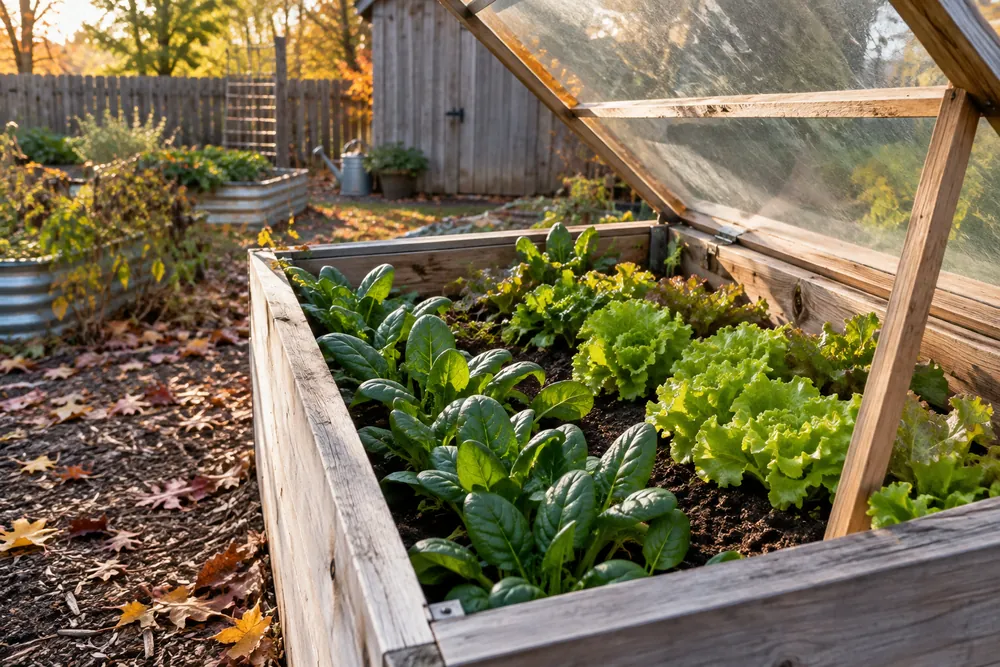
Zone 7 gardeners (much of Virginia, Tennessee, Oklahoma, the Carolina Piedmont and the Pacific Northwest lowlands) can still sow quick crops early in the month while setting up the overwintering garden.
- Garlic: mid-October to early November is the sweet spot.
- Onion sets and shallots: Clemson Extension lists October as planting time for garlic, onion sets and shallots in the South Carolina Upstate.
- Spinach, mâche and arugula: sow in the first two weeks; they will give a light fall harvest and overwinter with a row cover.
- Radishes and leaf lettuce: sow early; most radishes mature in 25-30 days.
- Peas: in milder parts of zone 7, Clemson suggests sowing garden peas outdoors through the end of October for an early spring crop.
- Cover crops: cereal rye, plus crimson clover if you sow it in the first week.
If you have a cold frame, start a tray of lettuce transplants indoors now and move them in once they have 3-4 leaves.
What to plant in October in zone 8
In zone 8 (coastal Carolinas, much of Georgia, central Texas, the Gulf Coast, the Pacific Northwest coast and inland California), October is busy. The first frost is often a month or more away and many cool-season crops can grow straight through a mild winter.
- Transplants: broccoli, cabbage, cauliflower, collards and kale. Transplants save 3-4 weeks over seed.
- Direct-sow: carrots, beets, turnips, radishes, spinach, lettuce, mustard greens and bok choy.
- Alliums: garlic, onion sets and shallots. Texas A&M AgriLife’s Central Texas chart puts garlic at October-November.
- Herbs: cilantro and parsley do better in fall than in a hot spring.
What to plant in October in zones 9-10
For Florida, south Texas, the low deserts of Arizona and much of coastal California, October is the start of the best gardening season of the year. Heat is finally easing, and frost is rare or weeks away.
- Leafy greens: lettuce, spinach, kale, collards, chard, arugula, mustard.
- Brassicas: broccoli, cabbage, cauliflower and Brussels sprouts (transplants preferred).
- Roots: carrots, beets, radishes and turnips.
- Onions: UF/IFAS lists October for bulbing onions in Central and South Florida (September-December in North Florida). Choose short-day varieties.
- Garlic: University of Arizona’s Maricopa County calendar lists garlic cloves for October and November; UC planting guides put garlic at October-December across California.
- Peas: the Maricopa County calendar includes peas in October and November.
- Strawberries: UF/IFAS gives roughly September 25-October 25 in Central Florida, October in South Florida and October-November in North Florida.
Warm-season crops like tomatoes and peppers can still produce through fall in zone 10 if they were set out in late summer, but October is not the month to start them.
Watch out: In zones 9-10, October soil can still be hot. Lettuce and spinach seed may refuse to germinate above about 80°F soil temperature. Sow in the evening, keep the bed shaded with burlap or shade cloth for a few days and water lightly every day until seedlings appear.
Fall bulbs and perennials, in brief
October is also the classic time to plant spring-flowering bulbs such as tulips and daffodils in zones 3-7, and to plant or divide rhubarb and asparagus crowns where the soil is still workable. Since this site focuses on vegetables, the short version is: plant bulbs at about three times their height in depth, before the ground freezes, and mulch new perennial crowns.
Your October garden to-do list
- Harvest before the freeze. Pick all tomatoes, peppers, eggplant, squash and beans before the first frost. Mature green tomatoes can finish ripening indoors.
- Cure winter squash and sweet potatoes. Cure most winter squash at about 80-85°F for 10-14 days (skip curing for acorn squash); cure sweet potatoes warm and humid for about a week, then store both cool and dry.
- Dig and cure potatoes. Let skins set for 1-2 weeks in a dark, cool spot before long-term storage.
- Leave hardy crops in the ground. Carrots, parsnips, leeks, kale and Brussels sprouts get sweeter after a few light frosts.
- Clean up diseased plants. Pull tomato and squash vines with blight or mildew and trash them rather than composting them.
- Collect leaves. Shred them with a mower and use them as mulch on garlic beds or add them to the compost pile. Our guide to composting fall leaves explains the browns-to-greens balance.
- Cover bare soil. Sow a cover crop or spread 2-3 inches of compost or shredded leaves on every empty bed.
- Test your soil. Fall is a good time for a soil test, so you can add lime or amendments months before spring planting.
Garden hack: Before the first frost, lay a roll of floating row cover and a few bricks at the end of each bed. When a frost warning hits at 9 p.m., you can cover everything in five minutes instead of searching the garage in the dark.
The Year-Round Vegetable Garden (2027 Edition)
Plan the whole season in one place: a 225-page month-by-month guide with calendars for six US growing regions, 50 plant profiles (tomatoes included), 5 copy-ready garden plans and 7 printable pages.
Tomato lover? Add Tomato Mastery, our seed-to-harvest tomato blueprint, for just $10 at checkout.
Get the guide ($27)Gear that helps
- Floating row cover fabric: Keeps greens alive through the first frosts.
As an Amazon Associate we earn from qualifying purchases. Check current prices and reviews on Amazon.
Common mistakes to avoid
- Planting garlic too early in the South or too late in the North. Too early and it sends up tender top growth that winter burns; too late and roots never form before freeze-up.
- Sowing slow crops too late. Carrots, cabbage and Brussels sprouts sown in October in zones 5-6 will not mature before winter.
- Using grocery-store garlic. It may be treated to prevent sprouting or be a variety poorly suited to your climate. Buy seed garlic.
- Leaving beds bare. Bare soil loses organic matter and erodes over winter. Cover it with a crop or mulch.
- Mulching garlic before planting is finished. Plant first, water, then mulch; in zones 3-5 you can wait until the soil starts to freeze to add the thickest layer.
FAQ
Is October too late to plant vegetables?
Not at all. In zones 3-6 you can still plant garlic, shallots and cover crops, plus spinach to overwinter. In zones 8-10, October is one of the best months to plant cool-season vegetables like lettuce, broccoli, carrots and kale.
Can I plant garlic in October?
Yes. October is ideal garlic-planting time for most of the country, from early October in zone 4 to late October or early November in zones 6-7. The goal is for roots to grow for a few weeks before the ground freezes.
What can I plant in October in zone 7?
Plant garlic, onion sets and shallots, and sow spinach, mâche, arugula, radishes and leaf lettuce early in the month. In milder parts of zone 7, peas sown in October can overwinter for an early spring crop.
What vegetables can I plant in October in Florida?
Almost every cool-season crop: lettuce, kale, collards, broccoli, cabbage, carrots, beets, radishes and short-day bulbing onions. October is also strawberry planting time in Florida, with exact dates depending on whether you are in the North, Central or South region.
What should I plant in an empty garden bed in October?
Sow cereal rye as a cover crop or plant garlic. Either one protects the soil over winter; cereal rye can germinate in soil as cool as about 34°F.
Keep reading
Sources
- Growing garlic in home gardens – University of Minnesota Extension
- Cereal Rye as a Cover Crop – Penn State Extension
- This Month in Your Garden: October – Clemson Home & Garden Information Center
- Florida Vegetable Gardening Guide – UF/IFAS Extension
- Vegetable Planting Calendar for Maricopa County – University of Arizona Cooperative Extension
- Spinach in the Garden – Utah State University Extension
- Time of Planting – UC Master Gardener Program, UC ANR
- USDA Plant Hardiness Zone Map – USDA Agricultural Research Service