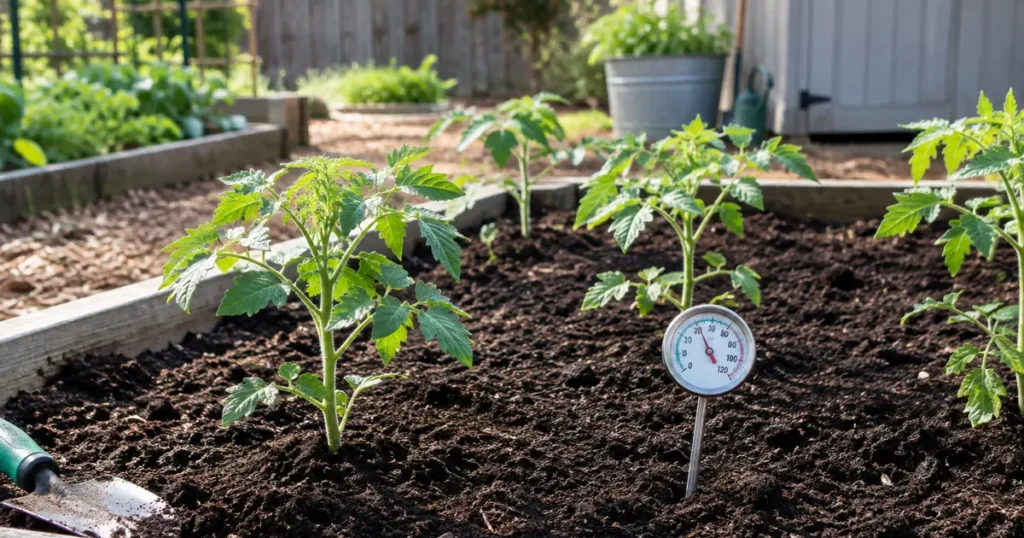
The best time to plant tomatoes is 1-2 weeks after your average last spring frost, once the soil is at least 60°F at a 4-inch depth and nighttime temperatures stay above 50°F. That falls in early to mid-June in zone 3, mid to late May in zone 5, late April to mid-May in zone 7 and February to March in zone 9. In zones 8-10, you can plant a second crop in summer for fall tomatoes.
Quick answer
- Plant after your last frost date, not on it: 1-2 weeks later cuts the risk of a killing frost.
- Wait for soil at 60°F or warmer and nights above 50°F.
- Start seeds indoors 6-8 weeks before your planned transplant date.
- In the South, plant early enough to set fruit before days reach about 90°F and nights stay above 75°F.
- Zones 8-10 get two tomato seasons: late winter to spring, and mid to late summer for fall.
In this guide
 Grow tomatoes in season for your region, month by month: The Year-Round Vegetable Garden ($27, PDF).
When should you plant tomatoes?
Tomatoes are frost-tender. A single night at 32°F kills transplants, and cooler nights in the 40s chill them enough to stall growth for weeks. Three signals tell you the time is right, and you want all three before you plant.
- Frost risk is past. Your average last frost date is a 50-50 bet, not a guarantee. Planting 1-2 weeks after it lowers the odds of a late freeze considerably. Find yours with our frost dates by zone guide.
- Soil is at least 60°F. Measure at a 4-inch depth in the morning with a soil thermometer. Roots barely grow in colder soil, and the plant sits still while pests and disease find it.
- Nights hold above 50°F. Check the 10-day forecast. Nights below about 55°F also cause early flowers to drop without setting fruit.
If you are new to tomatoes, our pillar guide on how to grow tomatoes covers everything that comes after planting day.
Gear that helps
- Soil thermometer: Tells you when soil at 4 inches has reached the 60°F planting threshold.
As an Amazon Associate we earn from qualifying purchases. Check current prices and reviews on Amazon.
When to plant tomatoes by USDA zone
The table below gives typical windows for each zone. Hardiness zones are based on winter lows, not frost dates, so two towns in the same zone can be a couple of weeks apart. Treat these as starting points and check your local frost dates or extension office, because elevation, coastlines and valleys all shift the calendar.
| USDA zone | Typical last frost | Start seeds indoors | Transplant outside | Fall crop |
|---|---|---|---|---|
| 3 | Mid-May to early June | Mid to late April | Early to mid-June | No |
| 4 | Early to late May | Early to mid-April | Late May to early June | No |
| 5 | Late April to mid-May | Late March to early April | Mid to late May | No |
| 6 | Mid-April to early May | March (mid to late is typical) | Early to mid-May | Transplants by mid-June for a late crop |
| 7 | Late March to mid-April | Late February to mid-March | Late April to mid-May | Transplant late June to mid-July (7b) |
| 8 | Early March to early April | Mid-January to mid-February | Late March to April | Start seeds in early June; transplant late June to mid-July |
| 9 | Late January to early March | December to January | Mid-February to March | Start seeds in early July; transplant late July to early September |
| 10 | Rare | December to January (spring); July (fall) | Low desert: February to March; SoCal coast: mid-March to May | South Florida: plant August to February (main season) |
For the full month-by-month plan for your area, see our planting schedules for zone 5, zone 6 and zone 7, along with the other zone pages.
Northern zones (3-5)
Short seasons reward patience and fast varieties. Most of zones 3-4 cannot plant until late May or June, and the first fall frost may arrive by mid-September, which leaves roughly 90-140 frost-free days. Choose tomatoes listed at about 55-70 days from transplant, use black plastic or a wall of water to warm the soil, and do not start seeds before April, or you will have overgrown plants waiting for warm weather.
Middle zones (6-7)
Zones 6 and 7 have time for full-size slicers, beefsteaks and heirlooms. The trap here is a warm spell in late March or April that tempts you to plant early, followed by a frost in mid-April. In zone 7b, a second planting of transplants in late June or early July can carry tomatoes into the fall.
Southern zones (8-10)
In the South, frost is not the only limit: summer heat is. Spring tomatoes need to go in early enough to set most of their fruit before the hottest weeks. A good rule from Texas A&M AgriLife is to transplant fall tomatoes about 100 days before your first expected frost. In Florida, UF/IFAS recommends late March to April and August plantings in North Florida, January to February and August to September in Central Florida, and August to February in South Florida. The Pacific Northwest is the exception in zone 8: cool summers push transplanting to mid or late May.
When to start tomato seeds indoors
Count back 6-8 weeks from the day you plan to transplant, not from the frost date. If your last frost is around May 1 and you plan to plant May 10, sow seeds between about March 15 and March 29. Seedlings started too early get leggy and root-bound and often stall after transplanting; younger, stocky plants with 5-7 leaves catch up fast.
Our guide on how to grow tomatoes from seed covers sowing depth, heat mats and lighting, and hardening off seedlings explains the 7-10 day transition outdoors.
Garden hack: Write your target transplant date on the seed tray label along with the sowing date. When a warm April week tempts you, the label reminds you what the plan was, and why.
Is it too early to plant tomatoes? How to protect early plantings
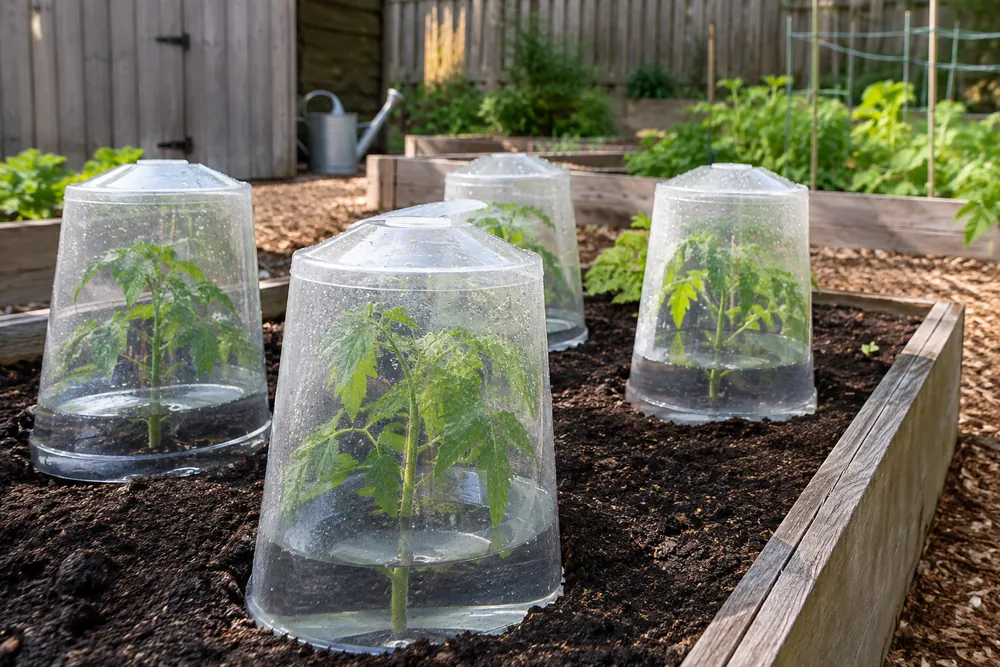
You can plant a week or two ahead of the usual window if you are ready to protect the plants. These tools add warmth and buffer cold nights.
- Walls of water: plastic sleeves of water-filled tubes that surround each plant. Water absorbs heat during the day and releases it at night. Set them up a week before planting to prewarm the soil, and remove or open them once days are steadily above 60°F, since the inside can run 20-40°F hotter than the air on sunny days.
- Floating row cover: lightweight fabric laid over plants or hoops adds a few degrees of frost protection. Remove it during warm afternoons or vent it when the air inside tops 80°F.
- Black plastic mulch: laid 1-2 weeks before planting, it warms the soil underneath. Cut an X for each plant and keep stems from touching the hot plastic.
- Emergency covers: buckets, sheets or frost cloth thrown over plants for a surprise cold night. Remove them in the morning. See how to cover plants for frost for what works.
Watch out: Clear plastic and closed cloches can overheat and scorch tomatoes on a sunny spring afternoon. Always vent or remove covers when the sun comes out.
Gear that helps
- Water-filled plant protectors (walls of water): Lets northern gardeners plant tomatoes earlier while buffering cold nights.
- Floating row cover / frost cloth: Adds a few degrees of protection against late spring frosts.
As an Amazon Associate we earn from qualifying purchases. Check current prices and reviews on Amazon.
What happens if you plant tomatoes too early or too late?
Too early
- A late frost kills transplants outright.
- Cold soil below 60°F stops root growth, and plants turn purplish and stall.
- Cold nights cause flowers to drop and can deform the first fruits (catfacing).
- Plants set out 2 weeks later in warm soil often catch up and produce just as soon.
Too late
- In the North, long-season varieties may not ripen before the fall frost.
- In the South, plants bloom during the hottest weeks and fail to set fruit.
- Young transplants in July heat need shade and daily water to establish.
Late is easier to fix than early. You can switch to a fast or cherry variety, or plant a few extra plants and pick green tomatoes at the end of the season to ripen indoors.
Southern heat: when tomatoes stop setting fruit
Tomato flowers are sensitive to heat. When daytime temperatures run above about 90°F and nights stay above about 75°F, pollen becomes sterile and flowers fall off without setting fruit. Plants keep growing and fruit already set keeps ripening, but new tomatoes stop forming until the weather breaks.
- Plant early in spring so the main fruit set happens before summer peaks.
- Choose heat-setting varieties and cherry types, which keep setting fruit in hotter weather than large beefsteaks.
- Use 30-50% shade cloth in the desert Southwest during the hottest weeks.
- Keep plants alive through summer in zones 8-9: healthy plants often start setting fruit again once nights cool in September.
- Plant a fall crop from transplants in late June through August, timed for harvest before your first frost.
In very hot weather, red color also stops developing above about 86°F, so pick at first blush and let tomatoes finish on the counter. Our guide to ripening green tomatoes covers that step.
Garden hack: In zones 9-10, put two dates on your calendar: early January to start spring tomato seeds and early July to start fall ones. Two short seasons beat one long season of fighting the heat.
Gear that helps
- 30-50% shade cloth: Reduces heat stress on tomatoes during peak summer in hot climates.
As an Amazon Associate we earn from qualifying purchases. Check current prices and reviews on Amazon.
Common mistakes to avoid
- Planting on the average last frost date. That date still carries roughly a 50% chance of a later frost.
- Going by air temperature alone. A warm afternoon does not mean the soil has warmed. Use a soil thermometer.
- Starting seeds too early. 6-8 weeks before transplant is enough; 12-week-old seedlings often struggle.
- Skipping hardening off. Greenhouse and windowsill plants sunburn and wilt when moved straight outside.
- Waiting too long in the South. A May planting in zone 9 often blooms into weather too hot to set fruit.
- Mulching cold soil. Organic mulch keeps soil cool; add it after the soil has warmed.
FAQ
What month do you plant tomatoes?
It depends on your zone: June in zones 3-4, mid to late May in zone 5, early to mid-May in zone 6, late April to mid-May in zone 7, late March to April in zone 8, and February to March in zone 9. South Florida plants from August to February.
What is the lowest temperature to plant tomatoes?
Wait until nights stay above 50°F and the soil is at least 60°F at a 4-inch depth. Tomatoes survive cooler nights but stop growing, and any frost at 32°F kills them unless they are covered.
Is it too late to plant tomatoes in June?
Not in most areas. In zones 3-6, June is still fine with an early or mid-season variety. In zones 7-9, June-planted transplants can work for a fall harvest if you keep them watered and give young plants some afternoon shade.
Can I plant tomatoes in the fall?
Yes, in zones 7b-10. Transplant about 100 days before your first expected frost, usually late June to August, and choose early or medium varieties. In South Florida, fall and winter are the main tomato seasons.
How many weeks before the last frost should I start tomato seeds?
Start tomato seeds 6-8 weeks before your transplant date, which is usually 1-2 weeks after the last frost. That works out to about 4-7 weeks before the frost date itself.
Keep reading
Sources
- Growing Tomatoes in the Home Garden – Ohio State University Extension
- Growing tomatoes in home gardens – University of Minnesota Extension
- How to Grow Tomatoes in Your Garden – Utah State University Extension
- Extending the Garden Season – Utah State University Extension
- Florida Vegetable Gardening Guide – UF/IFAS Extension
- Easy Gardening: Tomatoes – Texas A&M AgriLife Extension
- Tomato – Clemson Cooperative Extension Home & Garden Information Center