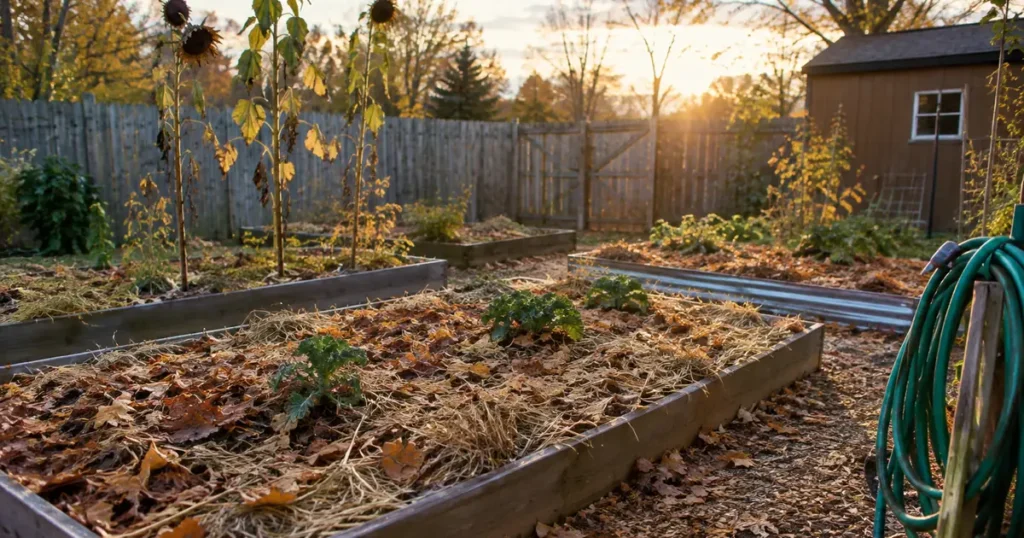
To winterize your garden, pull out spent and diseased plants, cover bare soil with compost, leaves, mulch or a cover crop, protect perennial crops like strawberries and asparagus, and drain your hoses and drip lines before the first hard freeze. Leave some healthy stems standing for beneficial insects, and make a few notes for next year while the season is fresh in your mind. Most of the work fits into two or three weekend sessions between your first frost and the time the ground freezes.
Quick answer
- Remove diseased plants (tomatoes, squash, cucumbers) and dropped fruit, and keep them out of a home compost pile.
- Never leave soil bare over winter: add compost, shredded leaves or straw, or sow a cover crop.
- Raised beds: top up with compost, mulch the surface and empty small containers that can crack.
- Mulch strawberries once plants are dormant, and cut asparagus ferns only after they turn fully brown.
- Drain hoses, drip lines and timers before freezing nights to avoid split lines.
In this guide
Want every planting date for your region in one place? Get The Year-Round Vegetable Garden (225 pages, $27).
When to winterize your vegetable garden
Start after the first killing frost has knocked back tomatoes, beans and squash, and finish before the ground freezes. In the South, “putting the garden to bed” is often partial, because zones 8-10 keep growing cool-season crops all winter.
| USDA zone | Clean up summer crops | Mulch beds and perennials | Drain irrigation by |
|---|---|---|---|
| 3-4 | Mid-September to early October | Late October to early November | Early October |
| 5 | Early to late October | Early to mid-November | Late October |
| 6 | Mid-October to early November | Mid to late November | Early November |
| 7 | Late October to mid-November | Late November to early December | Before the first hard freeze |
| 8 | November (as summer crops finish) | December, around winter crops | Before forecast hard freezes |
| 9-10 | Clear spent summer crops as they fade | Mulch to hold moisture in winter beds | Usually not needed |
These are approximate ranges. Check your local frost dates and extension office, because microclimates vary.
Fall garden cleanup: what to remove and what to leave
Clear out diseased and pest-ridden plants
Many diseases and insect pests spend the winter on old plant debris. Iowa State University Extension recommends removing leaves, stems and fruit of vegetable plants after the first frost to reduce disease the next season. Focus on the crops that had problems: tomatoes with blight or leaf spot, squash and cucumbers with powdery mildew, plants infested with squash bugs, and any rotting fruit on the ground.
Do not put diseased material in a home compost pile. A pile has to reach at least 140°F to kill most pathogens, and most backyard piles do not get that hot. Bag diseased plants for the trash or send them to a municipal yard-waste program instead.
Healthy plant debris, such as bean vines, spent lettuce and corn stalks, can go straight into the compost. New to composting? Our beginner guide to making compost walks you through it.
Leave some stems for beneficial insects
A perfectly bare garden is not the goal. Native bees, including small carpenter bees and mason bees, nest in hollow and pithy stems, and other insects overwinter in leaf litter. Oregon State University Extension suggests leaving dead stems standing at least 12 inches tall, and NC State Extension research found 12-24 inch stubble gives bees good nesting sites.
In a vegetable garden, that means you can leave healthy flower stalks, herb stems, sunflowers and pollinator borders standing until spring, and keep a few patches of undisturbed soil for ground-nesting bees. Just remove anything diseased.
Garden hack: Cut spent plants at soil level instead of yanking them out. The roots break down in place, feed soil life and leave the soil structure intact, and you avoid hauling out clumps of soil.
How to prepare garden soil for winter
Test your soil
Fall is a good time for a soil test through your state extension lab. Results come back before spring, and if your soil needs lime, adding it in fall gives it months to start working. Take samples from several spots in the bed, about 6 inches deep, and mix them together.
Add organic matter
Spread 1-2 inches of finished compost over the beds, or a few inches of shredded fall leaves. Leaves break down over winter, and earthworms pull them into the soil. Shredding them first with a mower keeps them from matting. Our guide to composting fall leaves and making leaf mold shows more ways to use them.
Cover the soil: cover crop or mulch
Bare soil loses topsoil to wind and rain and can crust over by spring. You have two good options:
- Cover crop: winter rye, oats or crimson clover sown in early fall protect and feed the soil. Oats die over winter in cold zones, which makes spring planting easy, while winter rye survives and needs to be cut down in spring. See our guide to cover crops for vegetable gardens for sowing dates.
- Mulch: if it is too late to sow a cover crop, lay 3-4 inches of shredded leaves or straw over the beds.
Gear that helps
- Home soil test kit or soil sample probe: Makes it easy to pull clean samples for an extension soil test
As an Amazon Associate we earn from qualifying purchases. Check current prices and reviews on Amazon.
How to winterize raised garden beds
Raised beds drain well and warm quickly in spring, but they also lose heat and moisture faster than in-ground beds. Here is what to do with raised beds in winter:
- Clear and cut back spent plants, removing any diseased ones.
- Top up the soil. Beds settle a few inches each year. Add compost now so it can settle before spring planting.
- Cover the surface with shredded leaves, straw, a cover crop, or cardboard topped with mulch.
- Check the frame. Tighten loose screws and corner brackets, and note boards that are rotting for a spring repair.
- Protect containers. Empty terra-cotta and ceramic pots, or move them into a garage, because wet soil expands as it freezes and can crack them. Fabric pots can be emptied and stored dry.
- Plant something. A raised bed is the perfect place for fall garlic. Our guide on how to plant garlic covers timing by zone.
The Year-Round Vegetable Garden (2027 Edition)
Plan the whole season in one place: a 225-page month-by-month guide with calendars for six US growing regions, 50 plant profiles (tomatoes included), 5 copy-ready garden plans and 7 printable pages.
Tomato lover? Add Tomato Mastery, our seed-to-harvest tomato blueprint, for just $10 at checkout.
Get the guide ($27)Gear that helps
- Leaf shredder / mulcher: Shreds fall leaves into mulch that won't mat on beds
As an Amazon Associate we earn from qualifying purchases. Check current prices and reviews on Amazon.
Protect perennial vegetables for winter
Asparagus
Leave the ferns standing until they turn completely brown. Kansas State University Extension explains that the green foliage feeds the roots for next spring’s spears. Once the ferns are dead, cut them to the ground and remove them, which also takes away overwintering sites for asparagus beetles. Add a couple of inches of compost or mulch over the bed.
Rhubarb
After frost kills the leaves, clear them away and spread compost or well-rotted manure around, but not on top of, the crown. In zones 3-5, a layer of straw or shredded leaves adds insulation.
Strawberries
University of Minnesota Extension recommends covering strawberries with 2-3 inches of straw once plants are dormant: when soil temperatures stay below 40°F or after about three days of below-freezing daytime temperatures. Mulching too early can cause crowns to rot. Pull the straw back in spring as new growth starts.
Watch out: Avoid hay for winter mulch. It usually carries weed and grass seeds that sprout in your beds next spring. Use clean straw or shredded leaves.
Gear that helps
- Straw mulch bale: Weed-free winter cover for strawberries and beds
As an Amazon Associate we earn from qualifying purchases. Check current prices and reviews on Amazon.
Tools, hoses and drip irrigation
- Hoses: drain them completely, coil them and store them indoors or in a shed. Disconnect them from outdoor faucets, because a hose left attached can trap water and freeze the faucet or pipe.
- Drip irrigation: open the end caps and let the lines drain, or blow them out at low pressure. Bring battery timers, filters and pressure regulators inside, since they can crack when frozen.
- Rain barrels: empty them and turn them upside down, or disconnect them from the downspout.
- Hand tools: clean off soil, wipe metal parts with a light coat of oil, sharpen pruners and hoes, and store everything under cover.
- Stakes and cages: pull them up, brush off soil and store them dry. Disinfect tomato cages if your plants had disease.
Gear that helps
- Hose reel with storage: Keeps drained hoses coiled and stored off the ground for winter
As an Amazon Associate we earn from qualifying purchases. Check current prices and reviews on Amazon.
Plan next year’s garden
Your memory of what grew where fades fast. Illinois Extension recommends sketching your garden layout in fall, which makes crop rotation easy in spring. Note which varieties did well, which ones struggled, the pest problems you saw and the dates of your first frost. Rotate tomatoes, peppers and potatoes to a different bed next year to reduce soilborne disease.
Garden hack: Take a photo of every bed before you clean it up. A phone album titled with the year becomes a free garden journal you can scroll through in February when you order seeds.
Common mistakes to avoid
- Composting blighted tomato plants in a backyard pile.
- Leaving beds bare all winter.
- Cutting asparagus ferns while they are still green.
- Mulching strawberries before they go dormant.
- Forgetting to drain hoses, drip lines and timers before a hard freeze.
- Stripping every stem and leaf, which removes habitat for beneficial insects.
- Leaving clay and ceramic pots full of wet soil outside.
FAQ
Should I pull out dead plants or leave them in the garden over winter?
Remove diseased or pest-infested plants. Healthy stems can stay or be cut at soil level, and leaving some 12-24 inches tall gives native bees a place to nest.
What should I put on my garden in the fall?
Spread 1-2 inches of compost or a few inches of shredded leaves, then sow a cover crop or add 3-4 inches of straw or leaf mulch so the soil is not bare.
What do you do with raised beds in winter?
Clear spent plants, top up the soil with compost, cover the surface with leaves, straw or a cover crop, and check the frame for repairs. Raised beds are also a good spot for fall garlic.
When should I winterize my garden?
Begin after the first killing frost and finish before the ground freezes. That is usually September to October in zones 3-5 and October to December in zones 6-8.
Can I compost diseased tomato plants?
Not in a typical home pile. A compost pile must reach at least 140°F to kill most pathogens, and most backyard piles do not, so bag diseased plants for the trash.
Do I need to drain drip irrigation for winter?
Yes, in any area with freezing temperatures. Open the end caps to drain the lines and bring timers, filters and pressure regulators indoors.
Keep reading
Sources
- Managing Fallen Leaves and Fall Cleanup – Iowa State University Extension
- Maintain a Bee-Friendly Garden in Fall and Winter, Too – Oregon State University Extension
- Garden Cleanup for Pollinators – NC State Extension
- Cover Strawberries With Straw for the Winter – University of Minnesota Extension
- Fall Care for Asparagus – Kansas State University Research and Extension
- Fall Garden Cleanup Lays Groundwork for a Successful Spring – University of Illinois Extension