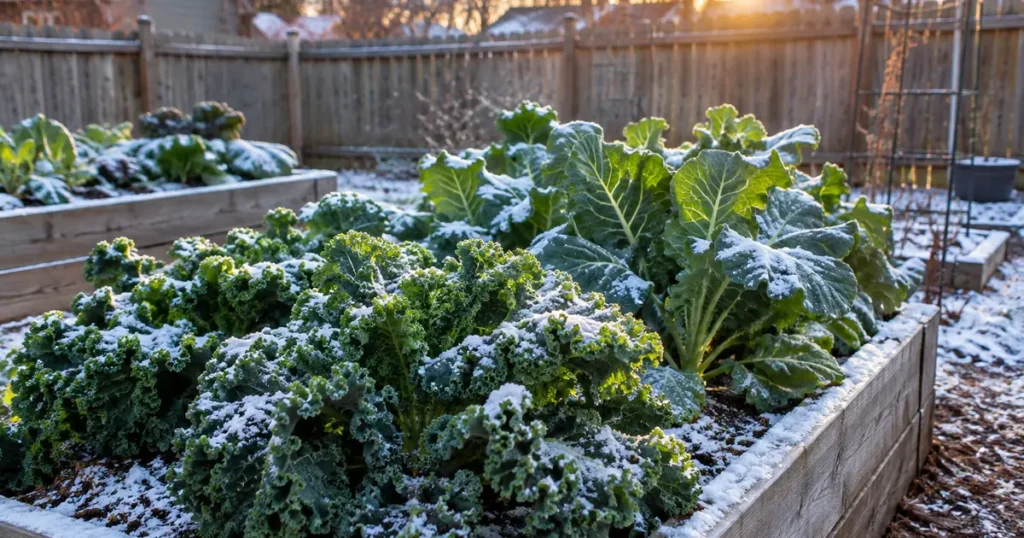
The best winter vegetables are cold-hardy crops like kale, collards, spinach, mâche, leeks, carrots, parsnips, garlic and onions, which survive freezing temperatures and often taste sweeter after frost. Whether you can grow them through winter without protection depends on your zone: zones 7-10 can harvest outdoors most of the season, zones 5-6 need row covers or tunnels, and zones 3-4 rely on cold frames and mulch.
Quick answer
- Hardiest winter vegetables: kale, collards, spinach, mâche, leeks, parsnips, garlic and overwintering onions.
- Plant them early: winter crops must be near full size before days drop below about 10 hours of daylight, since growth nearly stops after that.
- Zones 7-10: most hardy greens and roots grow or hold outdoors all winter.
- Zones 5-6: use row covers, low tunnels or cold frames; zones 3-4 need a cold frame plus mulch.
- Never pick frozen leaves: wait until they thaw on their own.
In this guide
Want every planting date for your region in one place? Get The Year-Round Vegetable Garden (225 pages, $27).
What vegetables can you grow in winter?
Winter vegetables fall into three groups. Some keep growing slowly through mild winters, mostly in the South and along the Pacific coast. Some stop growing but hold in the garden in good condition, so you harvest them as needed, like an outdoor refrigerator. And some, like garlic and overwintering spinach, sit through winter to finish in spring.
Most of the action happens before winter. Plants should be at or near harvest size by the time daylight drops under about 10 hours, which arrives in late November across much of the northern US. After that, cold and low light mean almost no new growth until late winter, so you are mostly harvesting what grew in fall. Our fall vegetable garden guide shows how to count back from frost dates to get that timing right.
Cold-hardy vegetables and the temperatures they tolerate
The temperatures below are approximate lows that established, cold-hardened plants usually survive in open ground, drawn from extension guidance and long-running grower trials. Wind, wet soil, sudden drops and plant age all change the result, and some varieties are much tougher than others.
| Vegetable | Approx. minimum temperature (unprotected) | Best use in winter |
|---|---|---|
| Kale (winter types like Winterbor, Red Russian) | 5-10°F | Harvest leaves all winter |
| Collards | About 10°F (hardiest varieties lower) | Harvest leaves all winter |
| Spinach (savoy types) | About 10°F; lower with cover | Harvest or overwinter for spring |
| Mâche (corn salad) | About 5°F | Winter salad green |
| Leeks (winter varieties) | 10-15°F | Hold in ground, dig as needed |
| Parsnips | Roots survive frozen soil | Leave in ground, mulch |
| Carrots | Tops about 12-15°F; roots safe under mulch | Leave in ground, mulch |
| Garlic and overwintering onions | Survive zone 3 winters in soil with mulch | Overwinter for summer harvest |
| Parsley | About 10°F | Fresh herb through winter |
| Cabbage (winter/savoy types) | About 15-20°F | Harvest heads in early winter |
| Brussels sprouts | About 20°F (some lower) | Harvest through early winter |
| Turnips and rutabagas | About 15-20°F | Harvest roots before deep freeze |
| Swiss chard | About 15-20°F | Harvest in mild winters |
| Arugula | About 20-25°F | Cold frame or tunnel crop |
| Lettuce | About 22-28°F depending on variety | Cold frame or tunnel crop |
| Bok choy | About 25-27°F | Mild-winter crop or under cover |
For a quick rule, University of Nebraska-Lincoln Extension groups collards, kale, spinach, turnips, rutabagas and mustard among crops that withstand hard freezes below 28°F, while beets, broccoli, cabbage, carrots, chard, onions, parsnips and radishes handle light frosts of 28-32°F.
Garden hack: Put a cheap min/max thermometer in your winter beds, one under the row cover and one outside. After a few cold nights, you will know exactly how many degrees your cover is buying you, and which crops can stay out.
Gear that helps
- Digital min/max garden thermometer: Shows how cold your beds actually get under cover.
As an Amazon Associate we earn from qualifying purchases. Check current prices and reviews on Amazon.
Winter vegetable garden by zone
Your USDA hardiness zone, from the 2023 map, is based on the average coldest night of the year, which makes it a good guide for overwintering. Microclimates vary a lot (a south-facing wall can be a half zone warmer), so check your local frost dates and extension office for details.
| Zone | What overwinters unprotected | What needs cover | Best strategy |
|---|---|---|---|
| 3-4 | Garlic, shallots, multiplier onions, parsnips (all under thick mulch) | Everything leafy | Cold frame for spinach, mâche and lettuce; harvest stored roots |
| 5-6 | Garlic, onions, parsnips, leeks, very hardy kale and spinach in milder winters | Lettuce, chard, arugula, collards in hard winters | Row cover plus low tunnel or cold frame |
| 7 | Kale, collards, spinach, mâche, leeks, carrots, garlic, onions | Lettuce, chard, cabbage during cold snaps | Row cover on hand for nights below about 20°F |
| 8 | Nearly all hardy greens, roots, alliums and cabbage family | Lettuce, bok choy and peas in hard freezes | Grow outdoors; cover on the coldest nights |
| 9-10 | All cool-season vegetables | Rarely anything; protect tender crops in occasional freezes | Winter is a main growing season |
Zones 7-10: winter is a growing season
In much of the South, the Southwest and coastal California, winter gardens keep growing. UF/IFAS lists kale, collards, cabbage, broccoli, carrots, beets, lettuce and radishes as fall and winter crops across Florida. In the Pacific Northwest west of the Cascades (zones 8-9), Oregon State University Extension notes that mild, wet winters let kale, cabbage, Brussels sprouts, leeks and carrots hold in the field, though lows below about 15-20°F can still damage brassicas.
Zones 5-6: add a layer
Here, the hardiest greens can survive a mild winter on their own, but a single cold snap below 10°F can wipe them out. NC State Extension says a floating row cover adds about 4-5°F of protection. A low tunnel of plastic over hoops, with row cover underneath, adds more. That combination keeps kale and spinach harvestable through much of the winter.
Zones 3-4: cold frames and storage
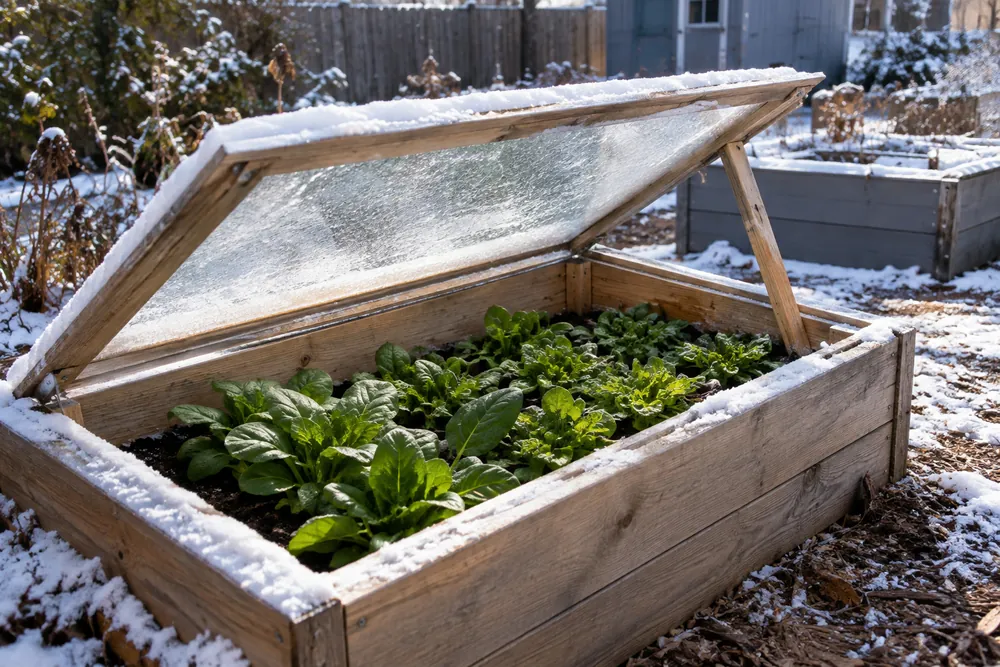
In the coldest zones, the realistic winter garden is a cold frame of spinach, mâche and lettuce, plus root crops held in the ground under heavy mulch or moved to storage. Our cold frame guide covers building one and what to grow in it.
Gear that helps
- Low tunnel hoop kit with greenhouse plastic: The key upgrade for winter greens in zones 5-6.
As an Amazon Associate we earn from qualifying purchases. Check current prices and reviews on Amazon.
Kale in winter
Kale is the easiest winter vegetable to grow in most of the country. Hardy varieties such as ‘Winterbor’ and ‘Red Russian’ typically survive into the single digits once hardened, and frost converts some starches to sugars, making leaves noticeably sweeter. Plant kale so it reaches full size by late fall, then harvest the outer leaves through winter, leaving the growing center intact. In spring, plants will flower; the young flower shoots are edible and taste like mild broccoli.
Growing lettuce in winter
Lettuce is one of the less hardy salad crops, so in zones 3-7 it needs a cold frame, tunnel or row cover. Choose cold-tolerant varieties labeled for winter or overwintering, such as ‘Winter Density’ or ‘Arctic King’, and sow them 6-8 weeks before your first frost so plants are established before short days. Harvest outer leaves regularly. In zones 8-10, lettuce grows well outdoors all winter; just cover it on freezing nights.
Watch out: Cold frames and tunnels overheat fast on sunny winter days, even when it is below freezing outside. Open the lid or vent the ends whenever the sun is out and the outdoor temperature is above about 40°F, and close them in mid-afternoon to hold heat.
Gear that helps
- Automatic cold frame vent opener: Prevents overheating on sunny winter days.
As an Amazon Associate we earn from qualifying purchases. Check current prices and reviews on Amazon.
Overwintering for a spring harvest
Some of the most rewarding winter vegetables are the ones you barely touch until spring.
- Spinach: Utah State University Extension notes that spinach overwinters best when plants have 4-5 true leaves going into winter and are heavily mulched; remove the mulch after spring snowmelt. You get a harvest weeks before spring-sown spinach is ready.
- Garlic: plant cloves in fall, mulch with 3-4 inches of straw or leaves, and harvest the following summer. See our step-by-step garlic planting guide.
- Onions and shallots: overwintering onion varieties, shallots and multiplier onions planted in fall jump into growth as soon as soil warms. In the South, short-day onions planted in fall bulb in late spring.
- Peas (zones 8-10): sown in fall or early winter, they flower and pod as days lengthen.
The Year-Round Vegetable Garden (2027 Edition)
Plan the whole season in one place: a 225-page month-by-month guide with calendars for six US growing regions, 50 plant profiles (tomatoes included), 5 copy-ready garden plans and 7 printable pages.
Tomato lover? Add Tomato Mastery, our seed-to-harvest tomato blueprint, for just $10 at checkout.
Get the guide ($27)How to harvest vegetables in winter
Harvesting in cold weather has one golden rule: do not pick leaves while they are frozen. Iowa State University Extension explains that leaves harvested below freezing turn limp once they thaw. Frozen leaves can look damaged on a cold morning and recover completely once they thaw in place, so wait until midday or afternoon.
- Greens: pick outer leaves only, leaving the crown to keep producing.
- Roots: dig carrots and parsnips during thaws; a thick layer of straw or leaves keeps the soil diggable longer.
- Leeks: loosen soil with a fork and pull; dig several at once before a hard freeze locks the ground.
- Brussels sprouts: pick sprouts from the bottom of the stem upward as they firm up.
Common mistakes to avoid
- Planting too late. Winter crops sown in November in zones 5-7 will not grow enough to harvest until spring.
- Trusting the zone alone. A wet, windy site loses crops a dry, sheltered site keeps. Watch the forecast and cover on extreme nights.
- Forgetting to vent. More winter crops are lost to overheating in cold frames than to cold.
- Wet, poorly drained soil. Waterlogged roots rot in winter. Raised beds drain better and warm faster.
- Harvesting frozen greens. Wait for them to thaw naturally.
FAQ
What is the most cold-hardy vegetable?
Among common garden crops, kale, collards, spinach and mâche are the most cold hardy for leaves; hardened plants often survive temperatures near 10°F or lower. Garlic, parsnips and overwintering onions survive even colder winters in the soil under mulch.
Can kale survive winter?
Yes. Winter-hardy kale varieties survive temperatures down to roughly 5-10°F once hardened, and with a row cover they often last through winter in zones 5-6. In zones 7-10, kale usually needs no protection at all.
Can you grow lettuce in winter?
Yes, in zones 8-10 outdoors, and in colder zones inside a cold frame or low tunnel. Choose cold-tolerant varieties and sow them early enough to be established before days get short.
Should I harvest vegetables after a frost?
Hardy crops like kale, Brussels sprouts, carrots and parsnips taste sweeter after frost, so it is a good time to harvest. Just wait until frozen leaves thaw before picking them.
What vegetables can I plant in winter?
In zones 9-10, you can plant most cool-season vegetables in winter, including lettuce, peas, carrots and broccoli. In colder zones, winter planting is limited to cold frames, so plant winter crops in late summer and fall instead.
Keep reading
Sources
- Frost and Cold Temperatures Bring End to Gardening Season – Nebraska Extension in Lancaster County
- Late Season Harvest in the Vegetable Garden – Iowa State University Extension
- Spinach in the Garden – Utah State University Extension
- Winter Vegetable Production on Small Farms and Gardens West of the Cascades – Oregon State University Extension
- Season Extenders and Greenhouses – NC State Extension Gardener Handbook
- Florida Vegetable Gardening Guide – UF/IFAS Extension
- Growing garlic in home gardens – University of Minnesota Extension
- Winter-Kill Temperatures of Cold-Hardy Vegetables – Sustainable Market Farming (Pam Dawling)