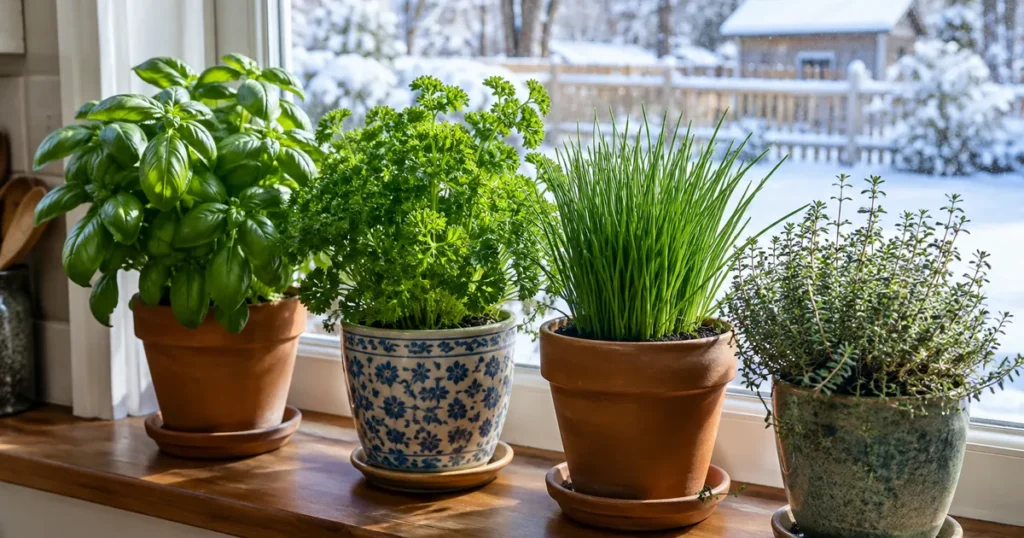
An indoor herb garden works when you give herbs what a windowsill rarely provides in winter: enough light. Most herbs need about 6-8 hours of direct sun a day, which means a bright south-facing window or a grow light running 12-16 hours, set 6-12 inches above the leaves. Add a fast-draining potting mix, pots with drainage holes and careful watering, and parsley, chives, mint, thyme and oregano will keep you in fresh leaves all winter.
Quick answer
- Light first: 6-8 hours of direct sun in a south window, or 12-16 hours under a full-spectrum LED 6-12 inches above the plants.
- Easiest herbs indoors: parsley, chives, mint, oregano and thyme. Basil and rosemary are possible but fussier.
- Use potting mix, never garden soil, and pots with drainage holes. Let the surface dry between waterings.
- Bring outdoor herbs in before the first frost; bring basil in earlier, before nights drop below 50°F.
- Harvest often, but take no more than one-third of a perennial herb at once.
In this guide
Want every planting date for your region in one place? Get The Year-Round Vegetable Garden (225 pages, $27).
How much light do indoor herbs need?
Light is the number one reason indoor herbs fail. Iowa State Extension notes that most herbs need about eight hours of direct light indoors, and Penn State Extension puts the minimum around six hours. In winter, even a south-facing window gives weaker, shorter light than summer sun, especially in northern states.
South window vs. grow light
- South-facing window: the best natural option. Set pots right against the glass, rotate them weekly and keep leaves from touching cold panes.
- East or west window: workable for chives, parsley, mint and cilantro, which tolerate less light. Expect slower growth.
- North window: not enough for most herbs without a grow light.
- Grow light: a full-spectrum LED fixture 6-12 inches above the leaves, on a timer for 12-16 hours a day, grows compact, flavorful herbs anywhere in the house, including a kitchen counter or basement shelf. The same fixtures sold as grow lights for seedlings work well.
Leggy, pale stems that lean toward the window are the sign of too little light. The same principles that stop leggy seedlings apply to herbs: more light, closer.
Garden hack: Plug your grow light into an outlet timer set for 14 hours, for example 6 a.m. to 8 p.m. Herbs get consistent light every day, and you never forget to switch it off.
Gear that helps
- Full-spectrum LED grow light with timer: Gives herbs the 12-16 hours of strong light a winter window can't provide.
As an Amazon Associate we earn from qualifying purchases. Check current prices and reviews on Amazon.
Best herbs to grow indoors
| Herb | Indoor difficulty | Light | Water | Best way to start |
|---|---|---|---|---|
| Chives | Easy | Medium to high | Keep lightly moist | Pot up a clump from the garden, or seed |
| Parsley | Easy | Medium to high | Keep lightly moist | Seed (soak overnight) or a young transplant; use a deep pot |
| Mint | Easy | Medium | Keep moist | Division or cuttings; give it its own pot |
| Oregano | Easy | High | Let dry slightly | Division, cuttings or transplant |
| Thyme | Easy to moderate | High | Let dry between waterings | Cuttings or transplant |
| Cilantro | Moderate (bolts) | Medium | Keep lightly moist | Seed every 3-4 weeks |
| Basil | Moderate | Very high | Keep evenly moist | Seed or tip cuttings |
| Rosemary | Hard | Very high | Never let the root ball dry out completely; avoid soggy soil | Bring in a potted plant or root cuttings |
Basil: possible, with caveats
Basil is the herb most people want indoors and the one most likely to sulk. It needs warmth and strong light, and cold drafts damage it quickly; Penn State Extension warns that basil does not survive below 50°F, so a winter windowsill next to cold glass is risky. Grow it under a grow light in a warm room, pinch the tips often and expect smaller harvests than in summer. Starting fresh plants from seed or rooting tip cuttings in late summer usually works better than digging up a big, woody garden plant.
Parsley, chives and mint: the reliable trio
These three tolerate lower light and cool rooms. Parsley grows a long taproot, so give it a pot at least 8 inches deep. Chives can be divided from a garden clump in fall and potted up. Mint spreads aggressively, so keep it in its own container.
Thyme and oregano
These Mediterranean herbs want bright light and a mix that dries out between waterings. Terracotta pots help because they breathe and dry faster than plastic.
Rosemary: overwintering indoors
Rosemary is generally hardy only to about zone 7, so in colder zones most gardeners bring it in for winter. It’s the hardest common herb to keep alive indoors: University of Illinois Extension notes that it prefers a cool spot around 50-60°F with very bright light, while most homes are too warm and dry. A cool, sunny room or an unheated sunporch that stays above freezing works best. Water when the top inch is dry; a rosemary whose root ball dries out completely often won’t recover. If you have no good spot, take cuttings in late summer and root them as a backup.
Bringing herbs indoors: timing by zone
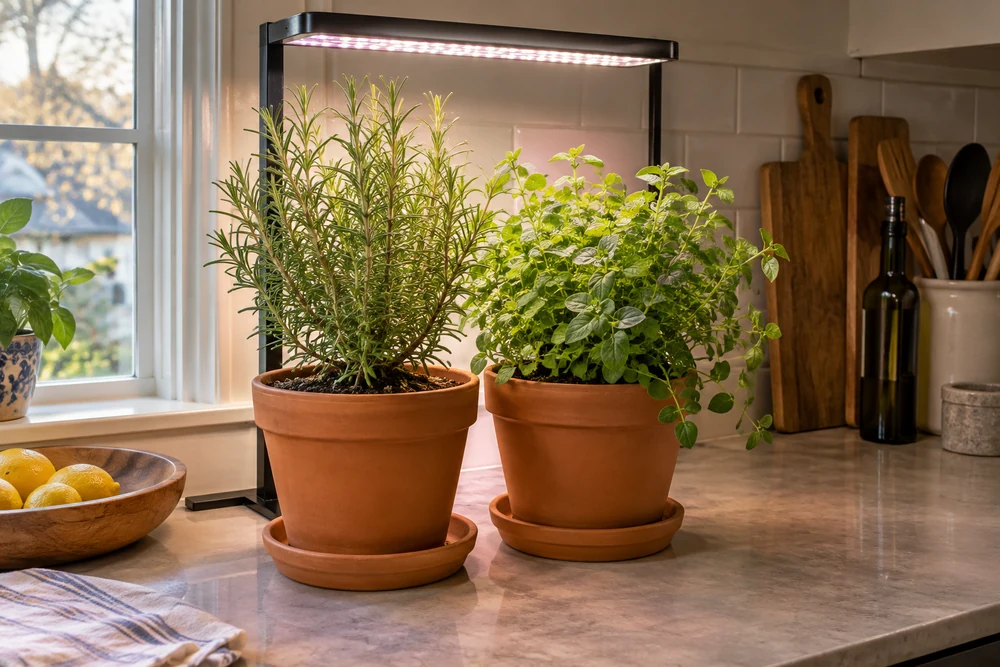
Move tender herbs inside before your first fall frost; basil should come in sooner, once nights drop toward 50°F. Use the table as a rough guide and check your local frost dates, since microclimates vary and your extension office can give you exact local averages.
| Zone | Typical first fall frost | Bring basil in | Bring rosemary and other tender herbs in |
|---|---|---|---|
| 3-4 | Early to mid-September | Late August | Early September |
| 5 | Late September to early October | Early September | Mid to late September |
| 6 | Mid-October | Mid to late September | Early October |
| 7 | Late October to early November | Late September to early October | Rosemary can often stay outside with protection |
| 8 | Mid-November | October | Most herbs overwinter outdoors |
| 9-10 | December or none | Only on cold nights | Winter is a main outdoor herb season |
In zones 8-10, cool-season herbs like parsley, cilantro and dill grow better outdoors in fall and winter than in summer, so an indoor garden there is mostly for basil during cold snaps or for convenience.
How to bring garden herbs inside
- Pot up plants a week or two before frost, using fresh potting mix in a container with drainage holes.
- Leave the pots in a shady spot outdoors for a few days to adjust.
- Inspect the tops and undersides of the leaves for aphids, spider mites and whiteflies; rinse the foliage with a strong spray of water.
- Move the plants to their sunniest indoor spot or under a grow light, and keep them away from other houseplants for a week or two.
- Trim back about one-third of the growth to reduce stress.
The Year-Round Vegetable Garden (2027 Edition)
Plan the whole season in one place: a 225-page month-by-month guide with calendars for six US growing regions, 50 plant profiles (tomatoes included), 5 copy-ready garden plans and 7 printable pages.
Tomato lover? Add Tomato Mastery, our seed-to-harvest tomato blueprint, for just $10 at checkout.
Get the guide ($27)Containers, soil and watering
Use a good-quality potting mix, never garden soil, which compacts in pots and can carry pests. Every pot needs a drainage hole; a decorative cachepot is fine as long as you empty it after watering. A 6-8 inch pot suits most single herbs, and parsley wants a deeper one.
Water when the top of the mix feels dry for most herbs; basil, mint, chives and parsley like it a bit more evenly moist, while thyme, oregano and sage like to dry out more. Overwatering is the most common killer indoors. Feed lightly: a balanced water-soluble fertilizer at half or quarter strength every few weeks while plants are actively growing. Too much fertilizer produces lush leaves with less flavor. Most herbs are comfortable at 65-70°F during the day and 55-60°F at night.
Gear that helps
- Terracotta herb pots with drainage holes and saucers: Porous pots with drainage help prevent overwatering, the top killer of indoor herbs.
As an Amazon Associate we earn from qualifying purchases. Check current prices and reviews on Amazon.
Countertop hydroponic herb gardens
Countertop hydroponic units grow herbs in water with built-in LED lights and a pump, and they solve the light problem neatly. Before buying, compare a few points: how high the light can rise (basil gets tall), whether you can use your own seeds or must buy the brand’s seed pods, the ongoing cost of pods and nutrients, and how easy the reservoir is to clean. Change the water and clean the unit regularly to prevent algae and odors. A grow light over regular pots does the same job with more flexibility; the hydroponic unit wins on convenience.
Pests on indoor herbs
Indoor herbs have fewer pests than outdoor ones, but a few show up often:
- Fungus gnats: tiny dark flies around damp soil. Let the surface dry between waterings and use yellow sticky traps.
- Spider mites: fine stippling and webbing, worse in dry, heated air. Rinse leaves often, especially rosemary and thyme.
- Aphids: clusters on new growth. Wash them off with a strong spray of water or pinch off the infested tips.
- Whiteflies: tiny white insects that fly up when disturbed. Yellow sticky traps help you spot and reduce them.
Since you eat the leaves, stick with water sprays, pruning and sticky traps first. If you use insecticidal soap or another product, choose one labeled for edible herbs and follow the label.
Watch out: Constantly wet potting mix leads to root rot and fungus gnats. If the pot feels heavy and the soil is dark and damp, wait. Lift the pot to judge its weight before you water.
How to harvest indoor herbs
Harvest often to keep plants bushy. Snip leafy annuals such as basil and cilantro just above a pair of leaves; pinching basil tips encourages branching. For perennials like thyme, oregano, mint and rosemary, never remove more than one-third of the plant at once. Cut chives and parsley from the outside, leaving the center to keep growing. When annual herbs get woody or stop producing, compost them and start fresh. For an even faster indoor harvest, try growing microgreens alongside your herbs.
Garden hack: Sow a small pot of cilantro or basil every 3-4 weeks. Indoor annual herbs decline after a few heavy harvests, and staggered sowings keep a steady supply.
Common mistakes to avoid
- Relying on a north or shaded window in winter.
- Using garden soil or pots without drainage holes.
- Watering on a schedule instead of checking the soil.
- Letting basil sit against cold glass or in a drafty spot.
- Keeping rosemary in a warm, dry room or letting its root ball dry out.
- Bringing herbs indoors without checking for pests.
- Cutting perennial herbs back by more than one-third at once.
FAQ
Can you grow herbs indoors all year?
Yes, if they get enough light. A bright south window works for many herbs, and a grow light running 12-16 hours a day lets you grow them anywhere in the house.
What herbs grow best indoors?
Parsley, chives, mint, oregano and thyme are the easiest. Basil and cilantro do well under strong light, and rosemary is the most challenging.
Why does my indoor basil keep dying?
Usually too little light, cold drafts or overwatering. Basil needs warmth above 50°F, strong light and evenly moist, well-drained soil.
When should I bring herbs indoors for the winter?
Bring tender herbs in before the first fall frost. Bring basil in earlier, when nights start dropping toward 50°F.
How often should I water indoor herbs?
Water when the top of the potting mix is dry rather than on a fixed schedule. Thyme, oregano and rosemary prefer drier soil than basil, mint and parsley.
Are countertop hydroponic herb gardens worth it?
They are convenient because the light and watering are built in. Check whether you need proprietary seed pods, how high the light adjusts and how easy the unit is to clean.
Keep reading
Sources
- Growing Herbs Indoors – Iowa State University Extension
- Growing Herbs Indoors – Penn State Extension
- Rosemary – University of Illinois Extension
- Managing Insects on Indoor Plants – University of Minnesota Extension
- Growing Herbs at Home – University of Missouri Extension
- USDA Plant Hardiness Zone Map – USDA Agricultural Research Service