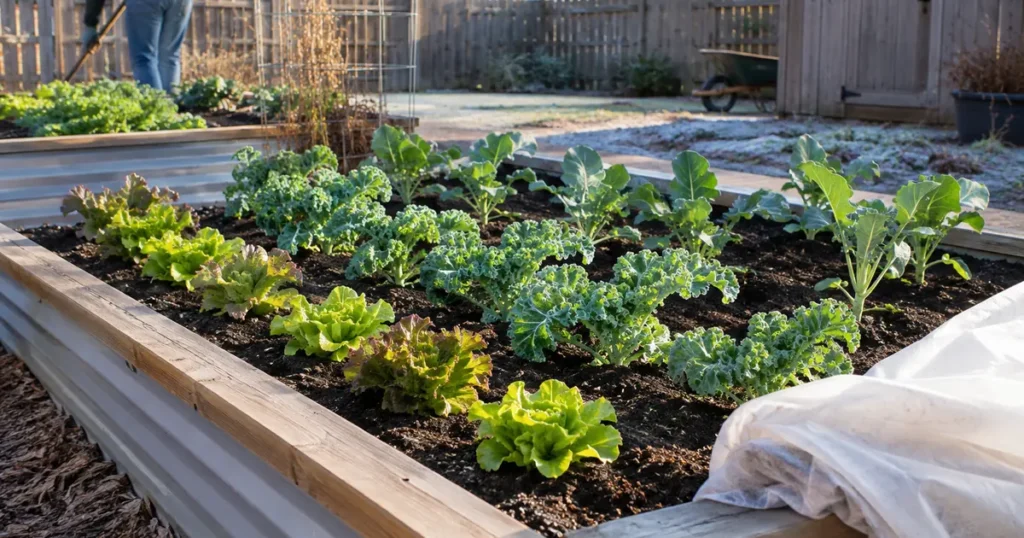
In December, gardens in zones 3-7 are resting, so the planting moves indoors: herbs on a sunny windowsill, microgreens on the counter and seed orders on the kitchen table. In zones 8-10, December is still an active planting month for lettuce, spinach, carrots, beets, broccoli, onions and peas, plus bare-root asparagus, artichokes and strawberries in California.
Quick answer
- Zones 3-6: nothing goes in the ground; grow indoor herbs and microgreens, order seeds and gather supplies for winter sowing.
- Zone 7: harvest mulched greens from cold frames and row covers; plan next year and set up a seed-starting station.
- Zone 8: sow spinach, radishes and turnips; set out cabbage and collard transplants where the ground is workable.
- Zones 9-10: plant lettuce, kale, broccoli, carrots, beets, spinach, radishes, bulb onions and garlic; add bare-root crops in California.
In this guide
 Every planting date for your region in one place: The Year-Round Vegetable Garden ($27, PDF).
What to plant in December by zone
Your USDA hardiness zone is based on the average coldest winter temperature (2023 map), not on frost dates, but it works well as a shortcut for December planning. By now the whole North is past its first frost, while Florida, the Gulf Coast, the low deserts and coastal California are in the middle of their cool-season garden. Microclimates vary a lot, so check your average frost dates with your local extension office before you plant.
| Zone | What December looks like | What to plant in December |
|---|---|---|
| 3-4 | Ground frozen, snow cover likely | Indoors only: herbs, microgreens, sprouts |
| 5-6 | Hard freezes, short days | Indoors only; collect jugs and seed for winter sowing |
| 7 | Frequent frosts, occasional mild spells | Harvest greens under cover; indoor herbs and microgreens |
| 8 | Cool, frosts likely | Spinach, radishes, turnips, mustard; cabbage and collard transplants |
| 9 | Mild days, light frost possible | Lettuce, kale, broccoli, cabbage, carrots, beets, spinach, peas, onions |
| 10 | Warm days, cool nights | All of zone 9’s list, plus herbs like cilantro, dill and parsley |
Zones 3-6: rest, plan and grow indoors
December in the North is the quiet month. Garlic should already be planted and mulched, and the soil is too cold for anything new to establish. Your job is to protect what is in the ground, rest, and set yourself up for a strong spring.
Grow herbs and microgreens indoors
Herbs and microgreens are the easiest way to keep harvesting fresh food in December. Parsley, chives, mint, thyme and oregano do well on a bright south-facing windowsill, while basil wants more warmth and light than most winter windows give. A simple shop light hung 2-4 inches above the leaves fills the gap. Our indoor herb garden guide covers pots, light hours and which herbs struggle.
Microgreens are even faster. Radish, broccoli, pea shoots and sunflower are ready to cut in about 1-3 weeks from a shallow tray of seed-starting mix. Follow the tray-to-harvest steps in how to grow microgreens at home.
Garden hack: Start a new tray of microgreens every 7-10 days. Two or three staggered trays give you a small, steady harvest all winter instead of one big glut you cannot eat fast enough.
Plan next year’s garden
Short days are perfect for planning. Write down what grew well, what failed and what you bought too much of. Then sketch a rotation so tomatoes, peppers and potatoes do not go back in the same bed, and make a list of seeds to order. Catalogs arrive in December and January, and popular varieties sell out early. Our list of the best seed catalogs can help you choose where to order.
Before you order, count what you actually ate and gave away this year. Write down how many feet of each crop you planted and whether it was too much or too little. That one page of notes is worth more than any seed catalog when you plan quantities for spring.
Get ready for winter sowing
Winter sowing lets you start hardy annuals and perennials outdoors in clear jugs, with no grow lights. Most gardeners in zones 3-6 sow from late December through February. Use December to rinse and save gallon milk jugs, buy seed-starting mix and choose cold-tolerant seeds such as kale, spinach, lettuce, onions and many flowers. Our winter sowing guide shows how to cut and label the jugs.
Gear that helps
- Microgreens growing kit with shallow trays: Lets northern gardeners harvest fresh greens indoors in 1-3 weeks during December.
As an Amazon Associate we earn from qualifying purchases. Check current prices and reviews on Amazon.
Zone 7: harvest from cover and plan
Zone 7 is in between. It is too late to plant outdoors, but kale, collards, spinach, mâche and leeks planted in late summer can keep producing under protection. A cold frame or a double layer of row cover keeps them harvestable on mild days. Growth will be minimal until days lengthen again, so harvest lightly and leave the center leaves.
December is also a good time to set up a seed-starting station. Onions and leeks are among the first crops started indoors in January in zone 7, so check your shelving, lights and heat mat now.
Watch out: Do not harvest greens while the leaves are frozen. Frozen kale and spinach leaves bruise and turn mushy when handled. Wait until the afternoon, after they have thawed, then pick.
Zone 8: keep the winter garden going
Zone 8 sits on the edge of the cold. December brings frosts in most of the zone, but the soil stays workable on many days. Stick to the hardiest crops:
- Direct-sow: spinach, radishes, turnips, mustard greens and arugula.
- Transplants: cabbage and collards. UF/IFAS lists cabbage, collards, beets and broccoli as reliable December crops in North Florida, which shares a lot with the warm side of zone 8.
- Herbs: parsley, cilantro, dill and fennel tolerate cool weather.
- Garlic: in the warmest parts of zone 8, early December is still possible if you missed the fall window.
Keep row cover nearby. A light fabric cover adds a few degrees of protection, enough to carry lettuce and young transplants through a frosty night.
Zones 9-10: the main planting season continues
If you garden in Florida, south Texas, southern Arizona or coastal and southern California, December is still prime time. Cool nights sweeten greens and roots, and pest pressure is lower than in fall.
Florida
UF/IFAS gardening calendars list cabbage, collards, beets and broccoli for December in North Florida. In South Florida, the list includes broccoli, carrots, kale and green onions, along with cool-season herbs such as parsley, thyme, sage, dill, fennel and cilantro. Lettuce, spinach and radishes fit the season statewide.
The low desert
The University of Arizona’s Maricopa County calendar lists December seeding of beets, bok choy, carrots, collards, endive, mustard, radishes, rutabagas, spinach and turnips. Lettuce and kohlrabi go in as transplants, bulb onions as sets, and asparagus crowns can also be planted.
California
UC Master Gardeners in the Sacramento Valley list bare-root artichokes, asparagus, rhubarb and strawberries for December, along with bok choy, kale and leaf lettuce, and seeds of chard, cilantro, mustard, radish and spinach. Fava beans, onion sets and garlic cloves also go in now. On the coast and in Southern California, the same cool-season list applies, with peas as an extra option.
For a month-by-month view of your area, see the zone 9 planting schedule or the zone 10 planting schedule.
| Crop | How to plant in December | Approx. days to harvest |
|---|---|---|
| Radishes | Seed | 25-35 |
| Leaf lettuce | Seed or transplant | 45-60 |
| Spinach | Seed | 45-60 |
| Kale | Seed or transplant | 50-70 |
| Broccoli | Transplant | 60-80 |
| Beets | Seed | 55-70 |
| Carrots | Seed | 70-100 |
| Bulb onions | Sets or transplants | 100-150 |
Days are approximate for cool winter weather, which slows growth; check the seed packet for your variety.
Garden hack: In zones 9-10, sow a short row of lettuce or radishes every two weeks from now until late winter. Small, frequent sowings beat one big planting that all matures in the same week.
Watch out: Even in zones 9-10, a December cold snap can drop below 32°F, especially inland and in the low desert. Keep frost cloth handy for lettuce, peas in flower and young transplants.
Gear that helps
- Frost cloth / floating row cover: Protects lettuce, peas and young transplants during December cold snaps in the South.
As an Amazon Associate we earn from qualifying purchases. Check current prices and reviews on Amazon.
Your December garden to-do list
- Check stored crops. Look over potatoes, onions in storage and winter squash every two weeks and remove anything soft or sprouting.
- Top up mulch. Add straw or shredded leaves over garlic beds if wind or rain has thinned the layer (zones 3-7).
- Vent cold frames. Open the lid on sunny days above about 40°F so plants do not overheat.
- Clean and sharpen tools. Wash soil off, sharpen hoes and pruners, and oil wooden handles.
- Take inventory. Test old seeds for germination, then make your order list.
- Feed the soil. Spread compost or leaf mold on empty beds so it can break down before spring.
- Keep planting (zones 8-10). Sow greens and roots in succession and water new seedlings during dry spells.
- Look ahead. Read through what to plant in January so seed and supplies are ready when the next window opens.
Gear that helps
- LED grow light for indoor herbs: Fills the light gap for windowsill herbs during short December days.
As an Amazon Associate we earn from qualifying purchases. Check current prices and reviews on Amazon.
Common mistakes to avoid
- Planting outdoors in zones 3-6. A warm December spell is not a planting window; seeds will rot or sprout and freeze.
- Starting tomatoes and peppers too early. In most zones, December starts produce leggy plants long before it is safe to set them out.
- Overwatering indoor herbs. Low light means slow growth, so let the top inch of mix dry between waterings.
- Forgetting frost protection in the South. Zones 8-10 still get frosts; tender transplants need a cover on cold nights.
- Waiting until spring to order seed. Popular varieties and onion transplants sell out early.
FAQ
Can you plant anything outside in December?
Yes, in zones 8-10. Spinach, radishes, turnips, lettuce, kale, carrots, beets and onions can all go in. In zones 3-7, outdoor planting is over for the year.
What vegetables can I grow indoors in December?
Microgreens, sprouts, leaf lettuce and herbs such as parsley, chives, thyme and mint grow well indoors with a bright window or a simple grow light.
Is it too late to plant garlic in December?
In zones 3-7, yes, if the ground is frozen. In zones 8-10, early December planting usually still works.
When should I start winter sowing?
Most gardeners in zones 3-6 start winter sowing hardy seeds in milk jugs from late December through February.
Can I plant strawberries in December?
In California, bare-root strawberries are planted in December. In Florida, the main planting window is October-November.
Keep reading
Sources
- North Florida Gardening Calendar – UF/IFAS Extension
- South Florida Gardening Calendar – UF/IFAS Extension
- Vegetable Planting Calendar for Maricopa County – University of Arizona Cooperative Extension
- December Vegetable Planting Calendar – UC Master Gardeners (UC ANR)
- USDA Plant Hardiness Zone Map – USDA Agricultural Research Service