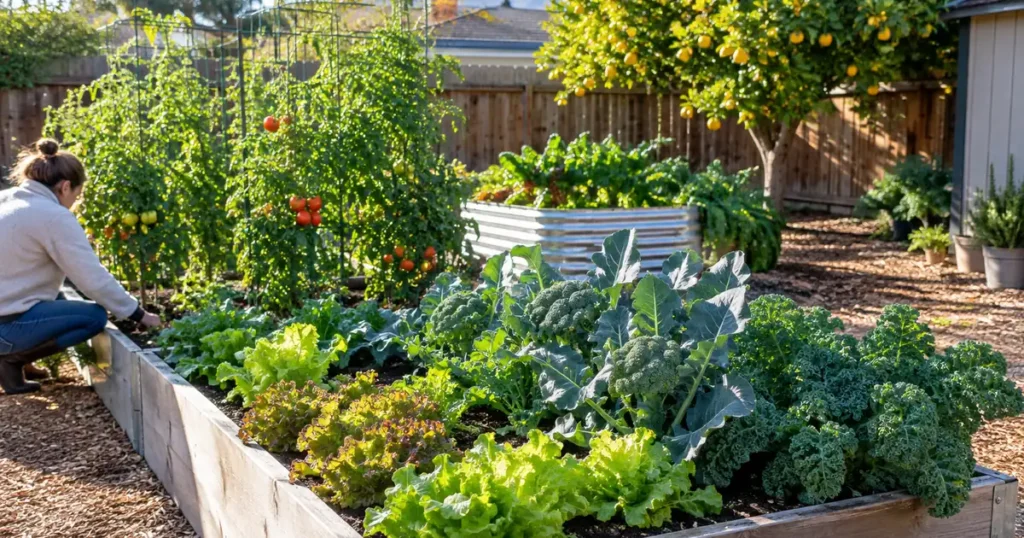
In zone 10, the main vegetable season runs from September to March, not spring to fall. You plant tomatoes, peppers, beans, lettuce, broccoli and carrots in late summer and fall, harvest all winter, and switch to heat-tolerant crops like okra, sweet potatoes and southern peas for the hottest months. Southern California’s coast follows a gentler rhythm, with tomatoes planted in spring.
Quick answer
- Frost is rare in zone 10. Most years bring no frost at all, though low desert and inland valley gardens can see a light frost from December to February. Central Phoenix, for example, averages a last frost around February 7. Treat these as typical figures and check your local data.
- Growing season: nearly year-round, but summer heat, not cold, is the limiting factor.
- South Florida: plant tomatoes and peppers from August to February and most cool-season crops from September to January.
- Southern California coast: plant cool-season crops from September to March and warm-season crops from March to July.
- Low desert (Phoenix, Palm Springs, Yuma): transplant tomatoes in February and March, and plant cool-season crops from September to November.
In this guide
Want every planting date for your region in one place? Get The Year-Round Vegetable Garden (225 pages, $27).
What zone 10 means for your garden
On the 2023 USDA Plant Hardiness Zone Map, zone 10 is where the coldest winter night averages between 30°F and 40°F (10a: 30 to 35°F, 10b: 35 to 40°F). That makes tender crops like peppers and eggplant behave almost like perennials, and it means “winter” is a growing season, not a rest period.
Zone describes winter cold, not frost dates. Frost dates come from NOAA climate normals, and in zone 10 many stations record no average frost at all. You can check yours on our frost dates by zone page. Microclimates matter here too, because a low spot in an inland valley can frost while a coastal garden a few miles away never does.
Where is zone 10?
- South and central Florida: Tampa, Orlando, St. Petersburg, Fort Myers, Naples and West Palm Beach. Much of Miami and the Keys now rate zone 11, but this schedule fits them too.
- Southern California: Los Angeles, Long Beach, Santa Barbara, Ventura, Riverside and Carlsbad. Coastal San Diego and Santa Monica are mostly zone 11a, with a similar calendar.
- Low desert: central Phoenix, Palm Springs, Indio and Yuma.
- Texas: Corpus Christi and parts of the Rio Grande Valley.
Our USDA hardiness zones guide shows how to look up your exact zone by ZIP code.
Zone 10 planting schedule, month by month
Zone 10 has three distinct climates: humid South Florida, the mild Southern California coast and the low desert. The table gives the typical plan for each month, with region notes where they differ. For a deeper look at the busiest stretch, see what to plant in November.
| Month | Start indoors | Plant outside | Harvest | Key tasks |
|---|---|---|---|---|
| January | Tomatoes and peppers for spring (SoCal, desert) | Lettuce, cabbage, carrots, beets, radishes, peas, potatoes (Florida); last tomatoes in South Florida | Tomatoes, peppers, beans (Florida); broccoli, cabbage, lettuce, carrots, strawberries | Cover tender crops on rare frost nights (desert) |
| February | Basil, melons | Tomatoes, peppers and eggplant (desert); potatoes (SoCal); corn (Florida, desert) | Strawberries, broccoli, greens, tomatoes, peas | Add compost, check drip lines |
| March | Nothing needed | Tomatoes, beans, corn, cucumbers and squash (SoCal coast from mid-month); cucumbers, squash, beans, melons (desert) | Tomatoes, peppers, potatoes, onions, cabbage | Mulch before the heat arrives |
| April | Nothing needed | Tomatoes, peppers, eggplant, beans, squash (SoCal); okra, sweet potatoes (desert); southern peas (Florida) | Onions, garlic, carrots, last cool-season crops | Plan summer cover crops (Florida) |
| May | Nothing needed | Tomatoes, beans, squash, melons (SoCal); okra, sweet potatoes (desert, Florida) | Squash, corn, early tomatoes (desert); garlic | Put up 40-50% shade cloth (desert) |
| June | Nothing needed | Beans, squash, corn (SoCal); black-eyed peas, okra (desert) | Squash, beans, tomatoes (SoCal); okra, melons (desert) | Solarize beds or sow sunn hemp and cowpeas (Florida) |
| July | Tomatoes and peppers for fall (Florida) | Beans, squash, corn (SoCal); black-eyed peas (desert) | Tomatoes, peppers, corn (SoCal); okra, sweet potatoes | Water deeply, keep mulch thick |
| August | Broccoli, cabbage, kale, lettuce | Tomatoes, peppers, eggplant, squash (Florida); potatoes late month (SoCal) | Tomatoes, peppers, melons (SoCal); okra | Shade new transplants |
| September | Lettuce, onions from seed | Beans, cucumbers, squash, tomatoes, cabbage, collards, kale, carrots, lettuce (Florida); peas, lettuce, spinach, broccoli, carrots, beets (SoCal, desert) | Summer crops (SoCal); okra, sweet potatoes | Refresh beds with compost |
| October | Nothing needed | Strawberries, potatoes, onions, broccoli, corn (Florida); garlic, onions, lettuce, peas, brassicas (SoCal, desert) | Fall beans and squash; last summer tomatoes (SoCal) | Peak planting month: plan bed space |
| November | Nothing needed | Lettuce, spinach, carrots, radishes, peas, potatoes; garlic (pre-chilled) | Tomatoes, peppers, beans, cucumbers (Florida); greens, radishes | Sow in waves every 2-3 weeks |
| December | Tomatoes and peppers for spring (SoCal, desert) | Lettuce, cabbage, carrots, beets, radishes, peas, potatoes; finish garlic | Tomatoes, beans, peppers (Florida); broccoli, greens, carrots | Watch forecasts for rare cold snaps |
Garden hack: In South Florida, think of August as your “spring.” That is when you start tomato and pepper transplants for fall, and when you sow broccoli and cabbage for October planting. Our guide on when to start seeds indoors explains how to count back from your planting date.
Gear that helps
- Seed starting trays with humidity domes: For starting fall tomatoes, peppers and brassicas in late summer
As an Amazon Associate we earn from qualifying purchases. Check current prices and reviews on Amazon.
When to plant vegetables in zone 10: crop-by-crop table
These windows are adapted from UF/IFAS (South Florida), UC Master Gardener programs in Los Angeles and San Diego counties, and the University of Arizona (Maricopa County). In zone 10, “spring planting” means late winter through early summer and “fall planting” means late summer through winter.
| Crop | Start indoors | Spring planting | Fall planting |
|---|---|---|---|
| Tomatoes | December to January; July (Florida) | February to March (desert); March to June (SoCal coast) | August to February (South Florida) |
| Peppers | December to January; July (Florida) | February to March (desert); April to June (SoCal) | August to February (South Florida) |
| Eggplant | December to January; July (Florida) | February to April (desert); April to June (SoCal) | August to February (South Florida) |
| Cucumbers | Optional | March to April (desert); mid-March to July (SoCal) | September to February (South Florida) |
| Summer squash | Optional | March to April (desert); mid-March to August (SoCal) | August to March (South Florida) |
| Snap beans | No | March to May (desert); mid-March to August (SoCal) | September to April (South Florida) |
| Sweet corn | No | March to May (desert); mid-March to July (SoCal) | October to March (South Florida) |
| Peas | No | Not recommended | September to February |
| Lettuce | August to September | Not recommended | September to February |
| Spinach | No | Not recommended | October to February |
| Kale and collards | August | Not recommended | September to January |
| Broccoli | August to September | Not recommended | September to January transplants |
| Cabbage | August to September | Not recommended | September to January transplants |
| Carrots | No | Not recommended | September to March |
| Beets | No | Not recommended | September to January |
| Radishes | No | Year-round on the SoCal coast | October to March |
| Onions (short-day) | Seed in September | Not recommended | Sets or transplants October to February |
| Potatoes | No | February to March (SoCal coast) | Mid-August to September (SoCal); September to October (desert); October to January (South Florida) |
| Garlic | No | Not recommended | October to December (pre-chilled cloves) |
| Strawberries | No | Not recommended | October to November, grown as annuals |
| Okra | No | April to June (desert); January to March (South Florida) | August to October (South Florida) |
| Sweet potatoes | Slips | April to June | Not recommended |
| Southern peas | No | June to August (desert, as black-eyed peas) | September to April (South Florida) |
How the three zone 10 regions differ
- South Florida: UF/IFAS lists tomatoes from August to February, broccoli from October to January and Irish potatoes from October to January. Summer rain, heat and pests make June to August a cover-crop season.
- Southern California coast: mild all year, with cool, foggy late spring days (“May gray” and “June gloom”) that slow tomatoes near the beach. UC Master Gardeners in San Diego list coastal tomato plantings from March to July and peas, lettuce and brassicas from September to March.
- Low desert: the University of Arizona calendar has tomatoes, peppers and eggplant going in as transplants in February and March, with cool-season crops from September to November. Summers above 105°F stop most crops cold.
Gear that helps
- Drip irrigation kit for raised beds: Saves water and keeps roots evenly moist in dry and hot climates
As an Amazon Associate we earn from qualifying purchases. Check current prices and reviews on Amazon.
Short-day onions and pre-chilled garlic
Only short-day onions bulb this far south. Plant varieties like Granex or Red Creole as sets or transplants from October to February. Garlic needs several weeks of cold to form bulbs, so chill cloves in the refrigerator before planting in late fall, and pick softneck or Creole types. Our guide on when to plant garlic explains how.
The Year-Round Vegetable Garden (2027 Edition)
Plan the whole season in one place: a 225-page month-by-month guide with calendars for six US growing regions, 50 plant profiles (tomatoes included), 5 copy-ready garden plans and 7 printable pages.
Tomato lover? Add Tomato Mastery, our seed-to-harvest tomato blueprint, for just $10 at checkout.
Get the guide ($27)Gear that helps
- Short-day onion sets: Only short-day onions bulb in zone 10
As an Amazon Associate we earn from qualifying purchases. Check current prices and reviews on Amazon.
Growing through the heat in zone 10
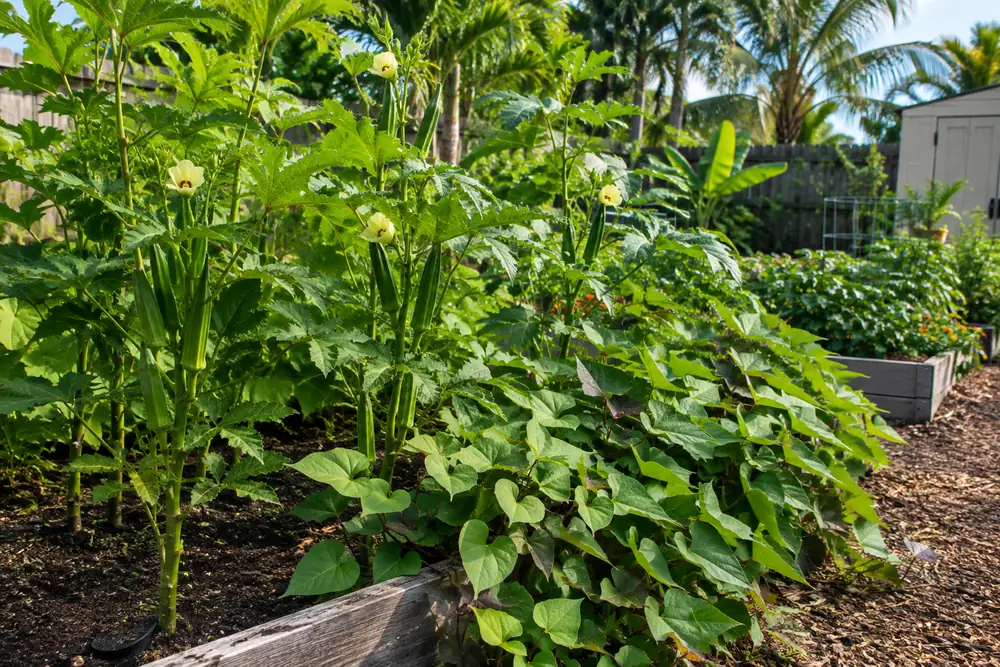
Summer is the off-season for most vegetables in zone 10, especially in South Florida and the desert. These steps keep your soil and your harvest going:
- Switch to heat-lovers. Okra, sweet potatoes, southern peas, yardlong beans, hot peppers, and tropical greens like Malabar spinach handle 90°F+ days.
- Plant tomatoes for the right window. Tomato fruit set drops when nights stay above about 75°F and days above about 90°F, which is why Florida grows them from fall to spring.
- Use shade cloth. In the desert, 40-50% shade cloth over peppers and late tomatoes prevents sunscald.
- Solarize or cover crop. UF/IFAS suggests clear plastic over moist soil during the warmest six weeks of summer, or a cover crop of sunn hemp or cowpeas.
- Water deeply and mulch. Drip irrigation under 3 inches of mulch saves water and keeps roots cooler.
Watch out: “Frost rare” does not mean “frost never.” Inland valleys and the low desert can dip near 30°F a few nights in some winters. Keep frost cloth handy from December through February for tomatoes, peppers and basil.
Gear that helps
- Shade cloth 40-50%: Prevents sunscald on peppers and tomatoes in desert and Florida heat
As an Amazon Associate we earn from qualifying purchases. Check current prices and reviews on Amazon.
Common mistakes to avoid
- Planting a spring garden on a northern schedule in South Florida, then watching it collapse in June heat and rain.
- Waiting until spring to plant lettuce, broccoli and peas, which bolt or struggle as days heat up.
- Buying long-day onions or unchilled garlic, which rarely form good bulbs here.
- Planting desert tomatoes in April, too late for fruit to set before 100°F days.
- Expecting beefsteak tomatoes to ripen well in coastal “June gloom.” Cherry and early varieties cope better.
- Leaving beds bare all summer, which invites weeds and nematodes.
FAQ
What is the best time to plant vegetables in zone 10?
Fall. From September to January, zone 10 gardens grow tomatoes, peppers and beans in Florida, and lettuce, broccoli, carrots, peas and onions everywhere. Southern California coastal gardens also have a strong warm-season window from March to July.
When do you plant tomatoes in zone 10?
In South Florida, from August to February. In the low desert, transplant in February and March. On the Southern California coast, plant from March to June or July.
Does zone 10 get frost?
Rarely. Most of zone 10 has no frost in a typical year, but inland and desert areas can see a light frost on a few winter nights, usually December to February.
What vegetables grow in zone 10 in summer?
Okra, sweet potatoes, southern peas, yardlong beans, hot peppers and tropical greens like Malabar spinach. On the Southern California coast, tomatoes, beans, squash and corn grow well in summer too.
Can you grow garlic in zone 10?
Yes, but chill the cloves in the refrigerator for several weeks first, choose softneck or Creole types, and plant from October to December. Bulbs are usually smaller than in colder zones.
Keep reading
Sources
- Florida Vegetable Gardening Guide (SP 103) – UF/IFAS Extension
- Vegetable Gardens by Season – UF/IFAS Gardening Solutions
- San Diego County Vegetable Planting Guide – UC Master Gardener Program, UC ANR
- Vegetable Gardening, Los Angeles County – UC Master Gardeners, UC ANR
- Vegetable Planting Calendar for Maricopa County – University of Arizona Cooperative Extension
- Frost Protection – University of Arizona Cooperative Extension
- USDA Plant Hardiness Zone Map – USDA Agricultural Research Service