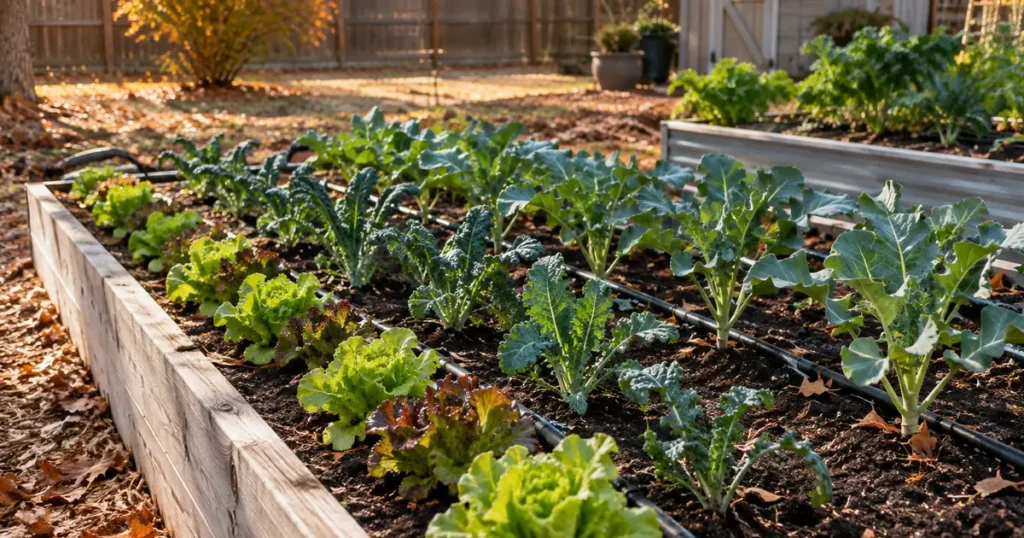
In November, most northern gardeners are down to one last planting: garlic, if the ground has not frozen yet. In zones 8-10, though, November is prime time to plant lettuce, kale, broccoli, carrots, onions and more, and in the Southwest and Florida you can add peas and strawberries.
Quick answer
- Zones 3-5: the planting season is over; mulch garlic, protect overwintering crops and plan next year.
- Zone 6: last call for garlic and shallots in early November if the soil is still workable.
- Zone 7: finish garlic planting; keep spinach and kale growing under row covers or a cold frame.
- Zone 8: set out cabbage, collards and kale transplants; sow spinach, radishes and turnips; plant onions where local charts allow.
- Zones 9-10: plant lettuce, broccoli, carrots, beets, peas, onions and garlic; strawberries in North Florida.
In this guide
Want every planting date for your region in one place? Get The Year-Round Vegetable Garden (225 pages, $27).
What to plant in November by zone
Your USDA zone reflects your average coldest winter temperature (2023 map), not your frost dates, but it is a useful shortcut for November planning. By this month, most of the North has had its first frost, while the Gulf Coast, Florida, the low deserts and coastal California are entering their main cool-season window. Microclimates vary, so confirm your average frost dates with your local extension office.
| Zone | What November looks like | Plant in November |
|---|---|---|
| 3-4 | Ground freezing or frozen | Nothing new; mulch garlic and perennials |
| 5 | Hard freezes common | Garlic only in the first days if soil is workable |
| 6 | After first frost, soil still open | Garlic, shallots (early November); cereal rye in the first week |
| 7 | First frosts arriving | Garlic, shallots; spinach and lettuce in a cold frame |
| 8 | Mild days, frost possible late in month | Cabbage, collards, kale, spinach, turnips, radishes, mustard, garlic, onions |
| 9-10 | Main cool-season planting | Lettuce, kale, broccoli, cabbage, carrots, beets, radishes, peas, onions, garlic, strawberries (Florida) |
Zones 3-5: protect, mulch and plan
In the North, November is about protecting what you planted in October. Once the top inch or two of soil starts to freeze, cover garlic and shallot beds with 3-4 inches of straw or shredded leaves. University of Minnesota Extension recommends that depth to buffer soil temperature swings that can heave cloves out of the ground.
Other jobs for the month:
- Mulch overwintering spinach heavily or close up your cold frame for the season.
- Dig the last carrots, beets and leeks, or mulch them deeply and harvest through the winter when the soil allows.
- Pile shredded leaves on empty beds to compost in place over winter.
- Order seed catalogs and sketch next year’s rotation while this year’s results are fresh.
Zone 5 gardeners who missed the October garlic window can still plant cloves in the first days of November if the ground is not frozen. Roots will be limited, so mulch well and expect slightly smaller bulbs.
Zones 6-7: last call for garlic
For zone 6, early November is the latest reasonable garlic planting; in zone 7, garlic can go in through mid-November. Aim for at least a few weeks of root growth before the ground freezes. See garlic planting dates by zone for a closer look at your window.
Keep greens going under cover
Kale, collards, spinach, mâche and leeks planted in late summer can keep producing through November and beyond with a little help. A floating row cover adds roughly 4-5°F of frost protection, according to NC State Extension, and a cold frame does more. Most leafy growth will slow sharply once days drop below about 10 hours of daylight, so think of the garden as a cold storage bin you harvest from, not a place where crops still bulk up.
Cover crops
Cereal rye can still go in during early November in zone 7 and the warmer edge of zone 6. Penn State Extension notes that late-planted rye produces less fall growth, but it still establishes and protects soil.
Garden hack: Push a short stake into the soil at the end of every garlic row before you mulch. Under 4 inches of straw and maybe a foot of snow, the rows disappear, and the stakes keep you from planting something else on top of them in early spring.
Gear that helps
- Floating row cover with hoops: Keeps kale and spinach harvestable into winter in zones 6-7.
As an Amazon Associate we earn from qualifying purchases. Check current prices and reviews on Amazon.
Zone 8: plant the winter garden
Zone 8 sits on the edge. Most of the month is mild, but a frost can come late in November. Focus on hardy crops that tolerate freezing:
- Transplants: cabbage, collards and kale. Broccoli and cauliflower set out now may not head before the coldest weeks, so they work best in the warmer half of zone 8.
- Direct-sow: spinach, mustard greens, turnips, radishes and arugula.
- Onions: in Florida’s panhandle and the Gulf Coast, short-day bulbing onions go in during fall; in much of Texas and the inland South, transplants are traditionally set in late winter instead. Check your county planting chart.
- Garlic: November is fine in zone 8. Texas A&M AgriLife’s Central Texas chart gives October-November.
Zones 9-10: the best planting month of the year
If you garden in Florida, south Texas, southern Arizona or coastal and southern California, November is when the cool-season garden takes off. Days are warm, nights are cool and pest pressure is lower than in summer.
What to plant in November in zones 9-10
- Lettuce: leaf and romaine types; sow every 2-3 weeks for a steady supply.
- Kale, collards and chard: transplants or seed.
- Broccoli, cabbage and cauliflower: transplants are fastest. UF/IFAS lists broccoli from transplants at about 50-70 days.
- Carrots, beets, radishes and turnips: sow directly; radishes are ready in about 3-4 weeks.
- Spinach: UF/IFAS puts spinach planting at October-November in North Florida and through winter farther south.
- Peas: English peas are a November-February crop in Central and South Florida, and the University of Arizona’s Maricopa County calendar includes peas in November.
- Onions and garlic: onion sets and garlic cloves are on the Maricopa County calendar for November; in California, UC planting guides give October-December for garlic.
- Strawberries: UF/IFAS recommends October-November planting in North Florida. Central and South Florida windows close in late October, and coastal California growers often plant bare-root strawberries in fall as well.
| Crop | Planting method | Approx. days to harvest |
|---|---|---|
| Radishes | Seed | 20-30 |
| Leaf lettuce | Seed or transplant | 40-60 |
| Spinach | Seed | 45-60 |
| Kale | Seed or transplant | 50-70 |
| Beets | Seed | 50-70 |
| Broccoli | Transplant | 50-70 |
| English peas | Seed | 60-80 |
| Carrots | Seed | 70-120 |
| Bulbing onions | Sets or transplants | 100-130 |
Ranges are typical for Florida and the low deserts; check the seed packet for your variety.
Watch out: In the low desert and inland Southern California, a rare December or January freeze can still hit. Keep a frost cloth on hand for lettuce, peas in flower and young broccoli, and cover them when the forecast drops below about 32°F.
Gear that helps
- Short-day onion sets or transplants: The right onion type for fall planting in zones 8-10.
As an Amazon Associate we earn from qualifying purchases. Check current prices and reviews on Amazon.
Your November garden to-do list
- Mulch garlic and shallots once the soil starts to freeze (zones 3-7).
- Harvest after thaws, not during freezes. Pick kale, spinach and other greens in the afternoon once frozen leaves have thawed.
- Store the harvest. Move cured potatoes, onions and winter squash to their long-term spots; check them every couple of weeks and remove anything soft.
- Finish cleanup. Remove diseased vines and stakes, and clean and store tomato cages.
- Use fall leaves. Shred and pile them for leaf mold or mix them into compost. Our beginner composting method shows how to keep a pile working into winter.
- Protect raised beds. Top them with compost or leaves so soil does not wash away. See how to winterize your vegetable garden.
- Drain hoses and irrigation before the first hard freeze in zones 3-7.
- Plan. Write down what worked and what did not while you still remember.
The Year-Round Vegetable Garden (2027 Edition)
Plan the whole season in one place: a 225-page month-by-month guide with calendars for six US growing regions, 50 plant profiles (tomatoes included), 5 copy-ready garden plans and 7 printable pages.
Tomato lover? Add Tomato Mastery, our seed-to-harvest tomato blueprint, for just $10 at checkout.
Get the guide ($27)Gear that helps
- Leaf shredder or mulching mower bag: Shredded leaves make better mulch and compost faster.
As an Amazon Associate we earn from qualifying purchases. Check current prices and reviews on Amazon.
Common mistakes to avoid
- Planting slow brassicas too late in zone 8. Cauliflower and broccoli that are still small when the cold arrives may button (form tiny heads) or fail to head.
- Mulching garlic too early in warm falls. In zones 3-5, thick mulch on warm soil can encourage early top growth and rodents nesting; wait until the soil begins to freeze.
- Forgetting water. Fall rains are unreliable. Crops in zones 8-10 still need about 1 inch of water a week.
- Picking frozen greens. Leaves harvested while frozen turn limp and mushy once they thaw.
- Using long-day onions in the South. Zones 8-10 need short-day (or some intermediate-day) varieties to form bulbs.
FAQ
Is it too late to plant garlic in November?
In zones 6-8, early to mid-November is still fine as long as the ground is not frozen. In zones 3-5, November planting is risky because roots have little time to grow, but cloves planted in workable soil and mulched heavily often still produce smaller bulbs.
What vegetables can I plant in November?
In zones 8-10, plant lettuce, kale, collards, spinach, broccoli and cabbage transplants, carrots, beets, radishes, turnips, peas, onions and garlic. In colder zones, garlic is usually the only crop still worth planting in November.
Can you plant lettuce in November?
Yes, in zones 8-10 lettuce is one of the best crops for November. In zones 5-7 you can still grow it in a cold frame, but growth will be slow until days lengthen.
Can I plant strawberries in November?
In North Florida, UF/IFAS recommends planting strawberries in October-November for a spring harvest. In most other regions, strawberries are planted in early spring.
What can I plant in November in zone 9?
Zone 9 gardeners can plant nearly every cool-season vegetable: lettuce, spinach, kale, chard, broccoli, cabbage, cauliflower, carrots, beets, radishes, peas, onions and garlic.
Keep reading
Sources
- Florida Vegetable Gardening Guide – UF/IFAS Extension
- Growing Strawberries in Florida – UF/IFAS Extension Pasco County
- Vegetable Planting Calendar for Maricopa County – University of Arizona Cooperative Extension
- Time of Planting – UC Master Gardener Program, UC ANR
- Growing garlic in home gardens – University of Minnesota Extension
- Season Extenders and Greenhouses – NC State Extension Gardener Handbook
- Cereal Rye as a Cover Crop – Penn State Extension
- Late Season Harvest in the Vegetable Garden – Iowa State University Extension