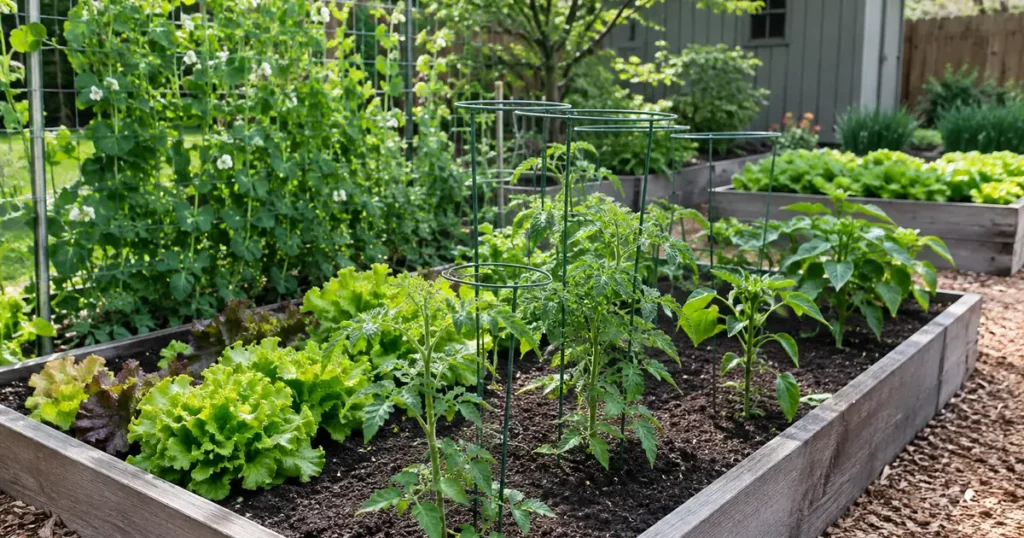
In zone 6, you start onions indoors in late January, peppers in late February to early March and tomatoes in mid to late March. Peas, spinach and broccoli go outside from late March to mid-April, and tomatoes, beans, squash and corn go in from early to mid May. A long fall lets you sow lettuce and spinach into September and plant garlic from mid-October to early November.
Quick answer
- Typical last spring frost: mid-April to early May. Typical first fall frost: early to late October. These are typical ranges for zone 6; check your local dates.
- Frost-free season: about 160-190 days, long enough for full-size tomatoes, peppers, melons and winter squash.
- Start indoors: onions in mid to late January, cabbage family in mid to late February, peppers and eggplant in late February to early March, tomatoes in mid to late March.
- Plant outside: peas and spinach from late March; tomatoes and beans in early to mid May; peppers, eggplant, cucumbers and squash in mid-May.
- Fall: sow carrots and beets in early July, transplant fall broccoli and cabbage in mid to late July, sow lettuce and spinach in August, and plant garlic mid-October to early November.
In this guide
Want every planting date for your region in one place? Get The Year-Round Vegetable Garden (225 pages, $27).
Where is zone 6?
Zone 6 has an average extreme winter low of -10°F to 0°F on the 2023 USDA Plant Hardiness Zone Map. It covers much of Ohio, Indiana, Illinois, southern Michigan, Pennsylvania’s interior, Missouri’s northern half, much of Kansas, southeastern Nebraska, Colorado’s Front Range cities, northern New Mexico, and large parts of New York, Connecticut, Massachusetts and coastal Maine.
Example cities include Chicago, Illinois (6b), Columbus, Cincinnati and Dayton, Ohio (6b), Indianapolis, Indiana (6b), Detroit, Michigan (6b), Kansas City, Missouri (6b), Hartford, Connecticut (6b), State College, Pennsylvania (6b), Denver, Colorado (6a), Omaha, Nebraska (6a), Milwaukee, Wisconsin (6a), and Albany, New York (6a). Confirm your zone by ZIP code with our USDA hardiness zones guide.
The schedule below assumes a last frost around late April and a first frost around mid-October. Denver and other high-plains cities in zone 6 often have later spring frosts and drier air than Ohio Valley cities, so check your local frost dates before you plant.
Zone 6 planting schedule month by month
These dates are anchored on Penn State Extension and Purdue Extension guidance for zone 6 areas, combined with standard seed-starting timelines. Check your local frost dates or county extension office, because microclimates vary.
| Month | Start indoors | Sow or transplant outdoors | Harvest | Key tasks |
|---|---|---|---|---|
| January | Onions and leeks (mid to late January) | Nothing | Stored crops; kale, leeks and greens under cover | Order seeds and seed potatoes; plan rotations |
| February | Broccoli, cabbage, cauliflower, kale, head lettuce (mid to late Feb); peppers and eggplant (late Feb) | Nothing in most years | Overwintered spinach, cold-frame greens | Set up lights; prune fruit; get soil tested |
| March | Finish peppers (early March); tomatoes (mid to late March) | Peas, spinach, radishes (late March, when soil is workable); onion sets (late March) | Overwintered spinach | Prepare beds; add compost; harden off brassicas late in the month |
| April | Squash, cucumbers, melons in pots (mid to late April, optional) | Broccoli, cabbage, kale transplants (early April); lettuce, beets, chard (early to mid April); potatoes, carrots, onions (mid April) | Radishes, spinach, asparagus | Cover tender seedlings on frosty nights; start hardening off tomatoes |
| May | Nothing | Beans and sweet corn (early to mid May); tomatoes (early to mid May); peppers, eggplant, cucumbers, squash, melons (mid-May) | Lettuce, spinach, radishes, peas (late May), strawberries | Mulch; set up trellises and cages |
| June | Fall broccoli, cabbage, Brussels sprouts (early to mid June) | Succession beans and corn; replant gaps | Peas, lettuce, kohlrabi, garlic scapes, early zucchini | Harvest garlic late June to early July; water 1 inch per week |
| July | Fall lettuce in pots (late July, optional) | Carrots, beets, last bush beans (early July); fall broccoli and cabbage transplants (mid to late July); kale (by late July) | Tomatoes, peppers, beans, cucumbers, squash, sweet corn, onions, garlic | Cure garlic and onions; watch for squash bugs and hornworms |
| August | Nothing | Lettuce, spinach, radishes, turnips (early August to early September) | Tomatoes, peppers, melons, eggplant, potatoes | Keep fall seedbeds moist; shade new sowings in heat |
| September | Nothing | Spinach for overwintering, radishes (early to mid Sept); cereal rye, oats or crimson clover cover crop | Winter squash, peppers, tomatoes, fall lettuce, carrots | Pull spent summer crops; seed cover crops on empty beds |
| October | Nothing | Garlic and shallots (mid-October onward) | Kale, cabbage, broccoli, carrots, beets, Brussels sprouts, last peppers | Cover crops before the first frost; pick green tomatoes |
| November | Nothing | Finish garlic by early November | Kale, leeks, carrots, Brussels sprouts, spinach | Mulch garlic and strawberries; shred leaves for compost |
| December | Nothing | Nothing | Kale, spinach and lettuce from a cold frame | Clean tools; review notes; plan next year |
Gear that helps
- Seed starting kit with heat mat and grow light: Covers January-March indoor starts for onions, peppers and tomatoes
As an Amazon Associate we earn from qualifying purchases. Check current prices and reviews on Amazon.
When to plant vegetables in zone 6: crop chart
Here are planting windows for about 20 common crops. “Plant outside” means spring sowing or transplanting; “Fall planting” means a second crop for fall harvest or a planting for next year.
| Crop | Start indoors | Plant outside | Fall planting |
|---|---|---|---|
| Tomatoes | Mid to late March (6-8 weeks) | Early to mid May, nights above 50°F | Transplants by mid-June for a late crop |
| Peppers | Late February to early March | Mid-May | No |
| Eggplant | Late February to early March | Mid-May | No |
| Cucumbers | Optional: mid to late April in pots | Mid-May to mid-June (soil 70°F) | Sow by mid-July |
| Summer and winter squash | Optional: mid to late April in pots | Mid to late May | Summer squash by early July |
| Beans | No | Early May to late June | Last sowing late June to mid-July |
| Sweet corn | No | Early May to early June (soil 60°F) | Early varieties by early July |
| Peas | No | Late March to mid-April | Late July to early August |
| Lettuce | Mid to late February (head types) | Early April to early May | Early August to early September |
| Spinach | No | Late March to mid-April | Mid-August to mid-September (later sowings overwinter) |
| Kale | Mid to late February | Early to mid April | Mid to late July |
| Broccoli | Mid to late February | Transplant early to mid April | Transplant mid to late July |
| Cabbage | Mid to late February | Transplant early to mid April | Transplant early to mid July |
| Carrots | No | Mid-April to mid-May | Early July |
| Beets | No | Early April to mid-May | Early to mid July |
| Radishes | No | Late March to early May | Mid-August to late September |
| Onions | Mid to late January (from seed) | Sets or transplants late March to mid-April | Walking and multiplier onions, shallots, overwintering sets, late September to late October |
| Potatoes | No (pre-sprout 2-3 weeks ahead) | Early to mid April (soil 45°F) | No |
| Garlic | No | Spring planting gives small bulbs | Mid-October to early November |
| Strawberries | No | Late March to mid-April | Spring planting preferred |
For the math behind the indoor dates, see when to start seeds indoors, and for January sowings, what to plant in January.
Garden hack: Zone 6 has room for two broccoli crops. Plant spring transplants in early April and fall transplants in mid to late July. Fall broccoli often forms tighter, sweeter heads, because it matures in cool October weather instead of a June heat wave.
Season extension tips for zone 6
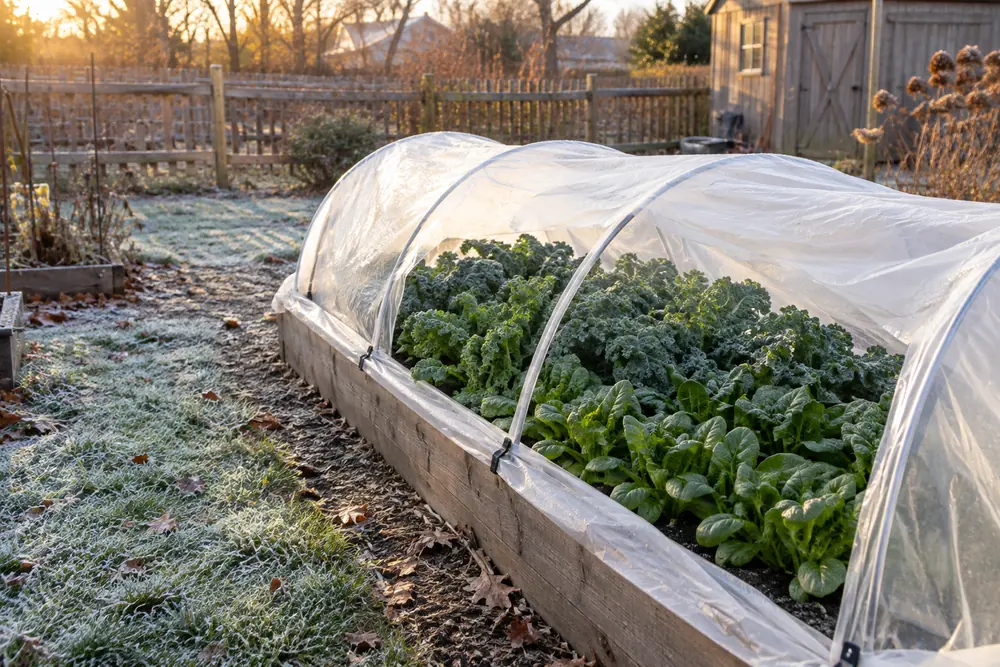
Zone 6 summers are long enough for nearly anything. Your extra gains come at the edges: earlier greens in March and fresh harvests well into December.
- Row covers over March sowings: lightweight fabric over peas, spinach and radishes speeds germination and blocks early flea beetles. Heavier frost fabric handles cold snaps in April. Our guide to protecting plants from frost explains which to use.
- Low tunnels for winter greens: spinach, kale, lettuce and mâche sown in late August to mid-September under a plastic low tunnel or in a cold frame can be picked through much of the winter in zone 6.
- Black plastic for melons: warming the soil about 5°F before planting helps melons and peppers grow faster in May.
- A second round of summer crops: a mid-June sowing of cucumbers, bush beans or zucchini replaces tired plants and keeps producing until frost.
- Shade cloth in July: 30-40% shade cloth over lettuce and fall seedbeds helps them through the hottest weeks.
Watch out: Zone 6 springs swing hard. A week in the 70s in early April can be followed by a frost near the end of the month. Hold tomatoes, peppers and basil indoors until nights stay above 50°F, usually early to mid May.
The Year-Round Vegetable Garden (2027 Edition)
Plan the whole season in one place: a 225-page month-by-month guide with calendars for six US growing regions, 50 plant profiles (tomatoes included), 5 copy-ready garden plans and 7 printable pages.
Tomato lover? Add Tomato Mastery, our seed-to-harvest tomato blueprint, for just $10 at checkout.
Get the guide ($27)Gear that helps
- Low tunnel hoop kit with greenhouse plastic: Lets zone 6 gardeners harvest spinach and kale through much of winter
- Shade cloth 30-40%: Protects lettuce and fall seedbeds in July heat
As an Amazon Associate we earn from qualifying purchases. Check current prices and reviews on Amazon.
Fall planting in zone 6
With a first frost around mid-October, zone 6 gives you a real second season. Penn State Extension’s York County planting guide, built on a May 1 last frost and an October 1 first frost, lists the latest summer sowings for beets around mid-July, carrots and head lettuce around early July, cabbage and cauliflower around mid-July, leaf lettuce in early August and radishes into late August. Most zone 6 gardens frost a bit later than that guide assumes, so you often gain a week or two.
Spinach sown in late August through mid-September can overwinter under a row cover and produce one of the first harvests the following March. Garlic goes in from mid-October to early November. See our garlic planting guide and fall vegetable garden guide.
Gear that helps
- Cereal rye cover crop seed: Protects empty beds after fall cleanup
As an Amazon Associate we earn from qualifying purchases. Check current prices and reviews on Amazon.
Common mistakes to avoid
- Planting tomatoes in mid-April. The first warm week is not the last frost. Early to mid May is safer and the plants grow faster in warm soil.
- Sowing peas and spinach too late. If they go in after mid-April, May heat often cuts the harvest short.
- Treating Denver like Columbus. High-plains zone 6 cities can frost into May and dry out fast. Use your local frost dates.
- Forgetting the fall garden. The July planting window for fall broccoli, cabbage, carrots and beets passes quickly during the busy summer harvest.
- Leaving beds bare in winter. Sow cereal rye or another cover crop in September or early October to protect soil.
- Skipping hardening off. Give seedlings 7-14 days outdoors before planting. Our hardening-off guide explains the steps.
FAQ
When should I plant tomatoes in zone 6?
Transplant tomatoes in early to mid May, after the last frost and once nights stay above 50°F. Start seeds indoors 6-8 weeks earlier, in mid to late March.
When is the last frost in zone 6?
The last spring frost in zone 6 typically falls between mid-April and early May. High-elevation and western zone 6 locations can run later, so check NOAA data or your county extension office.
What can I plant in March in zone 6?
Peas, spinach, radishes and onion sets can go outside in late March when the soil is workable. Indoors, start tomatoes in mid to late March and finish sowing peppers early in the month.
When should I start seeds indoors in zone 6?
Start onions in mid to late January, cabbage-family crops in mid to late February, peppers and eggplant in late February to early March, and tomatoes in mid to late March.
When do you plant garlic in zone 6?
Plant garlic from mid-October to early November, about one to two weeks after the first killing frost, and mulch with 3-4 inches of straw or shredded leaves.
Can I grow vegetables through winter in zone 6?
Yes, with protection. Spinach, kale, lettuce and mâche sown in late August to mid-September can keep producing under a low tunnel or in a cold frame through much of the winter.
Keep reading
Sources
- Vegetable Seed Planting Guide (York County) – Penn State Extension
- Indiana Vegetable Planting Calendar (HO-186) – Purdue Extension
- Starting seeds indoors – University of Minnesota Extension
- Growing Vegetables: When to Plant Your Vegetable Garden – UNH Extension
- Extending the growing season – University of Minnesota Extension
- USDA Plant Hardiness Zone Map – USDA Agricultural Research Service