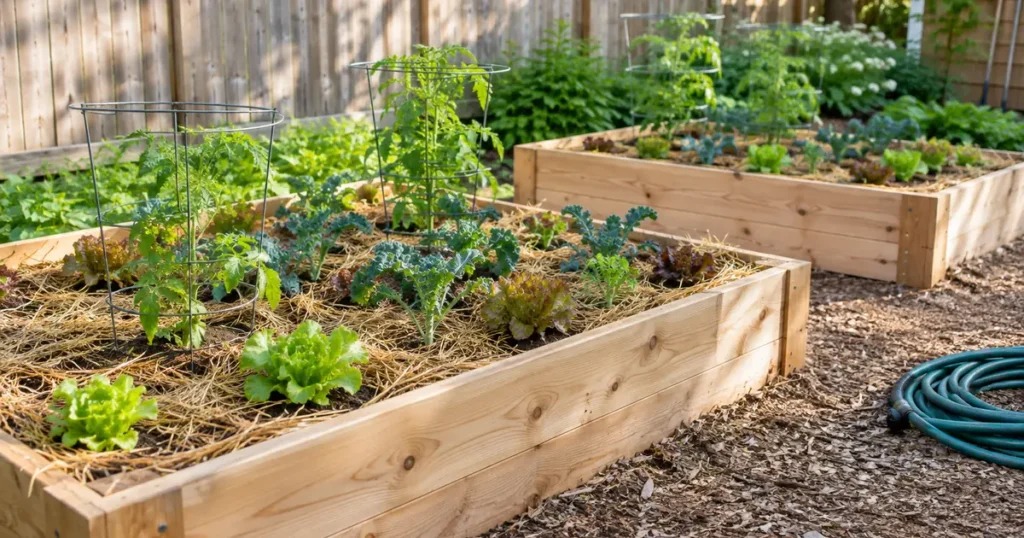
To start a vegetable garden, find your USDA zone and frost dates, pick a spot with 6 to 8 hours of direct sun, test and improve the soil, then plant a small bed with a handful of easy crops at the right time for your area. Water about 1 inch a week, mulch, and harvest often. The ten steps below walk you through each move, in order, so your first season is a success instead of a weed patch.
Quick answer
- Start with your zone and your average last spring frost date: every planting date depends on it.
- Choose the sunniest spot you have: at least 6 hours of direct sun, 8 or more for tomatoes, peppers and squash.
- Get a soil test, then work 2 to 3 inches of compost into the top of the soil before planting.
- Start small: one 4×8-foot raised bed or a plot no bigger than 10×10 feet is plenty for year one.
- Plant cool-season crops a few weeks before the last frost and warm-season crops after it; in zones 8-10, fall and winter are a second main season.
In this guide
- How to start a vegetable garden in 10 steps
- Step 1: Find your hardiness zone and frost dates
- Step 2: Pick a spot with 6 to 8 hours of sun
- Step 3: Choose in-ground beds, raised beds or containers
- Step 4: Test and improve your soil
- Step 5: Start small: how big should a beginner garden be?
- Step 6: Choose easy vegetables for your first season
- Step 7: Decide on seeds or transplants
- Step 8: Plant at the right time and depth
- Step 9: Water deeply and mulch
- Step 10: Keep up with maintenance and harvest
- When to start a vegetable garden: timeline by zone
- Common mistakes to avoid
- FAQ
 Every planting date for your region in one place: The Year-Round Vegetable Garden ($27, PDF).
How to start a vegetable garden in 10 steps
Here is the whole process at a glance. Each step gets its own section below, with numbers you can act on.
- Find your hardiness zone and frost dates.
- Pick a spot with 6 to 8 hours of sun.
- Choose in-ground beds, raised beds or containers.
- Test and improve your soil.
- Start small.
- Choose easy vegetables for your first season.
- Decide on seeds or transplants for each crop.
- Plant at the right time and depth.
- Water deeply and mulch.
- Keep up with weeding, feeding and harvesting.
If you want help with garden layouts, plant spacing and how many plants to grow, our companion guide on how to plan a vegetable garden covers the drawing-board side. This page is about getting the garden in the ground.
Step 1: Find your hardiness zone and frost dates
Your USDA Plant Hardiness Zone is based on the average coldest winter temperature where you live, using the 2023 USDA map. It tells you how cold your winters get, which matters for perennials, garlic and overwintering crops. Look yours up by ZIP code in our guide to USDA hardiness zones.
For a vegetable garden, the date that matters even more is your average last spring frost, along with your first fall frost. Those dates come from NOAA climate records, not from the zone map, and two towns in the same zone can be weeks apart. Find yours in our guide to frost dates by zone, then write it on a calendar. Every step in this guide counts forward or backward from it.
Colorado State University Extension groups vegetables by how much cold they handle:
- Hardy crops (lettuce, peas, radishes, spinach, onions, cabbage, broccoli): plant 2 to 4 weeks before the last frost, as soon as the soil is dry enough to work.
- Semi-hardy crops (beets, carrots, potatoes, Swiss chard): plant 0 to 2 weeks before the last frost.
- Tender crops (beans, cucumbers, summer squash, corn): plant around the last frost date.
- Very tender crops (tomatoes, peppers, eggplant, melons, winter squash): plant about 2 weeks after the last frost, once days stay above 55°F.
Step 2: Pick a spot with 6 to 8 hours of sun
Sun is the one thing you can’t add later. Extension services agree that most vegetables need at least 6 hours of direct sun a day, and North Carolina State Extension calls 8 to 10 hours ideal. Fruiting crops (tomatoes, peppers, squash, cucumbers) need the most light. Leafy greens and root crops can get by with a bit less.
When you compare spots, check them several times on a sunny day, from late morning through afternoon. Also look for:
- Drainage: skip low spots where water pools after a heavy rain. Low areas also collect frost.
- Water access: pick a place your hose reaches easily. Hauling watering cans gets old by July.
- Distance from trees: roots compete for water and nutrients. Keep vegetables well away from black walnut trees, whose roots can reach 3 to 5 times the tree’s height from the trunk, according to University of Wisconsin-Madison Extension.
- Visibility: a bed you walk past every day gets checked, watered and harvested on time.
Garden hack: Not sure how much sun a spot gets? Take a phone photo of it every 2 hours on a clear day, from the same place. Scroll through the photos at night and count the hours the spot sits in full sun.
Step 3: Choose in-ground beds, raised beds or containers
You have three ways to grow, and you can mix them. The best choice depends on your soil, budget and how much bending you want to do.
| Option | Best for | Pros | Cons |
|---|---|---|---|
| In-ground beds | Decent, well-drained soil and a bigger budget of time than money | Cheapest per square foot, holds moisture well | Sod removal, more weeding, slower to warm in spring |
| Raised beds | Heavy clay, rocky or poorly drained soil; gardeners who want less bending | Warm up and drain faster, easy to fill with good soil | Cost of frame and soil, dry out faster in summer |
| Containers and grow bags | Patios, balconies, renters, very small yards | Movable to follow the sun, no digging | Need water daily in hot weather, limited root space |
University of Minnesota Extension notes that raised beds warm faster in spring, which lets you plant earlier, but they also dry out faster, and taller beds need water more often. Our guide to raised garden beds compares sizes, heights and soil needs. For containers, Clemson Extension recommends pots at least 6 to 8 inches deep, a lightweight potting mix rather than garden soil, and checking moisture at least once a day, twice on hot or windy days.
Starting a garden from scratch on lawn
If your spot is grass, you have two options. For a fast start, slice off the sod with a flat spade or a rented sod cutter, taking about an inch of soil so most roots come out, as University of Illinois Extension describes. For a slower, no-dig start, cover the area with plain brown cardboard or a tarp to smother the grass, ideally the season before you plant. If you plan to build a raised bed, remove any tarp first, since it blocks drainage.
Step 4: Test and improve your soil
A soil test is the best few dollars you’ll spend on a new garden. Your county extension office or a certified lab will report pH, organic matter, phosphorus and potassium, plus lime or fertilizer recommendations. University of Wisconsin-Madison Extension puts the ideal pH near 6.5, with most vegetables growing well between 6.0 and 7.2. Learn how to collect a sample and read the results in our guide to how to test soil pH.
Whatever the test says, organic matter helps. Wisconsin Extension recommends working a 2- to 3-inch layer of compost into the soil at least a month before planting. West Virginia University Extension adds that soil doesn’t need to be perfect on day one: if it crumbles in your hand and holds some moisture, you can plant, and you’ll keep improving it season after season. Make your own supply with our guide on how to make compost.
Watch out: Don’t dig or till wet soil. If it sticks to your shovel or boots, wait a few days. Working wet soil, especially clay, crushes its structure into hard clods that stay with you all season.
Gear that helps
- Home soil test kit: Gives a quick pH and nutrient reading while you wait for a lab test or between yearly tests.
As an Amazon Associate we earn from qualifying purchases. Check current prices and reviews on Amazon.
Step 5: Start small: how big should a beginner garden be?
The most common first-year problem isn’t pests. It’s a garden too big to keep up with. West Virginia University Extension advises keeping your first garden small so it stays easy to maintain while you learn. A practical starting point:
- One 4×8-foot raised bed (32 square feet): a manageable size for one or two people.
- Two or three containers on a sunny patio if you have no yard.
- A plot up to 10×10 feet if you have good soil and some free time. University of Illinois Extension describes a 10×10 garden as enough for summer vegetables for a family of four, so there’s no need to go bigger in year one.
Keep beds no wider than 4 feet so you can reach the center from either side without stepping on the soil. Oregon State University Extension uses the same 4-foot limit for adult gardeners. You can always add a second bed next spring.
Step 6: Choose easy vegetables for your first season
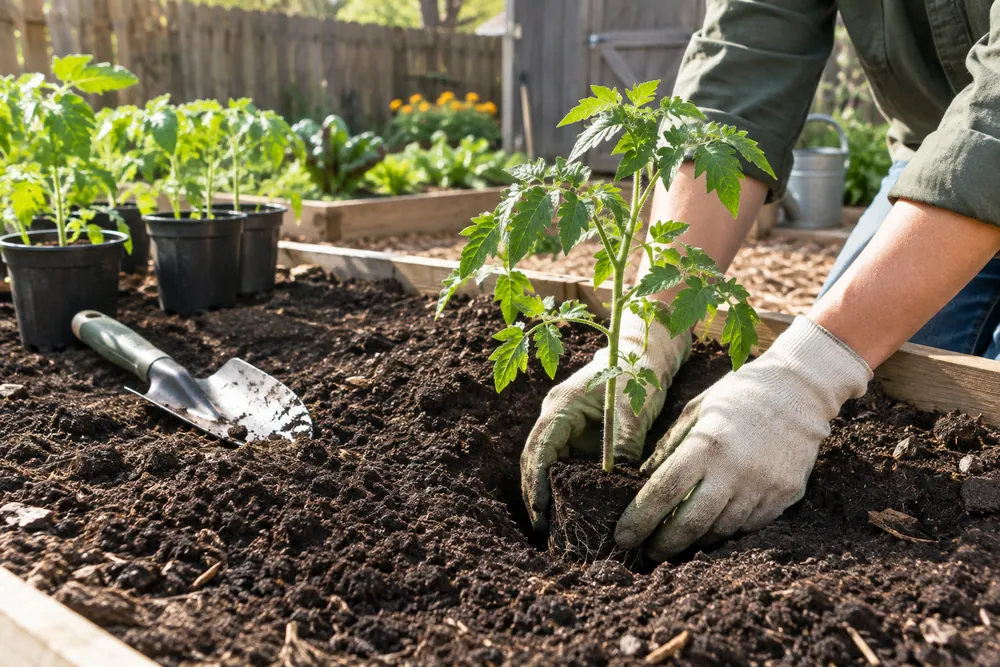
Pick crops that grow fast, forgive mistakes, and that you actually like to eat. Good first-year choices include:
- Cool season (spring and fall): radishes, leaf lettuce, spinach, peas, kale, Swiss chard, beets, green onions.
- Warm season (summer): bush beans, zucchini, cucumbers, cherry tomatoes, peppers, basil.
- Plant in fall for next summer: garlic.
Iowa State University Extension lists tomatoes, peppers, green beans, potatoes and zucchini as five of the easiest vegetables to grow. For days to maturity, planting tips and the full list, see our guide to the easiest vegetables to grow.
Limit yourself to 5 to 8 crops. Fewer crops means fewer planting dates to track, and you’ll learn each plant’s habits faster.
Garden hack: Plant radishes in the same row as slower carrots or beets. The radishes sprout in days, mark the row, and break any soil crust, and you pull them in about a month, just as the slower crop needs the room.
Step 7: Decide on seeds or transplants
Some vegetables grow best when you sow seed right in the garden. Others need a head start indoors and go out as young plants, called transplants.
- Sow directly: radishes, carrots, beets, beans, peas, spinach, leaf lettuce, cucumbers, squash. University of Minnesota Extension notes that root crops like radishes, carrots and beets don’t tolerate transplanting.
- Use transplants: tomatoes, peppers, eggplant, broccoli, cabbage and cauliflower. Tomatoes, peppers and eggplant won’t mature in most of the country if you sow them directly outside.
As a beginner, buying a few healthy transplants from a local nursery is perfectly fine. Choose stocky, dark-green plants without flowers or yellow leaves. If you want to grow your own, our guide on how to start seeds indoors covers timing and lights. Either way, toughen up indoor-grown plants for 7 to 10 days with our hardening off schedule before they go in the ground.
Step 8: Plant at the right time and depth
Soil temperature, not the calendar, decides when seeds sprout. University of Minnesota Extension says cool-season seeds like peas, spinach, lettuce and radishes can go in when soil reaches 40 to 50°F, while warm-season crops need 50 to 60°F or more. Colorado State lists 60°F as the minimum for cucumbers, peppers and squash. A cheap soil thermometer pushed 4 inches deep in the morning settles the question.
A few planting rules that work for nearly every crop:
- Seed depth: follow the packet. As a rule of thumb, small seeds like lettuce and carrots go about 1/4 inch deep, while beans, peas and squash go about 1 inch deep.
- Spacing: follow the packet, and thin seedlings to the final spacing once they have true leaves. Crowded plants stay small.
- Transplanting: water plants before you set them out and plant late in the afternoon or on a cloudy day to reduce shock. Most transplants go in at the same depth they grew in the pot; tomatoes can be buried deeper.
- Water in: soak every new seed row and transplant right after planting.
Gear that helps
- Soil thermometer: Tells you when the soil is warm enough for each crop instead of guessing from the calendar.
As an Amazon Associate we earn from qualifying purchases. Check current prices and reviews on Amazon.
Step 9: Water deeply and mulch
Most vegetable gardens need about 1 inch of water per week, counting rain. NC State Extension notes that’s roughly two-thirds of a gallon per square foot, or about 66 gallons a week for a 10×10 garden. Water deeply and less often, rather than a light sprinkle every day, so roots grow down. Push a finger 2 to 3 inches into the soil: if it’s still moist there, wait.
Water in the early morning when you can. Soaker hoses or drip lines put water right at the roots and keep leaves dry, which helps prevent disease. Raised beds and containers need checking more often, especially in July and August.
Once the soil has warmed, spread 2 to 4 inches of organic mulch, such as straw or shredded leaves, around your plants, as NC State recommends. Mulch holds moisture, keeps weeds down and stops soil from splashing onto leaves.
Garden hack: To learn how long your sprinkler takes to deliver 1 inch, set an empty tuna can in the bed and time how long it takes to fill. That’s your watering time for a dry week.
Gear that helps
- Soaker hose or drip irrigation kit: Delivers about an inch of water right to the roots and keeps leaves dry.
As an Amazon Associate we earn from qualifying purchases. Check current prices and reviews on Amazon.
Step 10: Keep up with maintenance and harvest
A new garden needs a short visit most days in summer. Small, regular check-ins beat a big weekend rescue mission.
- Weed weekly. Young weeds pull out in seconds. Mulch makes this much easier.
- Scout for pests. Check under leaves when you water. Hand-pick beetles and caterpillars early; if you use any product, choose one labeled for vegetables and follow the label.
- Support tall crops. Stake or cage tomatoes at planting time, and give peas and pole beans a trellis.
- Feed as needed. Follow your soil test. Heavy feeders like tomatoes and squash may need a side-dressing of fertilizer mid-season.
- Harvest often. Pick beans, zucchini and cucumbers every couple of days while they’re young. Iowa State Extension notes that frequent picking keeps bean plants producing for weeks.
- Replant gaps. When spring lettuce or radishes finish, sow beans or a fall crop in the empty space.
At the end of the season, pull spent plants, add compost and consider a cover crop. Our guide to the fall vegetable garden shows what to plant for a second harvest.
When to start a vegetable garden: timeline by zone
This table shows a typical spring timeline. The frost dates are broad averages for each zone, so always check the frost date for your own ZIP code or ask your local extension office, since microclimates vary.
| Zone | Typical last spring frost | Test soil, build beds | Plant cool-season crops | Plant warm-season crops |
|---|---|---|---|---|
| 3-4 | Mid-May to early June | Fall before, or as soon as soil thaws in April-May | Late April to mid-May | Early to mid-June |
| 5 | Early to mid-May | Fall before, or March-April | Mid-April to early May | Mid- to late May |
| 6 | Mid- to late April | Fall before, or March | Late March to mid-April | Early to mid-May |
| 7 | Early to mid-April | February-March | Mid-March to early April | Late April to early May |
| 8 | Mid- to late March | January-February, or late summer for fall | February to early March, again in September-October | Early to mid-April |
| 9-10 | February, or frost-free in many areas | Late summer for the main fall season | October to February (main season) | February-March, and again August-September in warm areas |
In zones 8 to 10, the cool months are a main growing season, not an afterthought. UF/IFAS Extension’s Florida Vegetable Gardening Guide, for example, lists broccoli, cabbage and collards from about September through February, and spring tomatoes as early as January-February in central Florida. Summer heat there is the hard season. If you live in the South, see our zone 9 planting schedule for month-by-month dates.
Common mistakes to avoid
- Starting too big. A small, well-kept bed out-produces a large, weedy one.
- Planting in shade. Less than 6 hours of sun means few tomatoes and peppers, no matter how much you fertilize.
- Planting warm crops too early. Tomatoes set out in cold soil sit and sulk, and a late frost can kill them outright. Wait about 2 weeks past your last frost date.
- Skipping the soil test. Guessing at lime and fertilizer can make pH or nutrient problems worse.
- Shallow, daily watering. It keeps roots near the surface. Water deeply once or twice a week instead, more in heat or in containers.
- Using garden soil in containers. It packs down and drains poorly. Use potting mix.
- Letting crops get oversized. Giant zucchini and tough beans signal you’re picking too late, and the plant slows down.
FAQ
What is the best month to start a vegetable garden?
It depends on your frost date. In most of the US, start preparing beds 4 to 6 weeks before your last spring frost, plant cool-season crops 2 to 4 weeks before it and warm-season crops after it. In zones 8 to 10, late summer is also a great time to start a fall and winter garden.
How do I start a vegetable garden for beginners with no experience?
Begin with one 4×8-foot raised bed or a few large containers in full sun, fill them with good soil and compost, and grow 5 to 8 easy crops such as lettuce, radishes, bush beans, zucchini and a cherry tomato. Water about 1 inch a week and check the garden most days.
Is it cheaper to start a garden from seeds or plants?
Seeds cost less per plant and are the best choice for crops you sow directly, like beans, radishes, lettuce and squash. Transplants cost more but save time and work for tomatoes, peppers and broccoli, which need a long head start indoors.
Can I start a vegetable garden in the fall?
Yes. Fall is a good time to build beds, remove sod, test soil and add compost for spring. In zones 8 to 10, fall is a main planting season for greens, broccoli, carrots and other cool-season crops, and everywhere you can plant garlic in fall for a summer harvest.
How much sun does a vegetable garden need?
At least 6 hours of direct sun a day, and 8 hours or more is better for tomatoes, peppers, squash and cucumbers. Leafy greens and root crops tolerate a little more shade.
Do I need a raised bed to start a vegetable garden?
No. In-ground beds work well in decent, well-drained soil. Raised beds help most when your soil is heavy clay, rocky or wet, or when you want less bending.
Keep reading
Sources
- Beginning Vegetable Garden Basics: Site Selection and Soil Preparation – University of Wisconsin-Madison Extension
- Vegetable Planting Guide – Colorado State University Extension
- Planting the vegetable garden – University of Minnesota Extension
- Extension Gardener Handbook, Chapter 16: Vegetable Gardening – NC State Extension
- Watering Wisely: How Much Your Summer Vegetable Garden Really Needs – NC State Extension
- Setting Up a Garden – West Virginia University Extension
- Planting a First-Time Vegetable Garden – University of Illinois Extension
- Container Vegetable Gardening – Clemson Cooperative Extension HGIC
- Five Easy to Grow Vegetables – Iowa State University Extension
- Florida Vegetable Gardening Guide – UF/IFAS Extension
- USDA Plant Hardiness Zone Map – USDA Agricultural Research Service