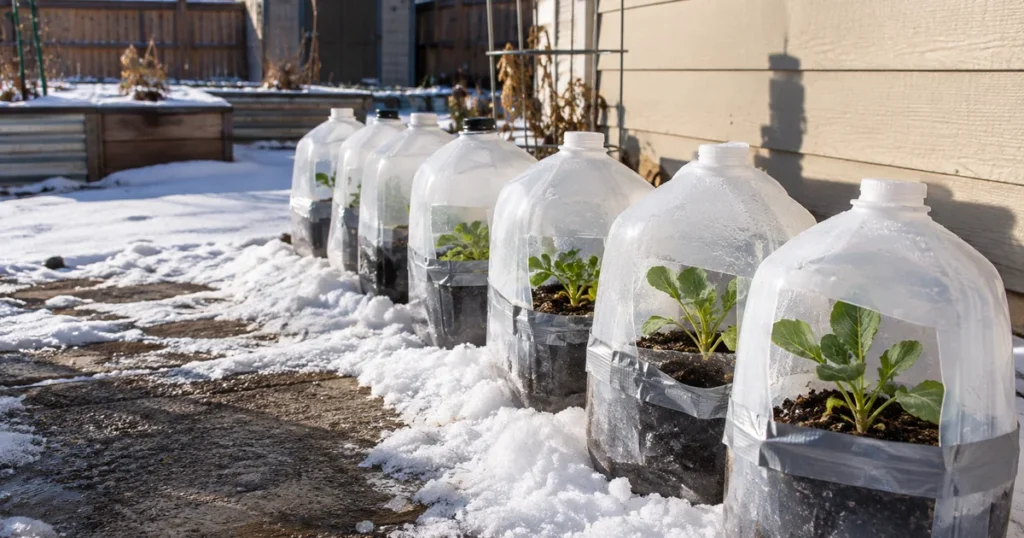
Winter sowing means planting seeds in covered containers, most often milk jugs, and leaving them outside in the cold. Snow and rain water them, freeze-thaw cycles break dormancy, and the seeds sprout on their own schedule in spring as hardy, already acclimated seedlings. No grow lights, no heat mats, and no hardening off.
Quick answer
- Cut a milk jug around the middle, leave a hinge, add drainage holes, fill with 3 inches of moist potting mix, sow, tape it shut and set it outside in the sun.
- Start hardy perennials and native plants in December-January, cool-season vegetables like kale and lettuce in late winter, and tomatoes only in late winter to early spring.
- Leave the cap off so rain and snow get in and heat escapes.
- In spring, open the jugs on warm days and close them at dusk until frost risk passes.
- Winter sowing works best in zones 3-7; in zones 9-10 winters are too mild for its main benefit.
In this guide
Want every planting date for your region in one place? Get The Year-Round Vegetable Garden (225 pages, $27).
What is winter sowing and why does it work?
University of Minnesota Extension calls it a passive method that uses natural freeze-thaw cycles. Each jug is a mini greenhouse. It keeps seeds moist, shelters them from wind and animals, and warms up a few degrees on sunny days.
Seeds stay dormant until conditions inside the jug are right for that species. Kale sprouts when the jug warms in late winter; tomatoes wait until spring is truly on its way. Because the seedlings grow in real outdoor light and temperatures, they come out stocky and tough, never leggy.
It is especially useful for seeds that need cold, moist stratification to germinate, such as many native perennials. Milkweed, coneflower, black-eyed Susan and wild bergamot are classic winter-sown plants.
What you need
- Clear or translucent plastic containers: gallon milk jugs, water jugs, 2-liter bottles or clear clamshells. Rinse them well.
- Potting mix or seed starting mix. Never garden soil, which packs down and carries weed seeds and disease.
- A sharp knife or scissors and a drill, or a heated skewer, for holes.
- Duct tape or packing tape.
- A paint pen or a plant label. Sharpies often fade in the sun by spring, so label inside and out.
Gear that helps
- Paint pen / UV-resistant garden marker: Labels that won't fade on jugs left outside all winter
- Duct tape: Seals jugs so they stay closed through wind and snow
As an Amazon Associate we earn from qualifying purchases. Check current prices and reviews on Amazon.
How to winter sow in milk jugs, step by step
- Add drainage. Poke or drill 4-6 holes in the bottom of the jug. Without them, the mix floods and seeds rot.
- Cut the jug. Cut around the jug just below the handle, leaving about an inch uncut under the handle as a hinge.
- Fill with mix. Add about 3 inches of moistened potting mix to the bottom half, as UMN and University of Missouri Extension recommend.
- Sow. Scatter seeds and cover them to the depth on the packet. Press light-needing seeds like lettuce onto the surface. Sow a little more thickly than in cells; you’ll transplant in small clumps.
- Water and label. Water gently until it drains from the bottom. Put a label inside, then write the crop and date on the outside too.
- Close it up. Tape the seam all the way around. Leave the cap off for airflow and so rain and snow can reach the mix. In very windy, dry areas, add a few small vent holes in the top.
- Set it out. Put jugs in a sunny spot sheltered from strong wind, such as along a south-facing wall or fence. Group them in a crate or tray so they don’t blow over.
Garden hack: Stand jugs inside a plastic storage tote or a few cut-down cardboard boxes lined with a trash bag. They stay upright in wind, and you can move the whole batch at once if a late cold snap or heat wave hits.
What seeds can you winter sow?
University of Illinois Extension lists cold-hardy crops like kale, broccoli, spinach and Brussels sprouts as good January-February candidates, and frost-tender crops like tomatoes, zinnias and squash for March or April. Here is a broader guide.
| Group | Examples | When to sow |
|---|---|---|
| Perennials and natives needing cold stratification | Milkweed, coneflower, black-eyed Susan, bee balm, blazing star, columbine | Earliest: December-January |
| Hardy annual flowers | Larkspur, poppy, snapdragon, sweet alyssum, calendula | Mid to late winter |
| Brassicas | Kale, broccoli, cabbage, Brussels sprouts, collards | Mid to late winter |
| Leafy greens | Lettuce, spinach, arugula, Swiss chard | Late winter |
| Hardy herbs and alliums | Parsley, chives, dill, cilantro, onions, leeks | Late winter |
| Warm-season crops | Tomatoes, tomatillos, zinnias, marigolds | Late winter to early spring, about 6-8 weeks before last frost |
Peppers and eggplant can be winter sown, but they need warm soil to germinate and often sprout too late to ripen much fruit in zones 3-5. Squash, cucumbers and melons dislike root disturbance, so most gardeners simply direct sow them after frost.
Gear that helps
- Native wildflower or milkweed seeds: Classic cold-stratification seeds that thrive with winter sowing
As an Amazon Associate we earn from qualifying purchases. Check current prices and reviews on Amazon.
When to start winter sowing by zone
The general rule: sow anything that needs cold stratification early, cool-season vegetables when the worst of winter is passing, and tender crops when the end of frost season is about 6-8 weeks away. Express it from your average last frost date, and check your local frost dates or extension office because microclimates vary.
| Zone | Perennials and natives | Kale, broccoli, lettuce, spinach | Tomatoes and other tender crops |
|---|---|---|---|
| 3-4 | January-February | March to early April | Mid-March to April |
| 5 | December-January | Late February to March | March |
| 6 | December-January | February to early March | Late February to mid-March |
| 7 | December-January | Late January to February | February |
| 8 | December | January (or direct sow in fall) | January to early February |
| 9-10 | Limited benefit | Direct sow in fall and winter | Start indoors or in a shaded tray in late fall-winter |
Illinois Extension warns that sowing too early is a real risk: seeds can sprout in a warm spell and then freeze. If you start in fall or early winter, stick to perennials that need the cold. In the South, fall and winter are prime outdoor seasons anyway, so you can direct sow cool-season crops; see what to plant in January and what to plant in February.
The Year-Round Vegetable Garden (2027 Edition)
Plan the whole season in one place: a 225-page month-by-month guide with calendars for six US growing regions, 50 plant profiles (tomatoes included), 5 copy-ready garden plans and 7 printable pages.
Tomato lover? Add Tomato Mastery, our seed-to-harvest tomato blueprint, for just $10 at checkout.
Get the guide ($27)Caring for winter-sown jugs
In winter
Leave them alone. Snow on top is fine and even helpful, since it melts slowly into the jug. Check every week or two that the mix is still damp; if a dry, sunny stretch drags on, water through the opening.
When seeds sprout
Watch for condensation. Heavy fog inside is normal; constant dripping and no visible seedlings means the mix may be too wet. If the mix looks dry and no droplets form, add water.
In spring
Overheating is now the bigger risk than cold. University of Missouri Extension notes the inside of a jug can heat up quickly even on a cold, sunny day and wilt seedlings. Follow this routine:
- On sunny days above about 50°F, untape and open the lids.
- Close them at dusk when frost is forecast.
- Once nights stay above freezing, leave hardy crops open. Keep tomatoes covered on nights below about 50°F.
- Water more often as plants grow and temperatures climb; open jugs dry out fast.
Because they’ve lived outdoors the whole time, winter-sown seedlings don’t need the full hardening-off routine. Opening the lids for a week or two is enough.
Watch out: A sealed jug in direct spring sun can cook seedlings in an afternoon. If you can’t check the jugs on a warm day, open them in the morning, or move them where they get afternoon shade.
Gear that helps
- Plastic storage tote: Holds jugs upright in wind and lets you move them together
As an Amazon Associate we earn from qualifying purchases. Check current prices and reviews on Amazon.
Transplanting winter-sown seedlings
Seedlings are ready when they’re about 2-3 inches tall and have true leaves, according to University of Missouri Extension. Transplant hardy crops when your garden soil can be worked, and tomatoes after your last frost when soil reaches about 60°F.
- Water the jug an hour before.
- Cut down the sides of the jug so you can slide the whole block of mix out.
- Break the block into small clumps of 2-4 seedlings, like brownies, or gently tease individual plants apart.
- Plant clumps at the spacing you want, then thin to the strongest plant once they settle in. Snip extras rather than pulling them to avoid disturbing roots.
- Water well and give a few days of shelter from harsh wind if you can.
Garden hack: For lettuce, spinach and other greens, plant the clumps whole. A small cluster of three or four plants makes a perfect cut-and-come-again patch.
Common mistakes to avoid
- Forgetting drainage holes, so jugs fill like buckets and seeds rot.
- Using opaque or dark containers that block light.
- Putting the cap back on, which traps heat and keeps out water.
- Labeling only with a marker that fades in the sun.
- Winter sowing tender crops too early, then losing them to a hard freeze after they sprout.
- Placing jugs in deep shade under evergreens or against a north wall.
- Forgetting to open jugs on warm spring days.
FAQ
When should I start winter sowing?
Start perennials and native plants that need cold in December or January, cool-season vegetables in mid to late winter, and tomatoes about 6-8 weeks before your last frost. Earlier is riskier, since seeds can sprout during a warm spell and then freeze.
Do winter-sown seeds freeze?
Dormant seeds handle freezing well, and that cold is the point for many perennials. Sprouted hardy crops like kale and lettuce tolerate frost in the jug, but tender seedlings like tomatoes need protection from freezing.
Can you winter sow tomatoes?
Yes. Sow them late, in late winter or early spring, so they sprout as the weather warms. They often come up after indoor-started plants but catch up quickly because they’re already tough and acclimated.
Do you put the cap on milk jugs for winter sowing?
No. Leave the cap off so rain and snow can water the mix and heat can escape on sunny days.
Do winter-sown seedlings need to be hardened off?
Not in the usual sense. They’ve grown outdoors the whole time. Opening the jugs for longer each day in spring is all the adjustment they need.
Does winter sowing work in warm climates?
Its main benefit, natural cold stratification, is limited in zones 9-10, where winters are mild. Southern gardeners usually direct sow cool-season crops in fall and winter instead.
Keep reading
Sources
- Jug It and Grow: Winter Sowing for Pollinator Gardens – University of Minnesota Extension
- Winter Seed Sowing – University of Illinois Extension
- Turn Milk Jugs into Mini Greenhouses – University of Missouri Extension
- Soil Temperature Conditions for Vegetable Seed Germination – Oregon State University Extension
- USDA Plant Hardiness Zone Map – USDA Agricultural Research Service