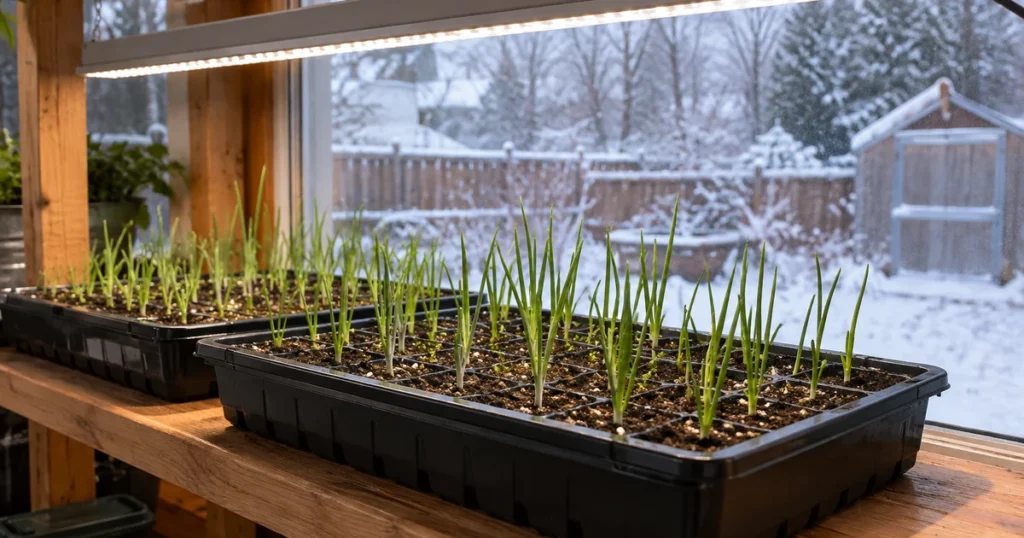
What you can plant in January depends on your USDA zone. In zones 3-6, January is for planning, ordering seeds and, by late month in zones 5-6, starting onions and leeks indoors. In zones 7-8 you start broccoli, cabbage and onions under lights, and in zones 9-10 January is one of the busiest planting months of the year.
Quick answer
- Zones 3-4: plan the garden, order seeds and seed potatoes, test old seed, set up lights. No outdoor vegetable planting.
- Zones 5-6: start onions and leeks indoors in late January (zone 6) and try winter sowing hardy perennials and herbs.
- Zone 7: start onions, broccoli, cabbage, cauliflower and lettuce indoors.
- Zone 8: set out onion transplants, start tomatoes and peppers indoors late in the month, sow peas in mild spots.
- Zones 9-10: plant potatoes, carrots, peas and cool-season greens; in Central and South Florida, tomatoes, peppers, eggplant and melons too.
In this guide
Want every planting date for your region in one place? Get The Year-Round Vegetable Garden (225 pages, $27).
How to use this January planting guide
Your hardiness zone tells you how cold winter gets, based on the 2023 USDA Plant Hardiness Zone Map. It is a good way to pick the right section below. Your actual planting dates, though, hang on your average last spring frost date, which comes from local NOAA climate records, not from your zone.
In January, most of the country is counting backward from that date. Slow crops like onions need 10-12 weeks or more under lights before they go outside, so they are the first seeds of the year. Check your local frost dates on our frost dates by zone page or with your extension office, because microclimates vary. When the month is over, move on to what to plant in February.
What to plant in January: zone-by-zone overview
| USDA zone | Typical last frost | Start indoors in January | Plant outdoors in January |
|---|---|---|---|
| 3-4 | Mid-May to early June | Nothing yet (onions start in February) | Nothing |
| 5 | Late April to mid-May | Onions and leeks at the very end of the month, at the earliest | Winter sowing of hardy perennials and herbs |
| 6 | Mid-April to early May | Onions and leeks, late January | Winter sowing of hardy perennials and herbs |
| 7 | Late March to mid-April | Onions, leeks, broccoli, cabbage, cauliflower, lettuce | Nothing in most years; peas in the mildest spots at month’s end |
| 8 | Early March to early April | Broccoli and cabbage (early); tomatoes and peppers (late) | Onion transplants, peas in mild areas, potatoes on the Gulf Coast |
| 9-10 | Frost rare to late February | Tomatoes, peppers and eggplant for spring | Most cool-season crops; warm-season crops in frost-free areas |
What to plant in January in zones 3-4
In Minnesota, northern New England, the northern Plains and the Rockies, the ground is frozen and your last frost is four or five months away. January is your planning month, and planning well is what makes May go smoothly.
- Take inventory. Sort leftover seed and toss packets past their prime. Onion, leek and parsnip seed loses vigor fastest.
- Run a germination test. Roll 10 seeds in a damp paper towel, keep it warm in a plastic bag, and count sprouts after a week or two. Seven sprouts means about 70% germination, so sow a little thicker.
- Order early. Popular varieties and seed potatoes sell out. Our seed catalog guide can help you compare sources.
- Set up your seed-starting space. University of Minnesota Extension schedules onions and leeks for early February in Minnesota, so lights, trays and mix should be ready by the end of January.
Gear that helps
- Seed starting tray kit: Readers set up their seed-starting space in January.
As an Amazon Associate we earn from qualifying purchases. Check current prices and reviews on Amazon.
What to plant in January in zones 5-6
For much of the Midwest, the Northeast and the Mid-Atlantic highlands, January is still too cold for outdoor planting. Indoor seed starting begins, though, with the slowest crops.
Start onions and leeks indoors
Onions and leeks grown from seed need about 10-12 weeks indoors before transplanting, and they go outside 2-4 weeks before the last frost. With a mid-April last frost (zone 6), that puts seeding in late January. In zone 5, with a frost in early to mid-May, aim for early to mid-February instead. Sow seeds about 1/4 inch deep in a seed-starting mix and give them strong light 14-16 hours a day.
Try winter sowing
Winter sowing means sowing seeds in clear containers, like milk jugs with drainage holes, and leaving them outside so nature handles the cold and the timing. South Dakota State University Extension recommends December through February for native perennials that need a cold period, and February through April for cold-hardy annuals and vegetables. In January, zones 5-6 are in the perennial window; save lettuce, spinach and onions for February or March. Our winter sowing guide walks through the setup.
Garden hack: Give onion seedlings a “haircut” with scissors whenever they reach about 5 inches tall. Trimming keeps them sturdy instead of flopping, and the clippings are perfect on eggs.
Gear that helps
- LED grow light for seedlings: Onions and leeks started in January need 14-16 hours of strong light.
As an Amazon Associate we earn from qualifying purchases. Check current prices and reviews on Amazon.
What to plant in January in zones 7-8
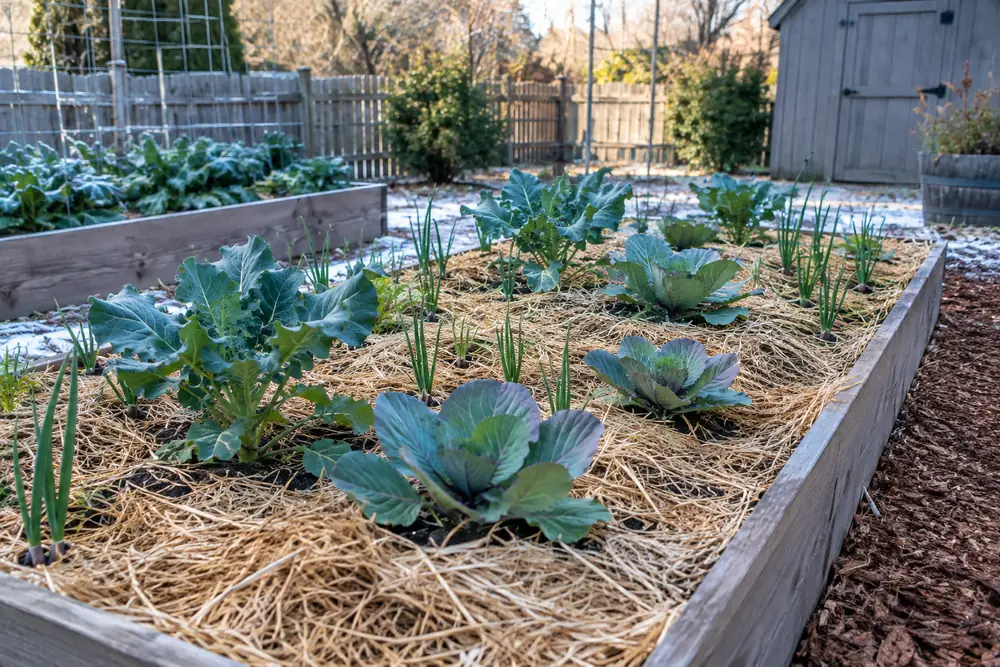
This covers much of the Upper South, the Carolinas, Georgia, Tennessee, Texas and the Pacific Northwest lowlands. Spring arrives early, so January is the main indoor seed-starting month for cool-season crops.
Zone 7: start cool-season crops indoors
- Onions and leeks: early January from seed, for transplanting in early to mid-March.
- Broccoli, cabbage, cauliflower: mid to late January. They need 5-7 weeks indoors and go out 2-4 weeks before the last frost.
- Lettuce: a tray in late January gives you transplants for March, weeks ahead of direct-sown lettuce.
- Peas: wait for February or March in most of zone 7. Clemson HGIC lists mid to late February for garden peas in the South Carolina Piedmont, and colder parts of zone 7 sow later.
Zone 8: the outdoor season starts
- Onion transplants: January and February are the main months to set out short-day onion plants in much of Texas and the Gulf South.
- Peas: in mild parts of zone 8, sow peas at the end of January or early February so they produce before summer heat.
- Potatoes: in the warmest zone 8 areas, along the Gulf Coast and in North Florida, UF/IFAS lists January through March for Irish potatoes.
- Tomatoes and peppers indoors: start late January or early February for transplants in March and April.
What to plant in January in zones 9-10
For Florida, South Texas, the Gulf Coast, Southern California and the low deserts of Arizona, January is a major planting month. Frost is rare or brief, and the cool, dry weather suits a long list of crops.
Florida (UF/IFAS planting windows that include January)
| Region | Vegetables you can plant in January |
|---|---|
| North Florida | Beets, broccoli, cabbage, carrots, kale, mustard, English peas, Irish potatoes, radishes, turnips |
| Central Florida | Beets, broccoli, cabbage, cantaloupe, carrots, cauliflower, sweet corn, cucumbers, eggplant, kale, lettuce, English peas, peppers, Irish potatoes, radishes, summer squash, tomatoes, watermelon |
| South Florida | Snap beans, beets, broccoli, cabbage, cantaloupe, carrots, collards, sweet corn, cucumbers, eggplant, kale, lettuce, English peas, peppers, Irish potatoes, radishes, spinach, summer squash, tomatoes, turnips, watermelon |
In South Florida, January is the last month in the UF/IFAS chart for beets, broccoli and potatoes, so plant them early in the month.
California and the Southwest
In California’s mild valleys and coast, January suits cool-season transplants such as broccoli, cabbage, lettuce and chard, plus perennials: UC Master Gardeners in Sacramento County list January for planting asparagus crowns and bare-root artichokes. Start tomatoes, peppers and eggplant indoors now for spring planting. In the low deserts, follow your local extension calendar, because timing there is driven by when the heat arrives.
Watch out: Even in zones 9-10, January can bring a surprise freeze. Keep frost cloth ready for tomatoes, peppers and young transplants, and cover them the evening before a forecast of 32°F or lower. Our guide to protecting plants from frost covers the best methods.
The Year-Round Vegetable Garden (2027 Edition)
Plan the whole season in one place: a 225-page month-by-month guide with calendars for six US growing regions, 50 plant profiles (tomatoes included), 5 copy-ready garden plans and 7 printable pages.
Tomato lover? Add Tomato Mastery, our seed-to-harvest tomato blueprint, for just $10 at checkout.
Get the guide ($27)Gear that helps
- Frost cloth: Protects tender transplants from a surprise January freeze in the South.
As an Amazon Associate we earn from qualifying purchases. Check current prices and reviews on Amazon.
Your January garden to-do list
- Look up your frost dates and write them at the top of this year’s garden notes.
- Draw a simple garden map and rotate plant families away from last year’s spots. Our guide on how to plan a vegetable garden has sample layouts.
- Inventory and test your seeds, then order what you need, including seed potatoes and onion plants.
- Count back from your last frost to schedule indoor seed starting. See when to start seeds indoors for crop-by-crop timing.
- Clean and sanitize trays and pots from last year to reduce damping-off.
- Check stored crops such as potatoes, onions, squash and garlic, and remove any that are soft or sprouting.
- Clean, sharpen and oil tools so they are ready for spring.
- In zones 8-10, weed and mulch the beds you are planting and keep cool-season crops watered in dry spells.
Common mistakes to avoid
- Starting tomatoes in January in the North. In zones 3-6, January tomatoes become leggy, root-bound plants by planting time. They need only 6-8 weeks indoors.
- Using old onion seed. Onion seed often loses vigor after a year. Buy fresh seed or test it first.
- Relying on a sunny window. Winter window light is too weak for seedlings. Use a light a few inches above the plants.
- Working wet soil in the South. Digging soggy soil damages its structure. Wait until a handful crumbles instead of forming a sticky ball.
- Ordering too much. Plan your beds first, then buy seed to fit the space you have.
FAQ
Can you plant anything in January?
Yes. In zones 8-10 you can plant onions, peas, potatoes and many cool-season crops outdoors. In zones 5-7, you can start onions, leeks and cool-season crops indoors. In zones 3-4, January is mainly for planning and ordering seeds.
What seeds should I start indoors in January?
Onions and leeks are the classic January starts in zones 6-7, with broccoli, cabbage, cauliflower and lettuce added in zone 7. In zones 8-10, start tomatoes, peppers and eggplant in mid to late January for spring transplants.
What can I plant in January in zone 8?
Set out onion transplants, sow peas in mild areas, and plant potatoes in the warmest parts of the zone. Indoors, start broccoli and cabbage early in the month and tomatoes and peppers late in the month.
What vegetables grow in January in Florida?
Florida gardeners can plant broccoli, cabbage, carrots, kale, lettuce, peas, potatoes, radishes and turnips in January. Central and South Florida can also plant tomatoes, peppers, eggplant, squash, cucumbers and melons.
Is January too early to start a garden?
Not for planning. January is the best time to map beds, order seeds and set up lights. Outdoor planting waits for spring in zones 3-7, but onions started indoors in late January give zone 6 gardeners a strong head start.
Keep reading
Sources
- Florida Vegetable Gardening Guide – UF/IFAS Extension
- Starting seeds indoors – University of Minnesota Extension
- Winter Sowing in the Northern Great Plains – South Dakota State University Extension
- Early Spring Vegetables – Clemson Cooperative Extension HGIC
- Monthly Vegetable Gardening Tips – UC Master Gardeners of Sacramento County
- Vegetable Planting Guide – Colorado State University Extension
- USDA Plant Hardiness Zone Map – USDA Agricultural Research Service