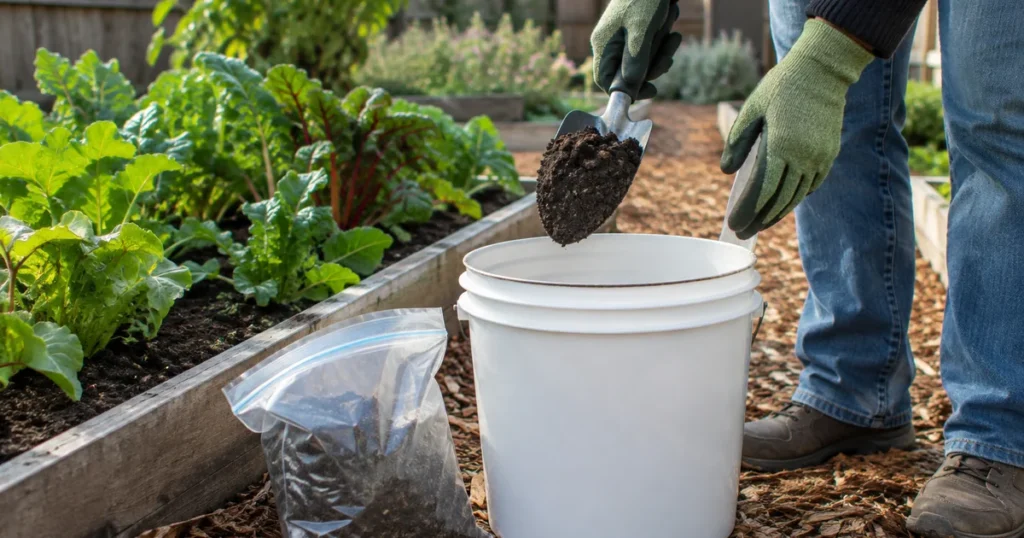
The most reliable way to test soil pH is to mail a soil sample to your state’s land-grant university soil lab through your local extension office. For a small fee, often $10-$30, you get your pH, key nutrient levels and exact lime or sulfur amounts for your garden. Home kits and meters give a rough idea, but they are not accurate enough to decide how much lime to spread.
Quick answer
- Most vegetables grow best at pH 6.0-7.0; potatoes and blueberries prefer more acidic soil.
- For a lab test, collect 10-15 cores, 6-8 inches deep, mix them in a clean plastic bucket and send about 2 cups of the blend.
- Test in late summer or fall so lime has months to work before spring planting; retest every 3-4 years.
- To raise pH, use limestone; to lower it, use elemental sulfur. Both take months.
- Never guess amounts: apply exactly what your soil test recommends.
In this guide
- What is soil pH and why does it matter?
- Soil test options: lab vs. home kit vs. meter
- How to take a soil sample for a lab test
- When to test soil pH, by zone
- How to test soil pH at home
- How to read your soil test results
- Best soil pH for vegetables
- How to raise soil pH with lime
- How to lower soil pH with sulfur
- Common mistakes to avoid
- FAQ
Want every planting date for your region in one place? Get The Year-Round Vegetable Garden (225 pages, $27).
What is soil pH and why does it matter?
Soil pH measures how acidic or alkaline your soil is on a scale from 0 to 14. A pH of 7.0 is neutral, lower numbers are acidic and higher numbers are alkaline. Each step is a tenfold change, so soil at pH 5.0 is ten times more acidic than soil at pH 6.0.
pH matters because it controls which nutrients your plants can actually take up. In very acidic soil, phosphorus, calcium and magnesium become less available, and aluminum and manganese can reach toxic levels. In alkaline soil, iron, manganese and phosphorus get locked up.
Region plays a big role. Soils in the rainy East, the Southeast and the Pacific Northwest tend to be acidic. Soils in much of the Great Plains, the Mountain West and the Southwest are often alkaline. That is why a soil test beats any general rule.
Soil test options: lab vs. home kit vs. meter
| Method | Typical cost | What you get | Accuracy |
|---|---|---|---|
| State extension or university soil lab | Often $10-$30 per sample (check your state lab) | pH, buffer pH or lime requirement, phosphorus, potassium, often organic matter, plus written lime and fertilizer recommendations | High; uses calibrated equipment and local research |
| Home chemical kit (color capsules or strips) | About $10-$25 | Rough pH, sometimes rough N-P-K | Approximate; color reading is subjective |
| Probe-style pH meter | About $10-$40 | A pH number on a dial | Often unreliable, especially cheap meters with no calibration |
| Digital pH meter with calibration solutions | $50 and up | pH of a soil-water slurry | Fair to good if calibrated before each use |
The big advantage of a lab test is not just a more accurate pH. Labs also measure how strongly your soil resists pH change (its buffering capacity), which is what determines how much lime or sulfur you need. Two soils at pH 5.5 can need very different amounts of lime. No home kit can tell you that.
How to take a soil sample for a lab test
A soil test is only as good as the sample. Follow these steps, then check your state lab’s website for its specific form and mailing instructions.
- Get a kit or form. Contact your county extension office or your state’s university soil lab. Many offer free sample bags and forms, or let you download the form and mail soil in a zip-top bag.
- Use clean tools. A stainless steel trowel, spade or soil probe and a clean plastic bucket. Avoid galvanized, brass or bronze tools, which can add zinc or copper to the sample.
- Sample one area at a time. Keep the vegetable garden separate from the lawn and flower beds, because each is managed differently.
- Remove surface debris. Scrape away mulch, plants and thatch.
- Dig to the right depth. For vegetable beds, take soil from the surface down to 6-8 inches, which is the root zone and the depth where amendments get mixed in. For lawns, labs usually ask for 3-4 inches.
- Take 10-15 cores. Walk a zigzag pattern across the bed and take a thin, uniform slice from each spot. Avoid unusual spots such as old compost piles or where you spilled fertilizer.
- Mix thoroughly. Break up clumps and remove roots and stones. This blend is your composite sample.
- Air-dry if your lab asks. Spread it on clean paper indoors; never dry it in an oven or microwave.
- Send about 2 cups (or the amount your lab requests), with the form. Note that you are growing vegetables so the recommendations fit.
Garden hack: Sample in late summer or early fall, before the spring rush at state labs. Results come back faster, and you get the whole winter for lime to react. Mark the date on your calendar to retest every 3-4 years, or every 2-3 years on sandy soil.
How much does a soil test cost?
A standard garden soil test from a state university lab often costs about $10-$30 per sample. For example, the University of Wisconsin lab charges $15 for its standard lawn and garden test, with optional add-ons such as a lead test. A few states offer free or very cheap tests for residents during part of the year. Prices change, so check your own state lab.
Gear that helps
- Stainless steel soil sampling probe: Takes clean, even cores at the right depth without zinc or copper contamination from galvanized tools.
As an Amazon Associate we earn from qualifying purchases. Check current prices and reviews on Amazon.
When to test soil pH, by zone
Lime and sulfur work slowly, so test well before you plan to plant. Labs also ask you to wait 6-8 weeks after liming or fertilizing before you sample. The windows below are approximate; check your local frost dates and extension office, because microclimates vary.
| Zone | Best time to sample | Apply lime or sulfur | Note |
|---|---|---|---|
| 3-4 | Mid-August to late September | September, before the ground freezes | Soil warm enough for sulfur only from late spring to early fall |
| 5 | Late August to early October | September to October | Spring testing works but leaves less time for lime |
| 6 | September to October | October to November | Fall lime is ready for April planting |
| 7 | September to November | October to December | Lime can go on during mild winter weather |
| 8 | Midsummer, before fall planting, or late fall for spring | August to September, or November to December | Two main seasons; test before the bigger one |
| 9-10 | Late spring or summer | Summer, ahead of the fall-winter garden | Many soils here are alkaline or sandy; retest more often |
Unsure of your zone? Start with our guide to USDA hardiness zones and our frost dates by zone page.
How to test soil pH at home
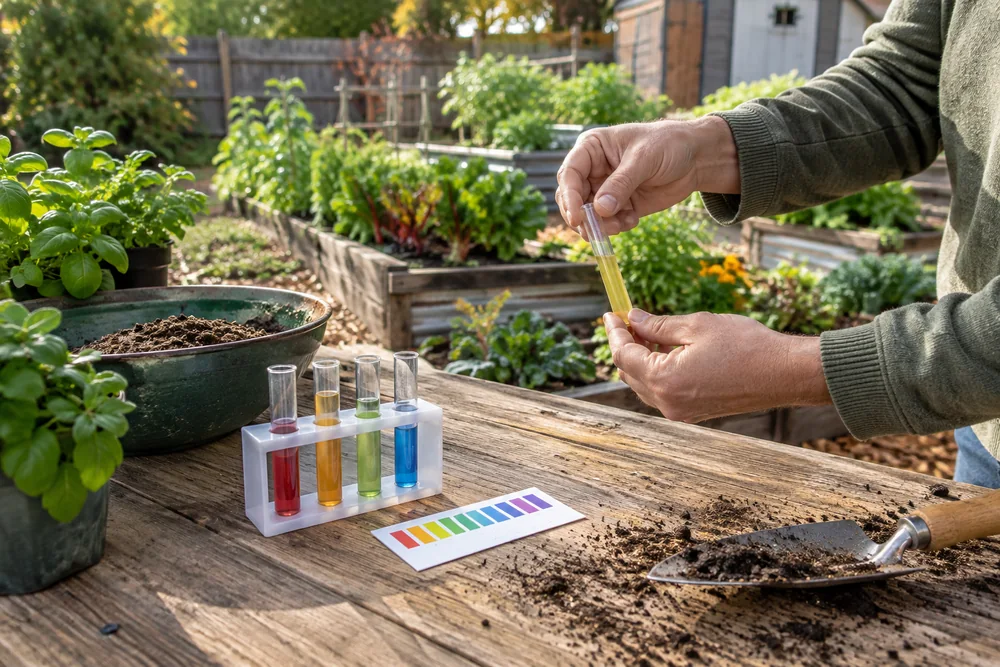
Home tests are handy for quick checks between lab tests, or for a container or a single bed. Use them for a rough reading, not for calculating lime.
Using a home kit
Collect soil the same way as for a lab test (several spots, 6-8 inches deep, mixed well). Use distilled water, not tap water, which can be alkaline. Follow the kit’s directions, let particles settle and compare the color in good daylight. If the result surprises you, confirm it with a lab.
Using a pH meter
Cheap two-prong probe meters are notoriously inconsistent. If you want one, pick a digital meter that reads a soil-and-distilled-water slurry, and calibrate it before every use.
Gear that helps
- Digital soil pH meter with calibration buffers: More reliable than cheap probe meters for quick checks between lab tests.
As an Amazon Associate we earn from qualifying purchases. Check current prices and reviews on Amazon.
How to read your soil test results
Your report will usually show:
- Soil pH (water pH): the current acidity.
- Buffer pH or lime requirement: how much lime is needed to raise pH to the target. Only reported for acidic soils.
- Phosphorus (P) and potassium (K): often rated low, medium, optimum or high.
- Organic matter: often included; 3-5% is a good long-term goal for vegetable beds.
- Recommendations: lime or sulfur and fertilizer amounts, usually in pounds per 100 or 1,000 square feet.
If anything is unclear, call your county extension office; Master Gardener volunteers often help with interpretation.
Best soil pH for vegetables
Most vegetables do well between 6.0 and 7.0, and many are happiest near 6.5. These preferred ranges are guidelines drawn from extension targets; your crops will usually still grow a little outside them.
| Crop | Preferred pH range |
|---|---|
| Asparagus | 6.5-7.5 |
| Beans (snap, lima) | 6.0-7.0 |
| Beets | 6.2-7.0 |
| Broccoli, cabbage, cauliflower, kale | 6.2-7.0 |
| Carrots | 5.5-7.0 |
| Cucumbers | 6.0-7.0 |
| Garlic and onions | 6.0-7.0 |
| Lettuce | 6.0-7.0 |
| Peas | 6.0-7.0 |
| Peppers | 6.0-7.0 |
| Potatoes | 5.0-6.5 (lower end helps reduce scab) |
| Spinach | 6.2-7.0 |
| Squash and pumpkins | 6.0-7.0 |
| Sweet corn | 6.0-7.0 |
| Sweet potatoes | 5.5-6.5 |
| Tomatoes | 6.0-7.0 |
| Watermelon | 5.5-6.5 |
| Blueberries | 4.5-5.5 |
Grow blueberries in their own bed or in containers. Their acidic target is far too low for the rest of the vegetable garden.
The Year-Round Vegetable Garden (2027 Edition)
Plan the whole season in one place: a 225-page month-by-month guide with calendars for six US growing regions, 50 plant profiles (tomatoes included), 5 copy-ready garden plans and 7 printable pages.
Tomato lover? Add Tomato Mastery, our seed-to-harvest tomato blueprint, for just $10 at checkout.
Get the guide ($27)How to raise soil pH with lime
If your test says your soil is too acidic, the lab will recommend ground agricultural limestone. Lime neutralizes acidity slowly, which is why fall is the best time to apply it.
- Calcitic lime is mostly calcium carbonate.
- Dolomitic lime contains both calcium and magnesium carbonate. Choose it only when your soil test shows low magnesium; otherwise use calcitic.
- Pelletized lime is finely ground limestone pressed into small pellets with a binder. It spreads cleanly with a regular lawn spreader and works like finely ground lime once the pellets dissolve, though it costs more per pound.
- Hydrated (quick) lime acts fast but is caustic, easy to overapply and unpleasant to handle. Home gardeners can skip it.
Spread lime evenly and mix it into the top 6-8 inches of soil if you are preparing a new bed. Ohio State University Extension suggests applying it 4-5 months before planting. On established beds, spread it on the surface and let it work in slowly.
Wood ash also raises pH, and quickly. Use it only in soil that tests acidic, in small amounts, and never in soil that is already near or above 7.0.
Gear that helps
- Pelletized garden lime: Spreads cleanly with a lawn spreader when your soil test calls for lime.
As an Amazon Associate we earn from qualifying purchases. Check current prices and reviews on Amazon.
How to lower soil pH with sulfur
Lowering pH is harder than raising it. The standard choice is elemental sulfur, which soil bacteria slowly convert into acid. Iowa State University Extension notes it needs about 3-6 months of warm soil, so apply it when soil is above about 55°F, ideally in spring or early fall, and mix it in before planting.
- Aluminum sulfate works faster but can build up aluminum to levels that harm plants. It is not recommended for vegetable gardens.
- Iron sulfate works faster than sulfur but takes much more product and can burn plants if overused.
- Soils that are naturally alkaline, especially ones with free lime (they fizz with vinegar), tend to drift back to their original pH. In much of the West, it is often easier to grow in raised beds or choose crops that tolerate slightly alkaline soil than to fight the native pH.
Watch out: Never guess lime or sulfur amounts. Too much lime can push pH above 7.5 and cause nutrient deficiencies that take years to correct. Too much sulfur can burn roots. Follow your lab recommendation, apply large amounts in split doses, and retest 6-12 months later.
Gear that helps
- Elemental garden sulfur (soil acidifier): The recommended slow, safe way to lower pH, especially for blueberry beds.
As an Amazon Associate we earn from qualifying purchases. Check current prices and reviews on Amazon.
Common mistakes to avoid
- Liming every year out of habit. Many soils never need lime, and some are already alkaline.
- Sampling only one spot. A single scoop can be off by a full pH point; take 10-15 cores.
- Sampling too shallow. Vegetable beds should be sampled 6-8 inches deep.
- Mixing lawn and garden soil in one sample. Send separate samples.
- Trusting a cheap probe meter. Confirm odd readings with a lab.
- Using coffee grounds or pine needles to lower pH. Their effect on soil pH is minimal; use elemental sulfur if a test calls for it.
Garden hack: Keep every soil test report in one folder, with the date and what you applied. After two or three tests, you will see how fast your soil drifts and can adjust lime and compost with confidence. If you are building new beds, pair this with our garden soil guide and the steps in improving clay soil.
FAQ
What is the best soil pH for a vegetable garden?
Most vegetables grow best between pH 6.0 and 7.0, with 6.5 a good target for a mixed garden. Potatoes, sweet potatoes and watermelon tolerate slightly lower pH, and blueberries need 4.5-5.5.
How often should I test my garden soil?
Every 3-4 years for most gardens, and every 2-3 years for sandy soil or after you have applied lime or sulfur. Test sooner if plants show unexplained yellowing or poor growth.
Are home soil pH meters accurate?
Cheap probe meters are often unreliable. Calibrated digital meters and chemical kits give a rough reading, but only a lab can measure buffer pH and tell you how much lime or sulfur to apply.
How long does lime take to change soil pH?
Several months. Finely ground or pelletized lime starts reacting within weeks once moist, but full results take a season or more. Apply it in fall for spring planting and retest after 6-12 months.
Should I use dolomitic or calcitic lime?
Use dolomitic lime only when your soil test shows low magnesium. Otherwise use calcitic lime, so you do not build up excess magnesium.
How do I lower soil pH quickly?
There is no safe quick fix. Elemental sulfur is the recommended option, but it needs about 3-6 months of warm soil to work. Faster products such as aluminum sulfate can harm plants.
Keep reading
Sources
- Soil Sampling for Residential Areas – Virginia Cooperative Extension
- Collecting Soil Samples – University of Illinois Extension
- Lawn and Garden Soil Testing – University of Wisconsin Soil and Forage Lab
- How to Change Your Soil’s pH – Iowa State University Extension and Outreach
- You Have Your Soil Test Results, Now What? – Ohio State University Extension
- Target Soil pH Values for Vegetable Crops – University of Maryland Extension
- Testing Soil pH – Oregon State University Extension Service