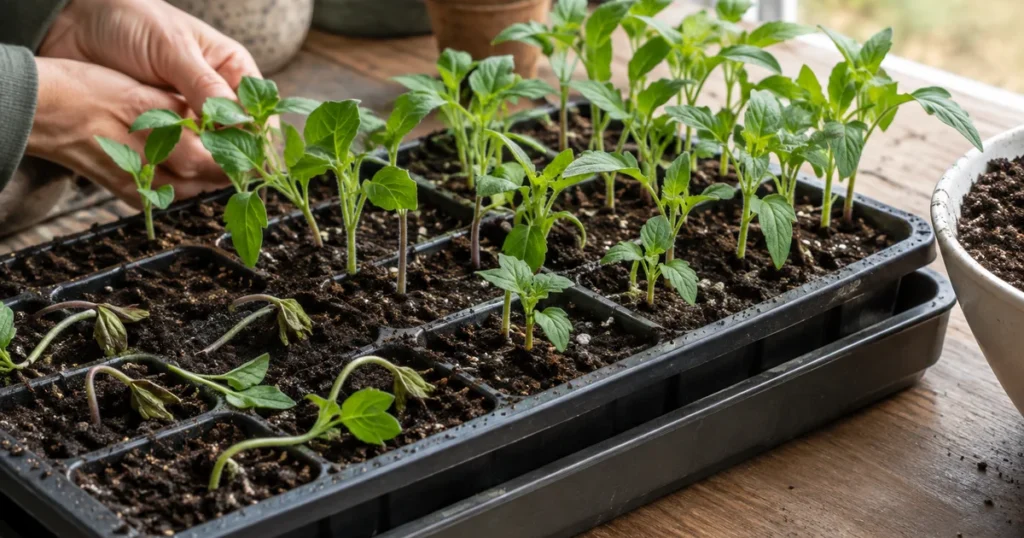
Damping off is a seedling disease caused by soilborne water molds and fungi, mainly Pythium, Rhizoctonia and Fusarium. Seeds rot before they sprout, or healthy-looking seedlings pinch at the soil line and collapse overnight. It can’t be cured once a seedling falls over, but clean supplies, a sterile mix, careful watering, warmth and airflow prevent most cases.
Quick answer
- Signs: seedlings with a thin, water-soaked or brown stem at the soil line that topple over, or seeds that never come up.
- Main causes: Pythium (cool, wet mix), Rhizoctonia and Fusarium (warmer conditions), plus Phytophthora and others.
- Prevent it with fresh seed-starting mix, sanitized trays, bottom watering, a fan, and bright light.
- Fallen seedlings can’t be saved. Remove them and the mix around them, then fix the conditions.
- Cinnamon is a popular home remedy, but there is little scientific evidence it works.
In this guide
Want every planting date for your region in one place? Get The Year-Round Vegetable Garden (225 pages, $27).
What does damping off look like?
Extension plant pathologists divide it into two phases.
- Pre-emergence damping off: seeds rot in the mix, or sprouts die before reaching the surface. UC IPM describes infected seeds as soft, mushy and dark brown. All you see is a tray with patchy or missing germination.
- Post-emergence damping off: seedlings come up normally, then develop a water-soaked, brown or pinched area on the stem at or just below the soil line. The stem can’t hold the plant, and it flops over, often overnight, while its leaves are still green.
It usually spreads outward in patches, so one fallen seedling is often followed by its neighbors. Older seedlings sometimes survive with a hard, thin, dark stem called “wirestem,” mostly in cabbage-family crops, and they rarely grow well.
What causes damping off?
Several organisms that live in soil, dust and on old pots cause the same symptoms. NC State Extension notes that the main culprits favor different conditions:
| Pathogen | Favored by | Typical attack |
|---|---|---|
| Pythium (a water mold) | Cool, wet, poorly drained mix; overwatering | Seeds and roots below the soil line |
| Phytophthora (a water mold) | Cool, wet conditions | Roots and stem base |
| Rhizoctonia | Moderate moisture, warmer temperatures | Stem at the soil line, reddish-brown lesions |
| Fusarium | Warmer, drier conditions | Stem and roots |
UC IPM names Pythium as the most common cause. These organisms are almost everywhere, so the goal isn’t total sterility. It’s giving seedlings conditions where they grow faster than the disease can attack. Slow, stressed seedlings in cold, soggy mix are the easiest targets.
How to prevent damping off: checklist
Start clean
- Use fresh, sterile seed-starting mix. Never garden soil or old potting mix, and avoid unfinished compost, which UC IPM notes can support these pathogens. See our seed starting mix guide.
- Sanitize reused trays and pots. Wash off old soil, then soak them in 1 part household bleach to 9 parts water for about 30 minutes and rinse well, as University of Wisconsin Extension recommends. More tips in our seed starting trays guide.
- Buy quality seed from a reputable source. High-quality seed sprouts fast and is less likely to carry pathogens.
- Use clean water, not water from a rain barrel or pond, for seedlings.
Water carefully
- Keep the mix moist, never soggy. Overwatering is the top trigger for Pythium.
- Bottom water. Pour water into the tray, let the cells soak it up for 15-30 minutes, then pour off what’s left. The surface stays drier, right where stems are vulnerable.
- Water in the morning so the surface dries during the day.
Keep them warm and growing fast
- Use a heat mat for germination. University of Minnesota Extension notes bottom heat reduces damping off by warming the mix surface where these organisms develop.
- Sow at the right depth, not too deep, so seedlings emerge quickly.
- Remove the humidity dome as soon as most seeds have sprouted.
- Give strong light right after germination. Weak, stretched seedlings are more susceptible; see grow lights for seedlings.
Give them air
- Run a small fan on low near the seedlings for a few hours a day.
- Thin crowded seedlings by snipping extras at soil level.
- Cover seeds with fine vermiculite instead of mix. It dries quickly at the surface; the University of Saskatchewan recommends a sterile vermiculite cover.
Garden hack: Lift a cell tray before you water. Light means water it; heavy means wait. This habit alone prevents most of the overwatering that leads to damping off.
Gear that helps
- Sterile seed starting mix: A clean, fine mix is the first line of defense
- Small clip-on fan: Gentle airflow keeps the surface dry and stems sturdy
- Bottom-watering trays without holes: Makes bottom watering easy, keeping stems drier
As an Amazon Associate we earn from qualifying purchases. Check current prices and reviews on Amazon.
What to do when damping off appears
- Remove fallen seedlings right away, along with a bit of the mix around them. Put them in the trash, not the compost.
- Let the surface dry. Hold off watering until the top of the mix is dry to the touch, then bottom water.
- Increase airflow and light. Turn on a fan, take off any dome, and lower the lights closer to the seedlings.
- Isolate the tray from healthy ones, and don’t share bottom-watering trays between them.
- If more than a few cells are hit, start over: discard the mix, sanitize the tray and resow with fresh mix. Most crops still have time, especially if you’re within the window on our seed-starting calendar.
- Transplant healthy survivors into clean containers with fresh mix once they have true leaves, handling them by the leaves, not the stem.
NC State Extension notes fungicide drenches are used only after symptoms appear and can stunt young seedlings. For home gardeners, some biological products containing beneficial microbes such as Trichoderma or Streptomyces are labeled for preventing damping off. If you use one, make sure it is labeled for vegetable seedlings and follow the label.
Watch out: A seedling that has already fallen over will not recover, even if it looks green. Don’t keep it in the tray hoping it stands back up; it only spreads the problem.
The Year-Round Vegetable Garden (2027 Edition)
Plan the whole season in one place: a 225-page month-by-month guide with calendars for six US growing regions, 50 plant profiles (tomatoes included), 5 copy-ready garden plans and 7 printable pages.
Tomato lover? Add Tomato Mastery, our seed-to-harvest tomato blueprint, for just $10 at checkout.
Get the guide ($27)Gear that helps
- Biological fungicide labeled for seedlings: Preventive option for gardeners with repeat problems; follow the label
As an Amazon Associate we earn from qualifying purchases. Check current prices and reviews on Amazon.
Damping off outdoors
Direct-sown seeds can damp off too, especially in cold, wet spring soil. Beans, peas, cucumbers and squash sown too early often rot before they emerge. UC IPM recommends sowing when the soil is warm enough for rapid germination, often 65-70°F for warm-season crops.
- In zones 3-6, wait to sow beans, corn and squash until well after the last frost, when the soil has warmed.
- In zones 7-10, early spring sowing is easier, but heavy, poorly drained soil can still cause problems in rainy spells.
- Raised beds and compost-rich soil drain better and warm faster.
Check your local frost dates and soil temperature, since microclimates vary.
Damping off myths and home remedies
Cinnamon
Sprinkling ground cinnamon on the soil surface is the most popular home remedy. The University of Saskatchewan’s gardening program states there is no scientific study showing it works in this use, so there’s no recommended amount. It probably does no harm, but it’s not a substitute for sanitation and careful watering.
Chamomile tea
Watering with cooled chamomile tea is another folk remedy. There is little published evidence that it prevents damping off in home seed starting.
“More water will perk them up”
A collapsing seedling looks wilted, so the instinct is to water. That’s the opposite of what helps, since wet mix favors the most common pathogen.
“Sterile mix means no damping off”
Sterile mix helps a lot, but pathogens can arrive on dirty trays, tools, dust or splashed water. Some sources also note that sterile mix lacks beneficial microbes that compete with pathogens, so good conditions still matter.
Common mistakes to avoid
- Reusing last year’s trays without washing and sanitizing them.
- Filling cells with garden soil or old potting mix.
- Keeping the humidity dome on after seeds sprout.
- Watering on a schedule instead of when the tray is light.
- Starting seeds in a cold basement without a heat mat.
- Sowing too thickly and never thinning.
FAQ
Can seedlings recover from damping off?
No. Once the stem is pinched and the seedling falls over, it won’t recover. Remove it and protect the rest of the tray by drying the surface and increasing airflow.
What does damping off look like?
A thin, water-soaked or brown section of stem at the soil line, after which the seedling topples while its leaves are still green. Seeds that never come up can also be a sign.
Does cinnamon prevent damping off?
The evidence is limited. There is no scientific study showing it works for this use. Clean supplies, a sterile mix and careful watering are proven prevention.
Can I reuse soil after damping off?
No. Throw it out, not into the compost you’ll use on seedlings, and start with fresh mix and sanitized trays.
What fungus causes damping off?
Several. Pythium is the most common, along with Rhizoctonia, Fusarium and Phytophthora. Pythium and Phytophthora are technically water molds, not true fungi.
Does bottom watering prevent damping off?
It helps. Bottom watering keeps the surface, where stems are most vulnerable, drier. Pour off any water left in the tray after 15-30 minutes.
Keep reading
Sources
- Damping-Off in Flower and Vegetable Seedlings – NC State Extension
- Damping-Off Diseases in the Garden – UC Statewide IPM Program
- Dampening Damping-Off: Tips on Seed Starting to Avoid Disease – University of Wisconsin-Madison Extension
- Damping-Off and Root Rots of House Plants and Garden Flowers – University of Illinois
- Damping Off – Gardening at USask, University of Saskatchewan
- Starting Seeds Indoors – University of Minnesota Extension