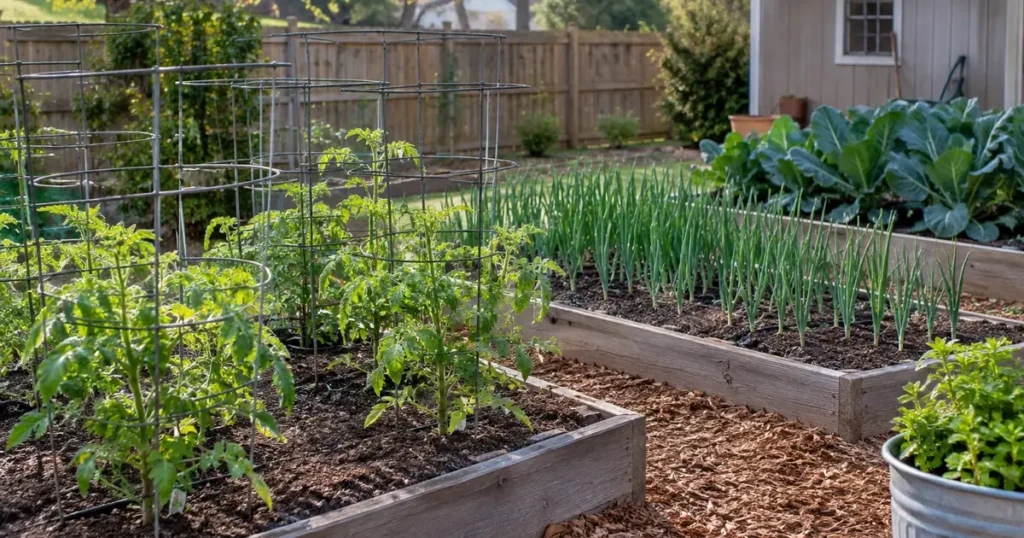
In most of zone 8, you plant potatoes, onions, peas and broccoli in late January through February, set out tomatoes and peppers in late March or April, and plant a big fall garden from August through October. The Pacific Northwest is the exception: zone 8 there has mild winters but cool summers, so warm-season crops go in much later, around mid-May.
Quick answer
- Typical last spring frost in zone 8: early March to early April. Typical first fall frost: early November to early December. These are typical ranges, so check your local dates.
- Frost-free season: about 220-260 days in the Southeast and Texas, with two full growing seasons.
- Southern zone 8: start tomatoes indoors mid-January to mid-February and transplant in late March to April. Plant short-day onions and potatoes in late January and February.
- Fall is a main season: transplant fall tomatoes in late June to mid-July and broccoli, cabbage and collards in August and September.
- Pacific Northwest zone 8: plant tomatoes, beans and squash in mid to late May, and use the long, cool fall and winter for brassicas, garlic and overwintered greens.
In this guide
- What zone 8 means for your garden
- Zone 8 planting schedule, month by month (Southeast and Texas)
- When to plant vegetables in zone 8: crop-by-crop table
- Pacific Northwest zone 8: a different calendar
- Managing heat and humidity in southern zone 8
- Fall and winter: the second main season
- Common mistakes to avoid
- FAQ
Want every planting date for your region in one place? Get The Year-Round Vegetable Garden (225 pages, $27).
What zone 8 means for your garden
On the 2023 USDA Plant Hardiness Zone Map, zone 8 means the coldest night of an average winter falls between 10°F and 20°F (8a: 10 to 15°F, 8b: 15 to 20°F). Collards, kale, cabbage, garlic and onions handle that without trouble, which is why winter gardens are so productive here.
Your zone does not set your frost dates, though. Those come from NOAA climate normals for nearby weather stations. Dallas-Fort Worth, for example, has an average last freeze around March 12 and first freeze around November 22, according to the National Weather Service. Look up your own on our frost dates by zone page, and adjust this schedule, because microclimates and elevation shift dates by weeks.
Where is zone 8?
- Southeast and South: Atlanta, Athens and Augusta (GA), Columbia and Greenville (SC), Raleigh and Charlotte (NC), Birmingham and Montgomery (AL), Jackson (MS), Memphis (TN), Little Rock (AR), Shreveport (LA), Norfolk (VA).
- Texas: Dallas, Fort Worth, Waco and Tyler.
- Pacific Northwest: Portland, Salem and Eugene (OR), Tacoma, Olympia and Bellingham (WA), plus much of the Seattle area.
Need to confirm yours? Our USDA hardiness zones guide shows how to find your zone by ZIP code.
Zone 8 planting schedule, month by month (Southeast and Texas)
This calendar fits the southern, humid-summer part of zone 8, with a last frost in mid-March and a first frost in mid to late November. Gardeners in 8a or at higher elevations can slide spring dates a week or two later. Pacific Northwest gardeners should use the separate section below.
| Month | Start indoors | Plant outside | Harvest | Key tasks |
|---|---|---|---|---|
| January | Peppers and eggplant (early to mid-month), tomatoes (late month) | Short-day onion transplants, English peas, spinach; potatoes late in the month | Collards, kale, cabbage, carrots, lettuce under cover | Test soil, add compost, order seed potatoes |
| February | Tomatoes (by mid-month) | Potatoes, peas, onions, broccoli and cabbage transplants, lettuce, carrots, beets, radishes, kale | Greens, carrots, broccoli side shoots | Keep frost cloth ready for cold snaps |
| March | Cucumbers and squash (optional) | Lettuce, beets, radishes; sweet corn from mid-month; tomatoes and beans late in the month in 8b | Radishes, lettuce, spinach, first peas | Harden off tomatoes and peppers |
| April | Nothing needed | Tomatoes, peppers, eggplant, beans, corn, cucumbers, squash; sweet potato slips and southern peas late month | Peas, lettuce, broccoli, cabbage, strawberries | Mulch, install drip irrigation |
| May | Nothing needed | Okra, sweet potatoes, southern peas, last beans and corn | Potatoes, onions, garlic, beets, carrots, squash, cucumbers, first tomatoes | Scout for squash vine borers and stink bugs |
| June | Tomatoes for fall (early month) | Okra, southern peas, sweet potatoes (by mid-month) | Tomatoes, peppers, corn, beans, squash | Water deeply, add shade cloth for young plants |
| July | Broccoli, cabbage, collards for fall | Fall tomato transplants (early month), peppers in 8b, beans; cucumbers and squash late month | Okra, peppers, eggplant, southern peas, melons | Solarize empty beds, pull tired spring plants |
| August | Lettuce for fall transplants | Broccoli, cabbage, collards and kale transplants; beans, squash, cucumbers early; carrots and beets late month | Okra, peppers, sweet potatoes (late month) | Shade seedlings, water daily until established |
| September | Nothing needed | Lettuce, spinach, carrots, beets, radishes, turnips, kale; more brassica transplants; fall peas | Sweet potatoes, winter squash, peppers, okra, first fall tomatoes | Sow cover crops on unused beds |
| October | Onions from seed | Spinach, lettuce, radishes, onion sets, strawberry plants; garlic late month | Fall tomatoes, peppers, beans, greens, broccoli | Compost leaves, have covers ready |
| November | Nothing needed | Garlic, shallots, lettuce and spinach under cover | Broccoli, cabbage, collards, kale, carrots, turnips, lettuce | Pick tender crops before the first frost, mulch |
| December | Broccoli, cabbage and lettuce for late-winter planting (late month) | Finish garlic early in the month | Greens, carrots, cabbage, broccoli side shoots | Cover greens on nights below about 25°F |
Garden hack: In southern zone 8, your seed-starting season begins right after the holidays. Count back 8-10 weeks from your planned pepper planting date and 6-8 weeks for tomatoes. Our guide on when to start seeds indoors has a printable countdown, and what to plant in January lists everything that goes in the ground this early.
Gear that helps
- Seed starting kit with heat mat and grow light: Southern zone 8 seed starting begins in January for peppers and tomatoes
As an Amazon Associate we earn from qualifying purchases. Check current prices and reviews on Amazon.
When to plant vegetables in zone 8: crop-by-crop table
These windows are adapted from Clemson HGIC (South Carolina Piedmont and coast), UGA Extension and Texas A&M AgriLife for north-central Texas. They fit the Southeast and Texas, not the Pacific Northwest.
| Crop | Start indoors | Spring planting | Fall planting |
|---|---|---|---|
| Tomatoes | Mid-January to mid-February | Late March to April | Late June to mid-July transplants |
| Peppers | Early January to early February | April to May | Mid to late July transplants (8b) |
| Eggplant | Early January to early February | April to May | July transplants (8b) |
| Cucumbers | Optional | April to May | Late July to August |
| Summer squash | Optional | April to May | Late July to August |
| Snap beans | No | Late March to May | July to early August |
| Sweet corn | No | Mid-March to April | Not recommended |
| English peas | No | Mid-January to February | September to October |
| Lettuce | December to January | February to March | September to October |
| Spinach | No | Late January to early March | September to October |
| Kale and collards | December to January | February to March | August to September |
| Broccoli | December to early January | February to mid-March | August to early September transplants |
| Cabbage | December to early January | February to mid-March | August to September transplants |
| Carrots | No | Late January to March | Late August to September |
| Beets | No | February to March | August to September |
| Radishes | No | February to April | September to October |
| Onions (short-day) | Seed in October to November | Transplants January to February | Seed or sets September to November |
| Potatoes | No | Late January to early March | Not recommended for most gardens |
| Garlic | No | Not recommended | Late October to early December |
| Strawberries | No | Dormant plants in February to March | Plants in October to November |
| Okra | No | Late April to June | Produces until frost |
| Sweet potatoes | Slips | Late April to June | Not recommended |
| Southern peas | No | Late April to July | Early August at the latest |
Why short-day onions matter in zone 8
Onions form bulbs in response to day length. In the South, summer days never get long enough to trigger long-day varieties, so they make leaves but no bulbs. Choose short-day types such as Granex, Texas Grano or Red Creole and set transplants out in January and February. They bulb as days lengthen in spring and are ready in May.
Gear that helps
- Short-day onion transplants: The right onion type for bulbing in the South
As an Amazon Associate we earn from qualifying purchases. Check current prices and reviews on Amazon.
Pacific Northwest zone 8: a different calendar
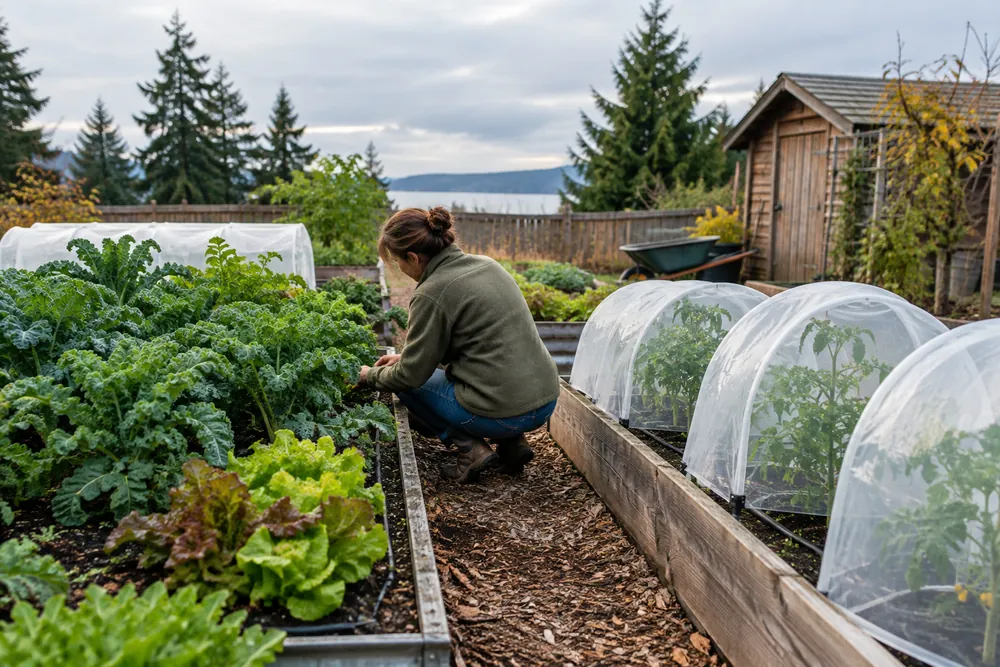
Portland, Salem, Eugene and the Puget Sound lowlands share zone 8 with Georgia and Texas, but their summers are nothing alike. Western Oregon and Washington have mild, wet winters and dry summers with warm days and cool nights, often in the 50s°F. Oregon State University Extension puts the western Oregon season at roughly 150 to 250 days. Soil warms slowly, and heat-loving crops struggle.
- Tomatoes and peppers: start indoors late March to early April and transplant in mid to late May, once soil reaches 60°F. Choose early, short-season varieties and use black plastic mulch or cloches.
- Beans, squash, cucumbers and corn: sow from mid-May into June. Cucumbers rot in cold, wet soil, so patience pays.
- Peas, lettuce, potatoes and onions: plant from February through April. Grow long-day or intermediate-day onions here, not short-day ones.
- Fall and winter crops: WSU Extension recommends sowing many fall crops by mid-July and setting broccoli and Brussels sprouts transplants out by about August 1. Spinach sown in September can overwinter for spring.
- Garlic: late October to about November 10, per WSU Extension in western Washington.
- Skip or trial: okra, sweet potatoes and southern peas rarely get enough heat.
The PNW’s dry summer means you water from July through September, while winter rain makes raised beds and good drainage a must.
Gear that helps
- Black plastic mulch film: Warms cool PNW soil for tomatoes, peppers and squash
As an Amazon Associate we earn from qualifying purchases. Check current prices and reviews on Amazon.
Managing heat and humidity in southern zone 8
Summer, not winter, is the hard season in the Southeast and Texas. Highs in the 90s and muggy nights last for weeks.
- Plant tomatoes early. Tomato fruit set drops when nights stay above about 75°F and days run above about 90°F. Getting transplants in by early April gives you a harvest before the worst of the heat.
- Use shade cloth. A 30-40% shade cloth over peppers and young fall transplants lowers leaf temperature and reduces sunscald.
- Mulch thickly. Three inches of straw or pine straw keeps roots cooler and cuts watering.
- Water in the morning at the soil line. Wet leaves overnight invite fungal disease in humid weather.
- Solarize or cover crop empty beds. Clear plastic in July or a summer cover crop of cowpeas or buckwheat keeps weeds and nematodes in check before fall planting.
The Year-Round Vegetable Garden (2027 Edition)
Plan the whole season in one place: a 225-page month-by-month guide with calendars for six US growing regions, 50 plant profiles (tomatoes included), 5 copy-ready garden plans and 7 printable pages.
Tomato lover? Add Tomato Mastery, our seed-to-harvest tomato blueprint, for just $10 at checkout.
Get the guide ($27)Gear that helps
- Shade cloth 30-40%: Reduces heat stress and sunscald on peppers and fall transplants
As an Amazon Associate we earn from qualifying purchases. Check current prices and reviews on Amazon.
Fall and winter: the second main season
In southern zone 8, fall planting gives some of the best harvests of the year. Broccoli, cabbage, collards, carrots and lettuce mature in cool, sunny weather with fewer pests. Fall tomatoes set out in early July often produce right up to the first frost.
Collards, kale, cabbage and spinach shrug off most zone 8 freezes. Cover lettuce, broccoli heads and young transplants when the forecast drops below about 28°F.
Watch out: Fall transplants set out in August face soil temperatures above 85°F and strong sun. Plant in the evening, water daily for the first week and shade them with row cover or shade cloth, or many will wilt and die in the first few days.
Common mistakes to avoid
- Following a northern calendar and planting tomatoes in late May, just in time for the heat to stop fruit set.
- Buying long-day onion sets at a big-box store in the South. They rarely bulb.
- Waiting until September to plant fall broccoli and cabbage, which then mature in winter cold instead of fall sunshine.
- Using a Southeast schedule in Portland or Seattle, where cold May soil rots beans and stunts tomatoes.
- Planting potatoes too late. Potatoes set in April often meet summer heat before they size up.
- Letting summer weeds take over empty beds instead of mulching, cover cropping or solarizing.
FAQ
When should I start planting in zone 8?
In the Southeast and Texas, start in late January and February with onions, potatoes, peas and broccoli. Plant tomatoes and peppers in late March to April after your last frost. In the Pacific Northwest, warm-season crops wait until mid-May.
When do you plant tomatoes in zone 8?
In southern zone 8, transplant tomatoes from late March to April, after the last frost, and again in late June to mid-July for a fall crop. In western Oregon and Washington, plant in mid to late May.
What can I plant in zone 8 in the fall?
Broccoli, cabbage, collards, kale, carrots, beets, lettuce, spinach, turnips, radishes, garlic and short-day onions. Most go in from August to October, garlic from late October to early December.
Can you grow vegetables year-round in zone 8?
In the Southeast and Texas, nearly so. Cool-season greens, cabbage and carrots grow through most winters, and warm-season crops fill the summer. Light frost protection on the coldest nights is usually enough.
What onions grow best in zone 8?
Short-day onions in the South, such as Granex and Texas Grano, planted as transplants in January and February. In the Pacific Northwest, choose long-day or intermediate-day varieties.
Keep reading
Sources
- Planning a Garden – Clemson Cooperative Extension Home & Garden Information Center
- Vegetable Planting Chart for Georgia (C 963) – University of Georgia Extension
- Texas Home Vegetable Gardening Guide – Texas A&M AgriLife Extension
- Fall Vegetable Gardening Guide – Texas A&M AgriLife Extension
- Vegetable Gardening in Oregon (EC 871) – Oregon State University Extension
- Fall and Winter Vegetable Gardens for Western Washington – WSU Extension
- Freeze Dates for Dallas-Fort Worth – National Weather Service
- USDA Plant Hardiness Zone Map – USDA Agricultural Research Service