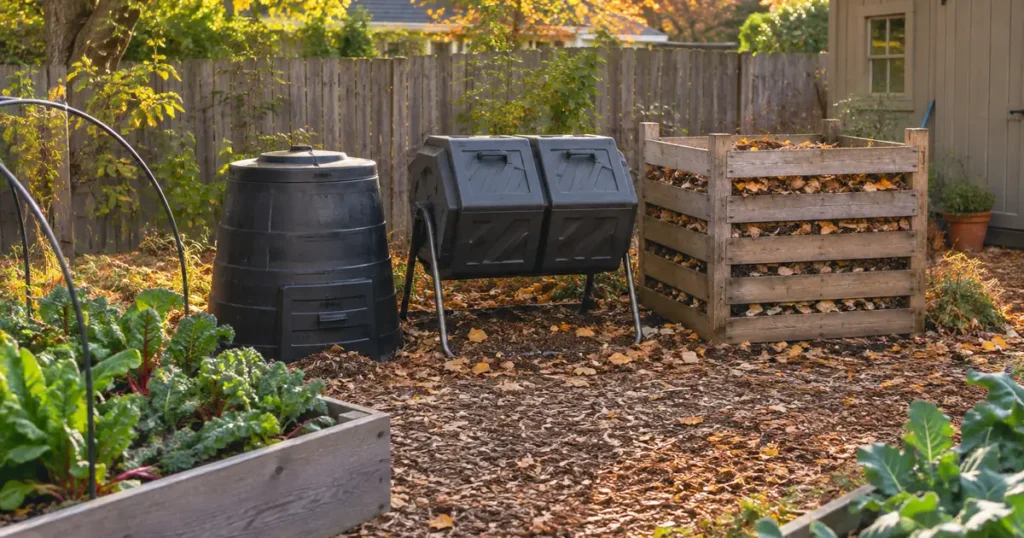
The best compost bin is the one that matches your yard, your volume of scraps and how much work you want to do. For most backyard vegetable gardeners, a roomy stationary bin or a homemade wire or pallet bin makes the most compost for the least money. Tumblers suit small yards and kitchen-scrap households, worm bins suit apartments, and electric countertop “composters” are a different tool altogether.
Quick answer
- Big garden, lots of leaves: a wire, pallet or 3-bin system at least 3 x 3 x 3 ft.
- Small yard or HOA rules: an enclosed stationary bin with a lid, or a dual-chamber tumbler.
- No yard: a worm bin indoors, plus a countertop caddy to collect scraps.
- Electric countertop units dry and grind food into a residue; it is not finished compost.
- Worried about rodents? Choose a closed design and line the base with 1/4-inch hardware cloth.
In this guide
- Compost bin types compared
- Stationary compost bins
- Compost tumblers: single vs. dual chamber
- Wire and pallet bins (DIY compost bins)
- 3-bin compost systems
- Worm bins (vermicomposting)
- Kitchen countertop compost caddies
- Electric countertop “composters”
- How to choose the right compost bin
- Common mistakes to avoid
- FAQ
Want every planting date for your region in one place? Get The Year-Round Vegetable Garden (225 pages, $27).
Compost bin types compared
Capacity, speed and effort below are general ranges for each type, not ratings of specific products. Always check the listed volume: a cubic yard (a 3 x 3 x 3 ft pile) is about 200 gallons, and many plastic bins hold less than that.
| Type | Typical capacity | Speed | Effort | Best for |
|---|---|---|---|---|
| Enclosed stationary bin | Small to medium | Slow to medium | Low | Small yards, tidy look, HOA rules |
| Single-chamber tumbler | Small | Fast per batch | Medium | Kitchen scraps, small households |
| Dual-chamber tumbler | Small | Fast, continuous | Medium | Steady scraps, small yards |
| Wire or pallet bin (DIY) | Large (about 1 cubic yard or more) | Medium to fast | Medium | Leaves, garden waste, budget |
| 3-bin system | Very large | Fast and continuous | High | Big gardens, serious composters |
| Worm bin | Small | Medium (3-6 months) | Low to medium | Apartments, kitchen scraps only |
| Countertop caddy | Very small (collection only) | None | Low | Everyone who composts |
| Electric countertop unit | Very small | Hours (not compost) | Low | Shrinking food waste with no yard |
Stationary compost bins
These are the classic black or green plastic bins with a lid on top and a small hatch at the bottom for removing finished compost. Other versions are made from wood, recycled plastic panels or concrete blocks. You add materials on top, and finished compost forms at the bottom.
- Pros: Neat appearance, keeps rain off, holds moisture, deters most animals when closed, little maintenance.
- Cons: Hard to turn, so compost is slower; many models are smaller than the 3 x 3 x 3 ft needed for a hot pile; once placed, they are a chore to move.
- Look for: A tight-fitting lid, a large access door, sturdy plastic that resists UV, and the largest size your space allows.
Set the bin directly on soil, not on a patio, so worms can move in and excess water drains away.
Gear that helps
- Enclosed outdoor compost bin with lid and access door: A tidy, low-effort option for small yards and HOA neighborhoods.
As an Amazon Associate we earn from qualifying purchases. Check current prices and reviews on Amazon.
Compost tumblers: single vs. dual chamber
A tumbler is a sealed drum on a stand or a frame that you turn with a crank or by hand. Turning mixes and aerates the contents in seconds, with no pitchfork needed, and the closed drum keeps animals out.
Single-chamber tumblers
You fill the drum, then stop adding new material while that batch finishes. That means you need somewhere to store scraps in the meantime, which is the main frustration with single-chamber models.
Dual-chamber tumblers
Two compartments let you fill one side while the other side finishes. For most households that add scraps every day, this is the more practical design.
- Pros: Easy aeration, fast when balanced, tidy, pest-resistant, raised off the ground.
- Cons: Small capacity, so they do not handle large volumes of leaves or garden waste; can get heavy and hard to spin when full; wet greens can clump into a heavy ball; they lose heat fast and freeze in cold winters.
- Look for: A solid frame, a wide door, internal mixing fins, good ventilation, and a height that fits a wheelbarrow or bucket underneath.
Garden hack: Tumbler contents too wet and clumpy? Toss in a few handfuls of shredded cardboard or dry leaves and give it ten turns. Keeping a bag of browns next to the tumbler fixes most tumbler problems before they start.
Gear that helps
- Dual-chamber compost tumbler: Lets you keep adding scraps to one side while the other side finishes.
As an Amazon Associate we earn from qualifying purchases. Check current prices and reviews on Amazon.
Wire and pallet bins (DIY compost bins)
The cheapest compost bins are also some of the most effective for vegetable gardeners, because they easily reach the size needed for a hot pile.
- Wire bin: Bend a length of 36-inch-tall welded wire fencing or hardware cloth into a circle about 3-4 ft across and fasten the ends with wire or clips. A standard hoop holds just over a cubic yard. To turn it, unhook the wire, set the hoop up next door and fork the pile back in.
- Pallet bin: Stand four wooden pallets on edge and lash the corners with wire, rope or screws. Use pallets stamped “HT” (heat-treated) and avoid any that are painted, stained or of unknown origin, since treated wood should not go near a vegetable garden.
- Block or brick bin: Stack concrete blocks on three sides, leaving gaps for air.
Open designs breathe well but can dry out quickly and do little to stop determined animals. A tarp on top helps with moisture, and a hardware cloth floor helps with burrowing rodents. If you have lots of fall leaves, a wire bin also makes a perfect leaf mold bin; see our guide to composting leaves.
3-bin compost systems
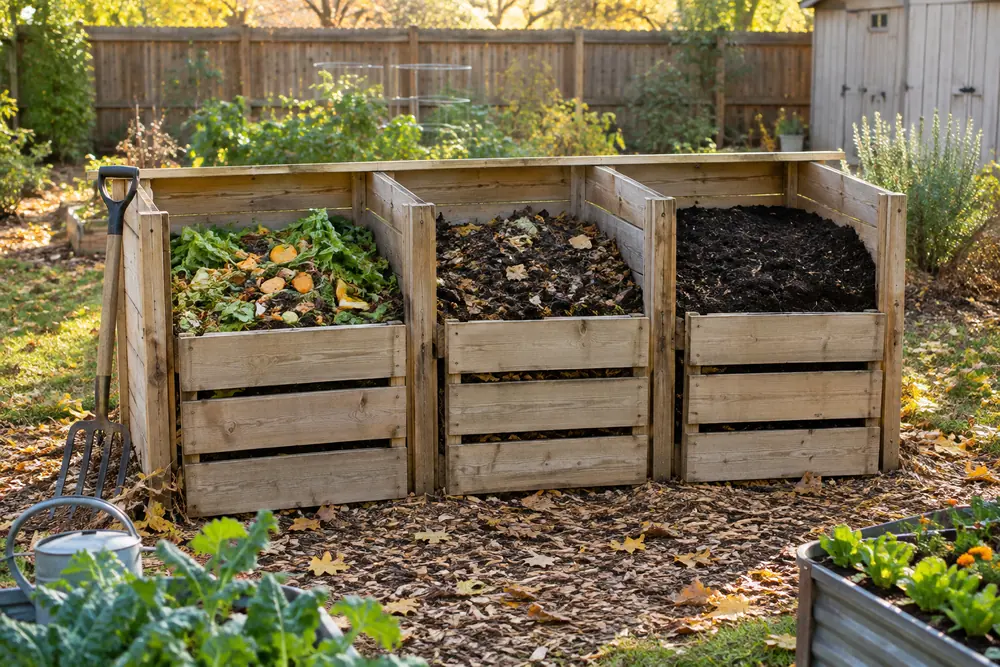
A 3-bin system is three side-by-side bays, usually made of wood, pallets or wire. You fill the first bay with fresh material, move it to the second bay when you turn it, and let it finish and cure in the third. Each bay should be at least 36 x 36 x 36 inches.
- Pros: The most compost, the fastest; a continuous supply; easy turning from one bay to the next.
- Cons: Takes about 9-10 ft of length plus room to work; more materials and building time; more physical work.
Removable front slats make turning much easier. This is the setup to aim for if you have a large vegetable garden and want to make all your own compost. Our guide to making compost covers the hot method these bins are built for.
Worm bins (vermicomposting)
Worm bins use red wigglers (Eisenia fetida), not garden earthworms, to turn kitchen scraps into rich worm castings. They work indoors in a closet, basement or garage, so they are the top choice for apartments and for gardeners in cold zones who want to keep composting all winter.
- Sizing: Oregon State University Extension suggests about 1 cubic foot of bin space per pound of worms. A 14-gallon bin (1 x 1 x 2 ft) holds 2 to 2.5 lb of worms and processes about 2 lb of kitchen scraps a week, about right for two or three people.
- Temperature: Worms tolerate about 40-90°F but do best at 55-77°F, so most bins should not stay outdoors through a cold winter or a hot summer.
- Avoid feeding: meat, fish, dairy, oils, lots of citrus or pet waste.
- Timeline: About 3-6 months from setup to harvestable castings.
Store-bought stacking tray systems make harvesting easier; a homemade bin from a plastic tote with air holes works fine too.
Gear that helps
- Stacking tray worm composting bin: Makes indoor vermicomposting and harvesting castings easy.
As an Amazon Associate we earn from qualifying purchases. Check current prices and reviews on Amazon.
Kitchen countertop compost caddies
A countertop caddy is not a composter; it is a collection pail that keeps scraps handy until you take them to the bin. Almost everyone who composts benefits from one. Look for a tight lid, a replaceable charcoal filter for odors, a size you will empty every few days (larger caddies get smelly), and dishwasher-safe stainless steel or ceramic. Compostable liner bags are optional.
Gear that helps
- Stainless steel countertop compost pail with charcoal filter: Collects kitchen scraps without odors between trips to the bin.
As an Amazon Associate we earn from qualifying purchases. Check current prices and reviews on Amazon.
Electric countertop “composters”
Electric kitchen units heat, dry and grind food scraps over several hours, shrinking the volume dramatically. What comes out is a dry, ground food residue, not finished compost. Research reported by the trade journal BioCycle found that this material has not gone through the biological decomposition that defines compost, can grow mold and attract pests once it gets wet again, and can be high in salts.
That residue can still be useful: you can add it to a backyard compost pile or worm bin, where it will finish breaking down. Do not dig large amounts directly around vegetable plants. These machines make sense if you have no yard and want to reduce kitchen waste and odors, but they are not a substitute for a compost bin if your goal is soil for your garden.
Watch out: No bin is truly rodent-proof if you add meat, dairy or greasy foods, or leave fresh scraps on top. Always bury scraps under browns, and for open or bottomless bins, staple 1/4-inch hardware cloth across the base.
How to choose the right compost bin
- Yard size: Plan for at least a 3 x 3 ft footprint for a hot pile plus working space. Tight on space? A tumbler or a compact stationary bin fits a patio corner (tumblers can sit on pavement).
- What you compost: Mostly kitchen scraps? A tumbler, stationary bin or worm bin is enough. Lots of leaves, grass and garden waste? You need the volume of a wire, pallet or 3-bin setup.
- How much you produce: Two people with a small garden make far less than a family of five with a big lawn and trees. Size up rather than down; piles shrink by half or more as they compost.
- Rodents and wildlife: In cities and near woods, choose enclosed designs and keep the base screened.
- HOA and city rules: Some require closed bins, set distances from property lines or ban open piles. Check before you build.
- Your effort level: If you will never turn a pile, a stationary bin with patience is better than a 3-bin system you abandon.
Compost bins by climate zone
In zones 3-5, small tumblers and plastic bins freeze solid in winter; a large pile or 3-bin system holds heat longer, and a worm bin indoors keeps scraps moving. In zones 8-10, plastic bins in full sun can dry out fast, so place them in partial shade and water more often. Check your local extension office for climate-specific advice, because microclimates vary.
The Year-Round Vegetable Garden (2027 Edition)
Plan the whole season in one place: a 225-page month-by-month guide with calendars for six US growing regions, 50 plant profiles (tomatoes included), 5 copy-ready garden plans and 7 printable pages.
Tomato lover? Add Tomato Mastery, our seed-to-harvest tomato blueprint, for just $10 at checkout.
Get the guide ($27)Common mistakes to avoid
- Buying too small. A bin smaller than about a cubic yard rarely gets hot. Check the gallon capacity.
- Overfilling a tumbler. A full drum is heavy and does not mix well. Leave room to tumble.
- Expecting compost from an electric unit. Its output still needs to finish in a pile or worm bin.
- Placing a bin on concrete. Stationary bins need soil contact for drainage and worms.
- Using treated wood. Build DIY bins from untreated or heat-treated lumber and pallets.
- Forgetting browns. Every bin type needs dry carbon to stay balanced.
FAQ
What size compost bin do I need?
For a hot compost pile, aim for at least 3 x 3 x 3 ft, about 1 cubic yard or 200 gallons. For kitchen scraps only, a smaller enclosed bin, tumbler or worm bin is usually enough.
Is a compost tumbler better than a bin?
A tumbler is easier to turn and keeps pests out, so it can be faster for kitchen scraps. A large bin or pile holds more volume, handles leaves and garden waste better and holds heat longer in cold climates.
Do electric composters make real compost?
No. They dry and grind food scraps into a residue that has not gone through biological decomposition. You can add that residue to a compost pile or worm bin to finish breaking down.
How do I keep rats out of my compost bin?
Use a closed bin, line the bottom with 1/4-inch hardware cloth, bury scraps under browns, and leave out meat, dairy and greasy food.
Can I make my own compost bin?
Yes. A ring of 36-inch welded wire fencing about 3-4 ft across, four heat-treated pallets tied at the corners, or a three-sided stack of concrete blocks all make effective, low-cost compost bins.
Keep reading
Sources
- Selecting a Backyard Compost Bin – UConn Soil Nutrient Analysis Laboratory
- Backyard Composting of Yard, Garden, and Food Discards – NC State Extension
- Home Composting: A Guide for Home Gardeners – Penn State Extension
- Composting with Worms – Oregon State University Extension
- Backyard Composting: It’s Only Natural – U.S. Environmental Protection Agency
- Electric Kitchen “Composter” Confusion – BioCycle