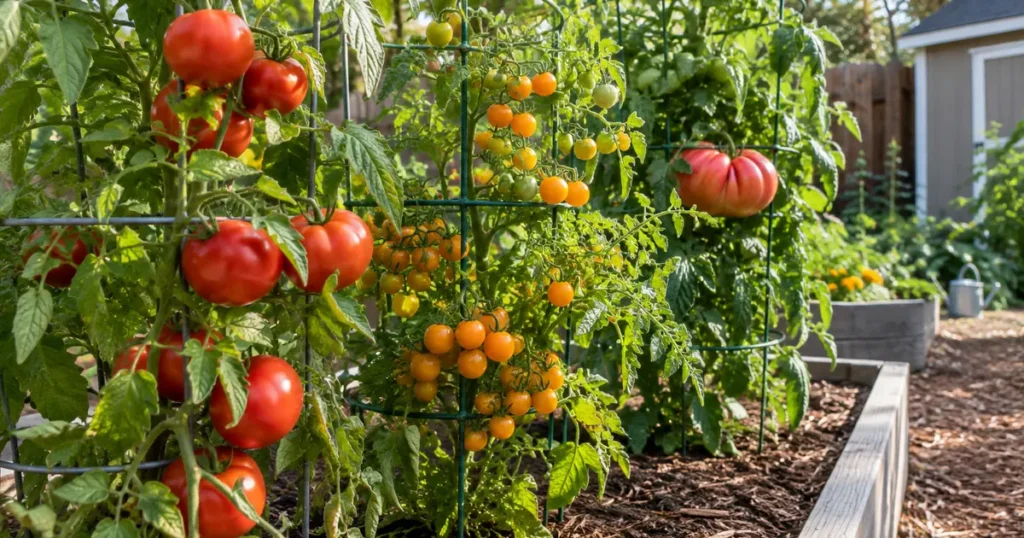
The best tomatoes to grow are the ones matched to your season length, your space and what you plan to do with the harvest. For most home gardens, that means a reliable disease-resistant slicer like Celebrity or Early Girl, one cherry such as Sun Gold or Juliet, a paste tomato for sauce and, if you have the season for it, one flavor heirloom like Brandywine or Cherokee Purple.
Quick answer
- Easiest and most reliable: Celebrity, Early Girl, Big Beef and Better Boy hybrids, all with multiple disease-resistance codes.
- Best heirloom tomatoes for flavor: Brandywine, Cherokee Purple, Black Krim, German Johnson and Amish Paste.
- Best cherries: Sun Gold, Juliet, Super Sweet 100.
- Short seasons (zones 3-5): Early Girl, Stupice, Glacier, Moskvich. Hot South (zones 8-10): cherries plus heat-set hybrids like Florida 91 and Heatmaster.
- Best tomato varieties for containers: Bush Early Girl, Patio Choice Yellow, Tiny Tim, Tumbling Tom and Husky Cherry Red.
In this guide
- Best tomatoes to grow at a glance
- Best tomatoes for beginners: reliable hybrids
- Best heirloom tomatoes for flavor
- Best cherry tomatoes
- Best paste tomatoes for sauce and canning
- Best tomatoes for short seasons in the North
- Best tomatoes for hot Southern gardens
- Best tomatoes where blight is a problem
- Best tomato varieties for containers
- Best tomatoes to grow by USDA zone
- Common mistakes to avoid
- FAQ
 Grow tomatoes in season for your region, month by month: The Year-Round Vegetable Garden ($27, PDF).
Every pick below is based on documented traits (days to maturity, growth habit, disease codes) and on varieties that land-grant extension services list for home gardens. If you are new to the vocabulary, our guide to the types of tomatoes explains cherry vs paste vs beefsteak and what the resistance letters mean.
Best tomatoes to grow at a glance
| Variety | Type | Days* | Why grow it |
|---|---|---|---|
| Celebrity | Red globe hybrid, determinate/semi-determinate | 70 | All-America Selections winner (1984); VFFNTA resistance; dependable in most zones |
| Early Girl | Red globe hybrid, indeterminate | 52 | One of the earliest slicers; 4-6 oz fruit; good for short seasons |
| Big Beef | Red beefsteak hybrid, indeterminate | 73 | Large fruit with classic flavor and VFFNTA resistance; noted for heat tolerance in Texas |
| Better Boy | Red globe hybrid, indeterminate | 75 | 12-16 oz fruit, VFN; a longtime extension staple |
| Sun Gold | Orange cherry hybrid, indeterminate | 57-65 | Very sweet, early and productive |
| Juliet | Red grape hybrid, indeterminate | 60 | AAS winner; crack-resistant; holds well on the vine |
| Brandywine | Pink beefsteak heirloom, indeterminate | 80-90 | Famous flavor; 1 lb+ fruit; potato-leaf foliage |
| Cherokee Purple | Dusky purple heirloom, indeterminate | 72-80 | Rich flavor; 10-12 oz fruit; tolerates Southern humidity better than many heirlooms |
| Roma | Paste, determinate | 75-78 | Classic canning tomato; crop ripens close together |
| San Marzano | Paste heirloom, indeterminate | 78-80 | Long, meaty sauce tomato over a long harvest |
| Florida 91 | Red globe hybrid, determinate | 72 | Sets fruit in high heat; bred for the South |
| Bush Early Girl | Red globe hybrid, determinate | 54 | Under 3 ft; VFFNT; ideal for pots |
*Days from transplanting to first ripe fruit, as listed by seed companies and extension variety lists. Cool summers add 10-14 days.
Best tomatoes for beginners: reliable hybrids
If you have had tomatoes wilt, crack or quit on you, start with hybrids that carry several resistance codes. They will not fix poor soil or irregular watering, but they shrug off the soilborne diseases that ruin many first gardens.
- Celebrity: medium 8-12 oz red fruit on a sturdy plant. Seed companies list it as determinate or semi-determinate, so a strong cage is enough. Extension lists from Missouri to Iowa to Texas include it.
- Early Girl: small slicers (4-6 oz) in about 52 days. It is indeterminate, so it keeps producing all summer.
- Big Beef: the beefsteak for people who have failed with heirloom beefsteaks. Big Beef Plus adds TSWV resistance for the Southeast.
- Better Boy: a vigorous vine with large, smooth fruit; recommended by Iowa State and Oklahoma State among many others.
Not sure how much support these need? Our breakdown of determinate vs indeterminate tomatoes covers cages, stakes and pruning for each habit.
Gear that helps
- Square folding tomato cages: Sturdy support for semi-determinate and indeterminate hybrids like Celebrity and Big Beef.
As an Amazon Associate we earn from qualifying purchases. Check current prices and reviews on Amazon.
Best heirloom tomatoes for flavor
Heirloom tomatoes are open-pollinated varieties passed down for generations, so you can save their seed and they will come back true. Many gardeners grow them for one reason: flavor. The trade-off is lower disease resistance, more cracking and catfacing, and usually a longer wait.
- Brandywine: large pink beefsteak, often 1 to 1.5 lbs, about 80-90 days. Yields can be light and heat can stop fruit set, but it remains a benchmark for flavor.
- Cherokee Purple: dusky rose-purple fruit of 10-12 oz around 80 days. NC State Extension lists it among heirlooms that cope with heat and humidity. See our full Cherokee Purple tomato guide.
- Black Krim: dark red-brown fruit from the Crimean region, 10-12 oz, 75-90 days.
- German Johnson: a pink Southern beefsteak around 80 days, also on NC State’s heat-and-humidity list.
- Pruden’s Purple: a Brandywine-style pink beefsteak that ripens noticeably earlier, about 67-75 days; Colorado State lists it as mid-season.
- Mortgage Lifter: big pink fruit around 85-95 days for long-season gardens.
Garden hack: Hedge your bets with a “one heirloom, one hybrid” rule for each slot. Plant Brandywine next to Big Beef, or Cherokee Purple next to Celebrity. If disease or heat hits the heirloom, the hybrid still fills your kitchen.
Gear that helps
- Heirloom tomato seed collection: An easy way to trial several flavor heirlooms in one season.
As an Amazon Associate we earn from qualifying purchases. Check current prices and reviews on Amazon.
Best cherry tomatoes
Cherries are the most productive and forgiving tomatoes almost everywhere. Extension agents in the South call them the most reliable type for their region, and in the North they ripen before cool fall nights shut things down.
- Sun Gold: orange, very sweet, about 57-65 days. Fruits can split after heavy rain, so pick them as soon as they color.
- Juliet: red grape type, crack-resistant, about 60 days; great for salads and quick sauces.
- Super Sweet 100: long clusters of small red fruit with Verticillium and Fusarium resistance, about 65 days.
- Black Cherry: a dark, rich-flavored open-pollinated cherry at about 65 days.
Best paste tomatoes for sauce and canning
For sauce, salsa and canning, grow paste tomatoes: they have meatier walls and less juice than slicers, so sauce cooks down faster.
- Roma VF: determinate; ripens a big share of the crop over a few weeks, which suits canning days.
- San Marzano: indeterminate heirloom with long, pointed fruit and a steady harvest into fall.
- Amish Paste: large plum-shaped heirloom, indeterminate, around 80-85 days.
- Plum Regal: determinate hybrid with resistance to TSWV and late blight, plus early blight tolerance; a smart choice where those diseases are common.
When canning, follow tested recipes from the USDA or the National Center for Home Food Preservation; tomatoes need added acid for safe water-bath canning.
Gear that helps
- Water bath canner kit: For canning a determinate paste tomato harvest with a tested recipe.
As an Amazon Associate we earn from qualifying purchases. Check current prices and reviews on Amazon.
Best tomatoes for short seasons in the North
In zones 3-5, and at high elevations anywhere, the frost-free window can be too short for 85-day beefsteaks. Oregon State University Extension advises picking the earliest varieties and adding 10 days to two weeks to the packet days in cool climates. Washington State suggests varieties under 75 days for cool-summer areas.
- Early Girl: about 52 days, indeterminate.
- Stupice: a Czech heirloom with 2 oz fruit, listed at 52-60 days.
- Glacier: determinate, 2-3 oz fruit, about 58 days.
- Moskvich: a Russian heirloom around 60 days, described as cold tolerant.
- Siberian and Sub Arctic Maxi: compact determinates at about 58-62 days.
Start seeds indoors 6-8 weeks before your last frost so transplants are ready the moment soil warms.
Best tomatoes for hot Southern gardens
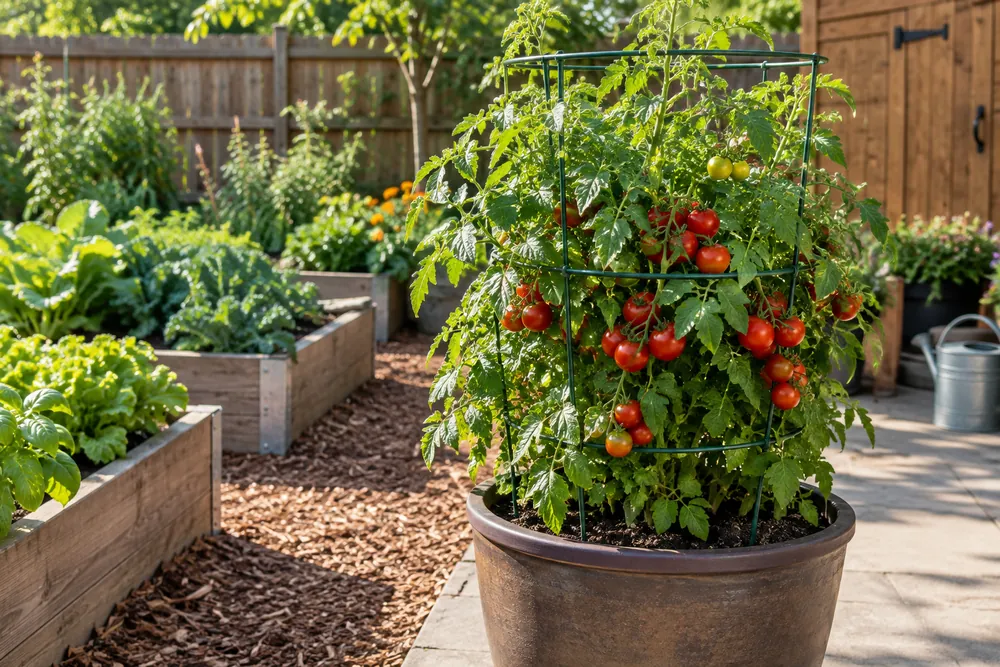
In zones 8-10 the problem is heat, not frost. Pollination and fruit set can be disrupted when days run above about 90°F and nights stay above about 70°F. Plant early in spring so fruit sets before peak heat, then plant again for fall.
- Heat-set hybrids: Florida 91, Heatmaster, Phoenix and Solar Fire are determinates bred to set fruit in high temperatures. A University of Maryland Extension taste test rated Florida 91 highest for flavor of the four.
- Cherries: Sun Gold, Juliet and Super Sweet 100 keep setting when big tomatoes stall.
- Medium slicers: Celebrity, Better Boy and Early Girl are easier than giant beefsteaks in heat, according to NC State Extension.
- TSWV-prone areas: look for TSWV on the label, as with Red Defender, Amelia, Mountain Merit or Big Beef Plus.
Watch out: Heat-set tomatoes are not heat-proof. In a heat wave even these varieties slow down, and fruit that ripens above about 92°F can develop poor color and internal white tissue. Pick at first blush and let tomatoes finish ripening indoors at room temperature.
Best tomatoes where blight is a problem
In the humid Northeast, Mid-Atlantic and Upper Midwest, leaf diseases often end the season before frost does. Look for varieties bred specifically against them:
- Iron Lady: a Cornell slicer hybrid with resistance to late blight and Septoria leaf spot, early blight tolerance, plus Verticillium and Fusarium resistance.
- Defiant PhR and Mountain Magic: listed by Alabama Extension among varieties with late blight resistance; Mountain Magic is a small, sweet, cocktail-size red.
- Plum Regal and Plum Perfect: paste options carrying late blight resistance.
Resistance buys time, not immunity. Pair it with mulch, wide spacing, watering at the soil line and removing infected leaves promptly.
Best tomato varieties for containers
Clemson Extension recommends compact cultivars labeled patio, balcony or bush in a 14- to 20-inch container or a 5-gallon bucket with drainage holes, and advises against tall indeterminates such as Better Boy and Brandywine in pots.
- Bush Early Girl: stays under 3 feet, slicer-size fruit, about 54 days.
- Patio Choice Yellow: about 18 inches tall with yellow cherries; an AAS winner.
- Tiny Tim: 10-18 inch micro plant, listed around 45-55 days; fits a windowsill-size pot.
- Tumbling Tom and Tumbler: trailing cherries for hanging baskets and window boxes.
- Husky Cherry Red: a compact (dwarf) indeterminate, 3-4 feet, about 65 days; give it a cage.
- Dwarf Tomato Project varieties: full-size heirloom-style fruit on 2-4.5 foot plants; UC Master Gardeners recommend 10- to 15-gallon pots for these.
Gear that helps
- Self-watering patio planter: Container tomatoes dry out daily in summer; a reservoir keeps moisture steady and reduces blossom end rot.
As an Amazon Associate we earn from qualifying purchases. Check current prices and reviews on Amazon.
Best tomatoes to grow by USDA zone
Your hardiness zone reflects winter lows, not frost dates, but it is a useful shortcut for season length. Treat this as a starting point and confirm your own frost dates and local extension recommendations, since microclimates vary.
| Zone | Season challenge | Top picks |
|---|---|---|
| 3-4 | Short, cool summers | Early Girl, Stupice, Glacier, Moskvich, Sun Gold |
| 5 | Moderate season, cool nights at both ends | Early Girl, Celebrity, Juliet, Pruden’s Purple, Roma |
| 6-7 | Long season, humid summers in the East | Celebrity, Big Beef, Brandywine, Cherokee Purple, San Marzano; late-blight-resistant Mountain Magic or Iron Lady in the Northeast |
| 8 | Hot midsummer, TSWV in the Southeast | Celebrity, Big Beef Plus, German Johnson, Juliet, Florida 91 |
| 9-10 | Heat limits summer fruit set | Sun Gold, Super Sweet 100, Florida 91, Heatmaster; plant late winter and late summer |
Once you have your varieties, our pillar guide on how to grow tomatoes covers soil, spacing, support and watering from planting to harvest.
Common mistakes to avoid
- Planting only heirloom beefsteaks, then losing the whole crop to wilt or blight.
- Buying 85-day varieties in a short-season zone with no early backup.
- Putting tall indeterminate varieties in small pots.
- Ignoring local diseases; check which codes (TSWV, LB, N) matter where you live.
- Planting too many plants of one variety instead of spreading risk across two or three.
- Expecting large fruit to set in midsummer heat in zones 8-10.
FAQ
What is the easiest tomato to grow?
Cherry tomatoes like Sun Gold, Juliet or Super Sweet 100 are the easiest. For a full-size slicer, Celebrity and Early Girl are dependable, disease-resistant hybrids recommended by many extension services.
What are the best heirloom tomatoes?
Popular, well-documented heirlooms include Brandywine, Cherokee Purple, Black Krim, German Johnson, Pruden’s Purple and Amish Paste. Choose earlier ones like Pruden’s Purple or Stupice in short-season zones.
What are the best tomato varieties for containers?
Choose compact patio or bush types such as Bush Early Girl, Patio Choice Yellow, Tiny Tim, Tumbling Tom or Husky Cherry Red. Use at least a 5-gallon container, and 10-15 gallons for dwarf heirloom types.
Which tomato produces the most fruit?
Indeterminate cherry tomatoes usually produce the most fruit over a season, because they set large clusters and keep flowering until frost. Yields always depend on sun, soil, water and weather.
What tomatoes grow best in hot weather?
Heat-set hybrids such as Florida 91, Heatmaster, Phoenix and Solar Fire, along with most cherry tomatoes. Medium slicers like Celebrity also set more reliably than large beefsteaks in heat.
How many tomato varieties should I grow?
Two or three is a good start: one reliable hybrid slicer, one cherry and either a paste tomato or a flavor heirloom. Spreading varieties lowers the risk of losing everything to one disease or weather event.
Keep reading
Sources
- Recommended Tomato Varieties – Texas A&M AgriLife Extension
- What Are the Best Tomato Varieties? – NC State Extension
- Good Tomato Varieties for the Home Garden – Iowa State University Extension
- Tomato Varieties (L-492) – Oklahoma State University Extension
- Grow Your Own Tomatoes and Tomatillos – Oregon State University Extension
- Tomato Variety Information – Colorado State University Extension
- Tomatoes – Clemson Cooperative Extension Home & Garden Information Center
- Heat-Tolerant Tomato Varieties – University of Maryland Extension
- Tomato Variety Selection – Alabama Cooperative Extension System
- Disease-Resistant Tomatoes Created at Cornell – Cornell Vegetable Program