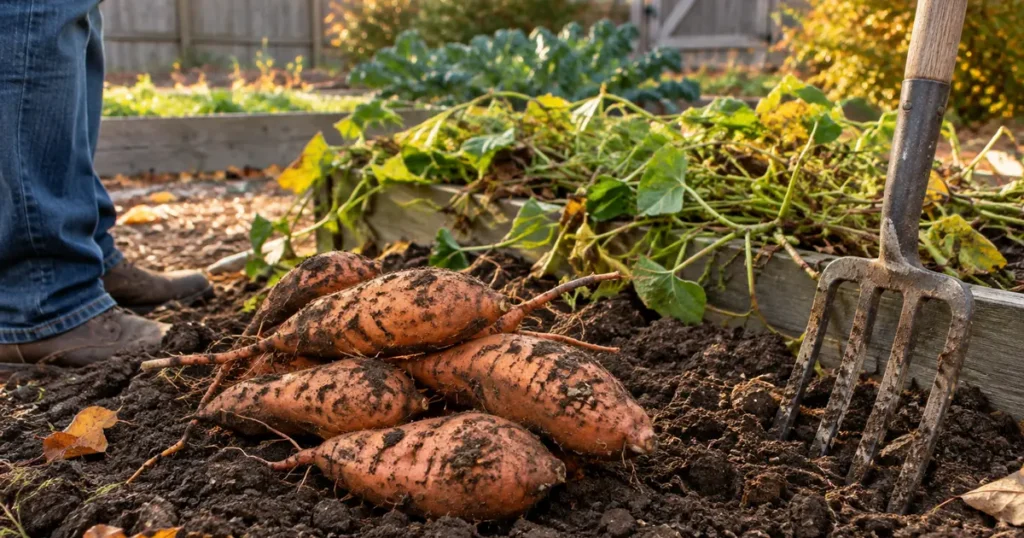
Curing sweet potatoes means holding freshly dug roots at 80-85°F and 85-90% humidity for 7-10 days. That warm, humid rest heals nicks in the skin, starts turning starch into sugar and lets the roots keep for months. After curing, store them at 55-60°F, never in the refrigerator.
Quick answer
- Harvest before the first frost, or before the soil drops below about 55°F.
- Dig gently with a fork, starting well out from the crown, and do not wash the roots.
- Cure at 80-85°F and 85-90% humidity for 7-10 days, or 2-3 weeks in a warm room if you cannot reach those numbers.
- Store cured roots in the dark at 55-60°F for 3-6 months or more.
- Never refrigerate whole sweet potatoes; cold below 50°F causes chilling injury.
In this guide
 Every planting date for your region in one place: The Year-Round Vegetable Garden ($27, PDF).
When to harvest sweet potatoes
Sweet potatoes keep growing until cold weather stops them, so most gardeners dig as late as they safely can. Clemson Cooperative Extension puts maturity at about 90-120 days after planting, depending on variety, and suggests checking a plant or two: the crop is ready when a good share of the roots have reached usable size.
The hard deadline is cold. Penn State Extension advises lifting roots before frost or before soil temperatures drop below about 55°F. Purdue Extension warns that soil at 50°F or lower can cause chilling injury that leads to internal breakdown and rot in storage. Roots are underground, but cold soil damages them even when the vines still look fine.
Sweet potato harvest timing by zone
| Zone | Typical first fall frost | Aim to harvest |
|---|---|---|
| 4-5 | Mid-September to early October | Early to mid-September (short-season varieties only) |
| 6 | Early to mid-October | Mid-September to early October |
| 7 | Late October | Late September to mid-October |
| 8 | November | October to early November |
| 9-10 | Rare or none | About 90-120 days after planting; dig before roots get oversized or cracked |
These are rough averages. Check your local frost dates in our frost date guide or with your extension office, and keep a soil thermometer handy in fall; a cold snap can push soil below 55°F before the first frost arrives.
Watch out: If a frost blackens the vines, cut them off at soil level right away and dig within a few days. Damage from the dead vines can travel down into the roots, and the soil will only get colder.
How to dig sweet potatoes without damaging them
Sweet potato skin is thin and tender at harvest. Every scrape, cut and bruise is an open door for rot, so slow down.
- Pick a dry day. Digging dry soil is easier on the roots and leaves less mud to dry off.
- Clear the vines. Cut or pull the vines back so you can see the crowns.
- Start wide. Push a digging fork into the soil 12-18 inches out from the crown, since roots can spread farther than you expect, and lever the soil up gently.
- Lift by hand. Loosen the clump and pull the roots out by hand instead of yanking them with the fork.
- Do not wash or scrub. Let soil dry on the skin for a few hours, then brush off only the loose clumps.
- Keep them out of the hot sun. Move roots into the shade within an hour or so to prevent sunscald.
- Sort. Put cut, cracked or badly bruised roots aside to eat within a week. Cure only the clean, sound ones.
Garden hack: Line your harvest bucket or crate with an old towel and set roots in, never drop them. Purdue Extension recommends padding containers because even small bruises from rough handling lead to decay later.
Gear that helps
- Digging fork: Loosens soil around the roots with less risk of slicing them than a shovel.
As an Amazon Associate we earn from qualifying purchases. Check current prices and reviews on Amazon.
How to cure sweet potatoes
The target is the same in every extension guide: warm and humid. Penn State gives 80-85°F with 85-95% relative humidity, and Purdue recommends about 10 days at 80-85°F with 85-90% humidity. Clemson’s version is 85°F and 90% humidity for one week.
During curing, the root grows a new protective layer under any wounds, the skin toughens, and enzymes begin converting starch into sugar.
Home curing methods
Few home gardeners have a curing room, but you can get close with what you have.
- Box near the furnace or water heater: Set roots in cardboard boxes or crates in a warm part of the basement or utility room. Stack the boxes and cover them with paper or heavy cloth to hold moisture in, a method Purdue suggests.
- Warmest room in the house: If you cannot reach 80°F, Clemson suggests keeping roots in the warmest room, often the kitchen, for about 14 days. At 65-75°F, plan on 2-3 weeks.
- Perforated plastic: Put roots in plastic bags with a few holes, or cover a crate loosely with plastic, to keep humidity high while letting some air move.
- Small room with a space heater: A closet or bathroom with a space heater set to hold 80-85°F, a bowl of water or a damp towel for humidity, and an inexpensive thermometer-hygrometer to check the numbers.
- Outdoors in the South: In zones 8-10, warm fall days in a shaded garage or shed often provide good curing conditions without extra heat.
Watch out: Space heaters cause home fires. Use a model with tip-over and overheat shutoff, plug it directly into a wall outlet, keep it at least 3 feet from boxes, paper, cloth and plastic, and never cover it. Do not leave a heater running unattended in a closed closet; a warm room with the door open is safer.
Note that curing does not happen below about 70°F, according to Clemson. If your only option is a cool garage, the roots will still store for a while, but they will not heal or sweeten as well.
Gear that helps
- Digital thermometer hygrometer: Checks that the curing spot holds 80-85°F and high humidity.
As an Amazon Associate we earn from qualifying purchases. Check current prices and reviews on Amazon.
Why curing makes sweet potatoes sweeter
A freshly dug sweet potato is starchy and bland. Curing triggers enzymes in the root that break down starch into sugars, and that conversion continues slowly during the first weeks of storage. Both Penn State and Purdue credit curing with better flavor as well as longer storage life.
Curing also changes the skin. Small scrapes from digging seal over with a corky layer, and the skin thickens, so the roots lose less moisture and resist the rot organisms that get into fresh wounds. Uncured roots taste flat and often shrivel or rot within weeks.
Many gardeners wait a few weeks after curing before cooking the main harvest, while eating any damaged roots right away.
How to store sweet potatoes after curing
Once cured, sweet potatoes want steady, moderately cool conditions:
- Temperature: 55-60°F. Above about 65°F they may sprout and shrivel; below 50-55°F they suffer chilling injury.
- Humidity: Moderately high, around 85-90%, to prevent shriveling. Wrapping roots in newspaper, as Purdue suggests, helps hold moisture.
- Darkness: A dark spot slows sprouting.
- Containers: Ventilated crates, baskets or cardboard boxes. Do not seal them airtight.
Good spots include a heated basement corner, an interior closet, or a cool spare room, the same places that suit cured winter squash. Avoid outdoor pits and damp root cellars; Purdue notes the dampness encourages decay. Sweet potatoes also want warmer storage than regular potatoes, so do not put them together; see how to store potatoes for those conditions.
Never refrigerate sweet potatoes
The fridge is around 37-40°F, well into the chilling-injury range. Chilled roots develop a hard white core, off-flavors and internal discoloration, and they rot faster once warmed. Clemson puts it bluntly: never expose sweet potatoes to temperatures below 50°F and never refrigerate them. Only cooked sweet potatoes belong in the fridge.
How long do cured sweet potatoes last?
| Condition | Approximate storage life |
|---|---|
| Cured, stored at 55-60°F and high humidity | 3-6 months, sometimes longer |
| Cured, stored at room temperature (65-75°F) | A few weeks to 2 months; sprouting likely |
| Uncured, or cut and bruised roots | About 1-2 weeks |
| Refrigerated whole roots | Not recommended; chilling injury |
Clemson notes that well-cured roots can keep for more than six months under good conditions. Check them every couple of weeks and use any that show soft spots.
Garden hack: Save two or three healthy, medium roots from storage to grow your own slips in late winter. Set them half-submerged in water or in moist potting mix about 6-8 weeks before your planting date.
Gear that helps
- Ventilated wooden storage crates: Stores cured roots in the dark with airflow at 55-60°F.
As an Amazon Associate we earn from qualifying purchases. Check current prices and reviews on Amazon.
Common mistakes to avoid
- Waiting too long to dig. Cold soil damages roots even before a frost.
- Washing roots before curing. Wet skin invites rot; brush off dry soil instead.
- Skipping the cure. Uncured roots are bland and store poorly.
- Curing too cool. Below about 70°F, wounds do not heal properly.
- Refrigerating whole roots. Chilling injury ruins texture and flavor.
- Storing in a damp pit or cellar. Excess moisture and cold lead to decay.
- Re-curing stored roots. Warming roots that have been in storage can trigger sprouting.
FAQ
How long do you cure sweet potatoes?
About 7-10 days at 80-85°F and high humidity. At typical room temperatures of 65-75°F, allow 2-3 weeks.
Can you eat sweet potatoes right after digging?
Yes, they are safe to eat, but they are starchy and less sweet until they have been cured and stored for a few weeks.
Should you wash sweet potatoes before curing?
No. Let the soil dry and brush it off gently. Wash roots only just before cooking.
What happens if sweet potatoes get frost?
Frost kills the vines, and cold soil can injure the roots. Cut the vines and dig within a few days, then cure and check the roots closely.
Can sweet potatoes be stored in the refrigerator?
Not whole and raw. Temperatures below 50°F cause chilling injury, hard cores and off-flavors. Refrigerate only cooked sweet potatoes.
Keep reading
Sources
- Sweetpotato Curing and Storage – Penn State Extension
- Time to Harvest Sweet Potatoes – Purdue University Consumer Horticulture
- Sweet Potato – Clemson Cooperative Extension Home & Garden Information Center
- Harvesting, Curing and Storing Sweet Potatoes – The Garden Professors
- Heating Fire Safety – U.S. Fire Administration (FEMA)