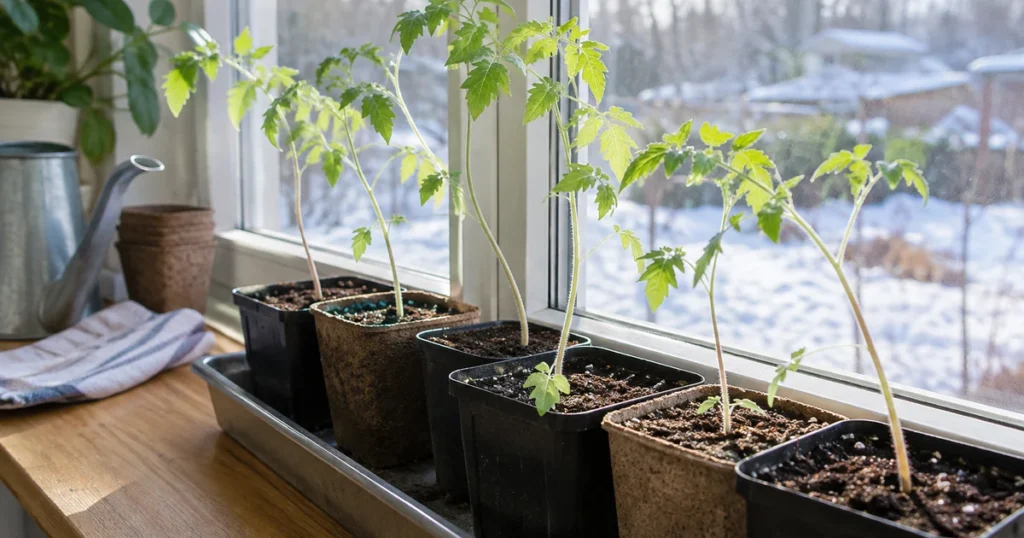
Leggy seedlings are tall, thin and pale because they’re stretching for light. Low light is the main cause, made worse by warm rooms, crowding and starting seeds too early. Fix them by moving the light closer, running a fan, cooling the room a few degrees, and, for tomatoes only, burying the long stem deeper when you pot up or transplant.
Quick answer
- Main cause: not enough light. A sunny window is rarely enough in late winter.
- Keep fluorescent or LED lights close, about 2-4 inches above the tops for typical shop lights, on for 12-16 hours a day.
- Grow seedlings cooler: about 60-65°F at night and roughly 10°F warmer by day.
- Leggy tomato seedlings can be buried up to their top leaves; they root along the stem.
- Don’t bury peppers, cucumbers, squash or most other crops deeper; give them light and support instead.
In this guide
Want every planting date for your region in one place? Get The Year-Round Vegetable Garden (225 pages, $27).
What causes leggy seedlings?
1. Too little light
This is the big one. Purdue Extension explains that seedlings grown in low home light stretch in search of it. Even a south window in February delivers far less light than the outdoors, and the days are short. Seedlings lean toward the glass and grow long, weak stems with widely spaced leaves.
2. Light too far away
Many people have a grow light but hang it too high. University of Minnesota Extension recommends keeping lights no more than 4 inches above the seedlings, with about 2 inches ideal for typical fluorescent and LED shop lights. Utah State University Extension suggests 2-3 inches.
3. Too warm
Warm temperatures speed up stem growth faster than the plant can build sturdy tissue, especially when light is limited. A seedling shelf next to a heat vent or on a heat mat left on after germination will stretch.
4. Crowding
When seedlings shade each other, each one stretches to get above its neighbors. Utah State recommends spacing plants so leaves don’t overlap.
5. Started too early
Seedlings kept indoors weeks longer than needed outgrow their pots and the light. Purdue lists starting too early as a common reason tomatoes get leggy.
6. Excess fertilizer
Too much nitrogen pushes soft, fast growth. Seedlings need only a diluted feed once they have true leaves.
How to fix leggy seedlings
- Lower the light. Move fluorescent or LED shop lights to 2-4 inches above the leaves and raise them as seedlings grow. Hang lights on adjustable chains or set trays on stacked books you can remove.
- Run the lights 12-16 hours a day. Use a timer, and give the plants a dark period each night.
- Add a fan. A small fan on low, blowing gently across the seedlings for a few hours a day, makes stems thicker. Utah State recommends intermittent air movement for 5-10 minutes or more, one to several times a day. Brushing your hand lightly across the tops once or twice a day also helps.
- Cool them down. Turn off the heat mat once seeds sprout, and grow seedlings around 60-65°F at night and about 10°F warmer during the day. Cool-season crops like broccoli prefer nights near 55°F.
- Thin or space them out. Snip extra seedlings at the soil line and spread pots apart as they grow.
- Pot up tomatoes deeper (see below).
- Stake floppy stems. A toothpick or bamboo skewer and a soft twist tie keep a weak stem upright while it thickens.
Garden hack: Window light only? Make a reflector. Tape aluminum foil to a piece of cardboard and stand it behind the tray, facing the window. It bounces light back onto the shaded side and reduces leaning, though a grow light is still the real fix.
Gear that helps
- LED shop light for seedlings: Bright, adjustable light that can hang close to seedlings
- Outlet timer: Keeps lights on a steady 12-16 hour schedule
As an Amazon Associate we earn from qualifying purchases. Check current prices and reviews on Amazon.
Leggy tomato seedlings: bury the stem
Tomatoes are the forgiving exception. Their stems are covered with tiny bumps that turn into roots when buried, so a leggy tomato becomes a well-rooted plant once you sink it deeper.
When potting up
- Choose a pot deep enough to hold most of the stem.
- Pinch off the seed leaves and any lower leaves that would end up underground.
- Set the seedling so only the top set or two of true leaves sits above the mix.
- Fill, firm gently and water. New roots form along the buried stem within days to weeks.
When transplanting into the garden
For tall tomato transplants, University of Maryland Extension suggests digging a trench and laying the stem sideways, leaving only two or three sets of leaves above ground. Purdue recommends planting at an angle so the roots stay in warmer, better-aerated soil near the surface instead of deep in cold soil. The top bends upward toward the sun within a few days.
Tomatillos root along buried stems in a similar way.
Watch out: Don’t bury peppers, eggplant, cucumbers, squash, melons or most other vegetables deeper than they grew. University of Minnesota Extension advises setting pepper transplants at the same soil level as before. Buried stems of these crops don’t root like tomatoes and can rot.
What about other leggy seedlings?
- Peppers and eggplant: fix the light and temperature, stake if floppy, and plant at the same depth. They thicken up as they grow.
- Cucumbers, squash and melons: these stretch quickly indoors and hate root disturbance. If they get leggy, plant them out as soon as weather allows, or direct sow a fresh batch, which often catches up fast.
- Lettuce and greens: leggy greens rarely recover well. Resow; they grow quickly.
- Onions and leeks: long, floppy leaves are normal. Trim them to about 3-4 inches with scissors to keep them upright.
- Flowers: most leggy annuals improve with better light and a pinch of the growing tip once they have several sets of leaves.
The Year-Round Vegetable Garden (2027 Edition)
Plan the whole season in one place: a 225-page month-by-month guide with calendars for six US growing regions, 50 plant profiles (tomatoes included), 5 copy-ready garden plans and 7 printable pages.
Tomato lover? Add Tomato Mastery, our seed-to-harvest tomato blueprint, for just $10 at checkout.
Get the guide ($27)How to prevent leggy seedlings next time
Most leggy seedlings come from starting too early under too little light. Start each crop on time for your zone and plan for real light from day one. Our grow lights guide compares options, and the full process is in how to start seeds indoors.
When to start tomato seeds by zone
University of Minnesota Extension suggests keeping tomatoes indoors only about 5-6 weeks before they move outside, and peppers and eggplant about 9 weeks. Counting back from the usual tomato transplant date (after the last frost, once nights stay above 50°F) gives roughly this:
| Zone | Typical tomato transplant | Start tomato seeds indoors |
|---|---|---|
| 3-4 | Early to mid-June | Late April |
| 5 | Mid to late May | Early to mid-April |
| 6 | Early to mid-May | Late March to early April |
| 7 | Mid to late April | Early to mid-March |
| 8 | Late March to mid-April | Mid to late February |
| 9-10 | February to March (fall crop: late July to August) | January (fall crop: June) |
These are typical windows. Check your own frost dates or your extension office, since microclimates vary, and see when to start seeds indoors for every crop.
Prevention checklist
- Put seedlings under lights as soon as the first ones sprout.
- Keep the light close and raise it as plants grow.
- Turn off the heat mat after germination.
- Grow in a cool room, not next to a heat vent.
- Thin to one seedling per cell and space pots so leaves don’t overlap.
- Run a fan or brush the tops daily.
- Feed lightly with a diluted fertilizer only after true leaves appear.
- Start hardening off on time; outdoor sun and wind are the best stem builders. See hardening off seedlings.
Garden hack: High-output LED panels are much stronger than shop lights and usually need more distance; follow the maker’s height guide. If the top leaves look bleached or crispy, raise the light a few inches. If seedlings lean or stretch, lower it.
Gear that helps
- Adjustable seed starting shelf with light hangers: Makes it easy to keep lights at the right height as plants grow
As an Amazon Associate we earn from qualifying purchases. Check current prices and reviews on Amazon.
Common mistakes to avoid
- Relying on a windowsill in late winter.
- Hanging grow lights a foot or more above shop-light-grown seedlings.
- Leaving seedlings on a heat mat after they sprout.
- Starting tomatoes 10-12 weeks before they can go outside.
- Burying pepper, squash or cucumber stems the way you would a tomato.
- Over-fertilizing to “help” weak seedlings.
FAQ
Can leggy seedlings recover?
Often, yes. With closer light, cooler temperatures and air movement, new growth comes in sturdier. Leggy tomatoes recover best because you can bury the stem; very weak lettuce or squash seedlings are often better resown.
How do you fix leggy tomato seedlings?
Pot them up deeper or plant them in a trench so only the top set or two of leaves are above the soil. The buried stem grows roots. Then move the light closer and keep them cooler.
How close should grow lights be to seedlings?
For fluorescent and typical LED shop lights, about 2-4 inches above the leaves. Stronger LED panels usually need more distance, so follow the manufacturer’s guide.
Why are my seedlings leggy under a grow light?
Most often the light is too far away or too weak, or the room is too warm. Lower the light, run it 12-16 hours a day, and turn off any heat mat.
Can you bury leggy pepper seedlings?
It’s not recommended. Peppers don’t root along the stem like tomatoes, so plant them at the same depth, give them better light, and stake them if needed.
Does a fan help leggy seedlings?
Yes. Gentle air movement makes stems thicker and sturdier and also helps prevent damping off. A small fan on low for a few hours a day is enough.
Keep reading
Sources
- Leggy Tomatoes – Purdue Consumer Horticulture
- Starting Seeds Indoors – University of Minnesota Extension
- Starting Vegetable Seeds Indoors: Seedling Culture and Transplanting – Utah State University Extension
- Planting Vegetable Transplants – University of Maryland Extension
- Growing Peppers – University of Minnesota Extension