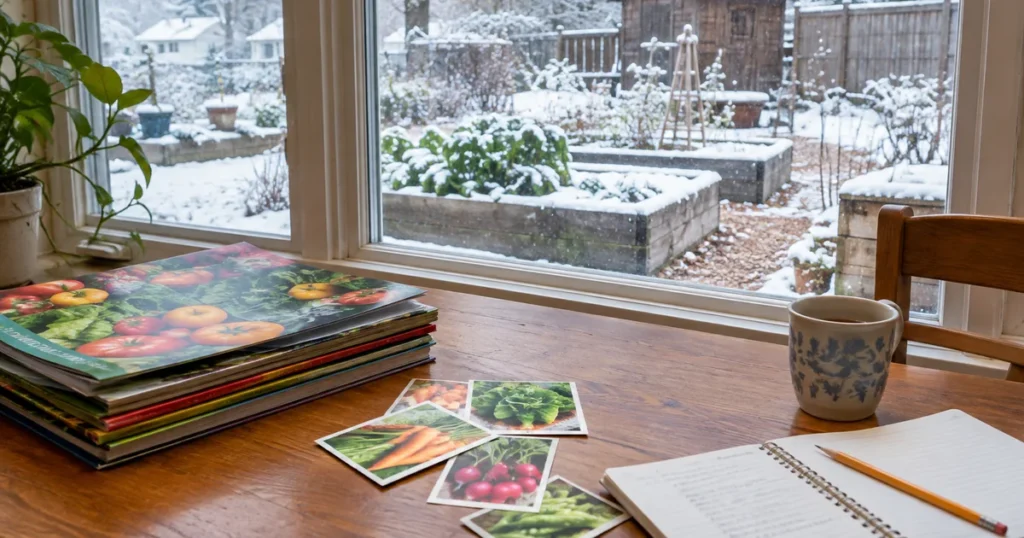
The best seed catalogs for most American gardeners come from companies that trial their varieties, explain them clearly and match your climate: Johnny’s, Territorial, Southern Exposure, Fedco, Seed Savers Exchange, Baker Creek and High Mowing are standouts for home vegetable growers. Many still mail a free print catalog if you request one in late fall, and all of them publish their full listings online. Below, you’ll find what each company does best, how to decode a catalog page, and when to order for your zone.
Quick answer
- Request catalogs in October-December; most arrive between December and February, and popular varieties sell out by early spring.
- Pick a company near your climate: Maine and Vermont companies for short seasons, Southern Exposure or Park for heat and humidity, Territorial for the Pacific Northwest.
- Heirloom seeds are open-pollinated varieties you can save seed from; F1 hybrids often add disease resistance and uniformity.
- “Non-GMO” is a marketing label on garden seed: genetically engineered seed is almost never sold to home gardeners.
- Read the days to maturity and disease codes before you buy; they matter more than the photo.
In this guide
Want every planting date for your region in one place? Get The Year-Round Vegetable Garden (225 pages, $27).
Why seed catalogs beat the seed rack
A store rack carries a few dozen varieties chosen for broad appeal. A good catalog lists hundreds, with days to maturity, disease resistance, plant size, packet seed counts and growing notes. That is how you find a 55-day tomato for a zone 4 summer, a bolt-resistant lettuce for Texas, or a downy-mildew-resistant cucumber for a humid Southeast garden.
Catalogs are also free education. Many include sowing charts, spacing guides and trial notes written by people who grow those crops every season. Paired with a vegetable garden plan, a catalog turns winter browsing into a realistic shopping list.
The best seed catalogs to request
The profiles below describe each company’s focus and strengths, not a ranking. Print catalogs change from year to year (some companies shrink their mailing lists or charge for a big edition), so check each site for current availability; every company here also has a full online catalog.
Baker Creek Heirloom Seeds (Missouri)
Baker Creek is the go-to source for rare and unusual heirloom seeds from around the world: purple carrots, striped tomatoes, dozens of melons and Asian greens. It typically offers a free catalog of 100-plus pages to US addresses and a much larger Whole Seed Catalog sold separately. Great for collectors and anyone who loves color and variety; less focused on disease-resistant hybrids.
Johnny’s Selected Seeds (Maine)
Johnny’s, an employee-owned company, serves market farmers and serious home gardeners. Its catalog is one of the most technical: detailed disease-resistance codes, seeding rates, succession planting advice and a large online Grower’s Library. It sells hybrids, open-pollinated and organic seed, plus tools. Strong for short seasons, but the varieties are trialed for broad adaptation.
Seed Savers Exchange (Iowa)
A nonprofit founded in 1975 and based at Heritage Farm in Decorah, Iowa, Seed Savers Exchange preserves heirloom varieties and sells many of them through its catalog, often with the family history behind each one. Buying here supports seed conservation. Expect open-pollinated and heirloom seed, much of it organic, with strong Midwest adaptation.
Southern Exposure Seed Exchange (Virginia)
This worker-run cooperative in central Virginia focuses on heirloom and open-pollinated varieties adapted to the Mid-Atlantic and the South: heat-tolerant tomatoes, Southern peas, okra, collards, peanuts, plus fall garlic and perennial onions. If you garden in zones 6-9 with hot, humid summers, start here.
Burpee (Pennsylvania)
Burpee has sold seeds to American home gardeners since 1876 and is the most familiar name on the list. Its catalog leans toward easy, high-performing hybrids, exclusive varieties and live plants, with beginner-friendly descriptions. A good first catalog for new gardeners.
Territorial Seed Company (Oregon)
Founded in 1979 to find varieties suited to the Pacific Northwest, Territorial trials thousands of varieties on its farm near Cottage Grove, Oregon. It is known for cool-season crops, a strong selection for fall and winter growing, and practical growing guides. Ideal for zones 7-9 west of the Cascades, and useful for cool-summer gardens anywhere.
High Mowing Organic Seeds (Vermont)
High Mowing, in Wolcott, Vermont, sells only certified organic seed, including organic hybrids. That makes it a top choice if you want organic seed for every crop without checking each listing. Varieties are well suited to Northern and Northeast gardens.
Fedco Seeds (Maine)
Fedco is a worker- and consumer-owned cooperative in Clinton, Maine, specializing in cold-hardy varieties. Its print catalog is famous for dense, witty, information-packed descriptions and low prices, with organic, heirloom and hybrid options. Excellent for zones 3-5 and short seasons; the cooperative ships seed year-round, but popular items go fast.
Botanical Interests (Colorado)
Botanical Interests is best known for illustrated seed packets with detailed growing instructions printed inside the packet. It offers heirloom, hybrid and organic seed, and its varieties are widely sold in garden centers, so you can buy locally after browsing the catalog. Very beginner-friendly.
Park Seed (South Carolina)
Park Seed, based in Hodges, South Carolina, has served home gardeners since the 1800s and sells seeds, plants, bulbs and seed-starting supplies. Its catalog includes many heat-tolerant varieties suited to the Southeast.
Pinetree Garden Seeds (Maine)
Pinetree sells smaller packets at lower prices, which is ideal for small gardens, raised beds and gardeners who want to try many varieties without wasting seed. Its catalog has a broad vegetable and herb selection, including international crops.
Renee’s Garden (founded in California)
Renee’s Garden was founded by Renee Shepherd to bring trialed, flavor-first varieties to home gardeners. Packets feature watercolor illustrations and growing notes, and many are “mixed” packets (three colors of zucchini or lettuce in one). It sells mainly online and through garden centers; check its site for catalog availability.
Garden hack: Order from one company in your own region and one specialist. A local-climate company gives you reliable basics, and a specialist (heirloom, organic or small-packet) covers the fun extras. You’ll pay two shipping fees, but you’ll get varieties that fit your garden.
Seed catalog comparison table
| Company | Base | Focus | Seed types | Best regions |
|---|---|---|---|---|
| Baker Creek | Missouri | Rare heirlooms | Open-pollinated, heirloom | All (collectors) |
| Johnny’s Selected Seeds | Maine | Growers, technical detail | Hybrid, OP, organic | All, strong for North |
| Seed Savers Exchange | Iowa | Heirloom preservation | Heirloom, many organic | Midwest, North |
| Southern Exposure | Virginia | Southern heirlooms | Heirloom, OP, many organic | Mid-Atlantic, South |
| Burpee | Pennsylvania | Beginner-friendly hybrids | Hybrid, some heirloom | All |
| Territorial Seed | Oregon | Cool-season, winter crops | Hybrid, OP, organic | Pacific Northwest, cool summers |
| High Mowing | Vermont | 100% certified organic | Organic hybrid and OP | North, Northeast |
| Fedco Seeds | Maine | Cold-hardy, low prices | Hybrid, OP, organic | Zones 3-5, short seasons |
| Botanical Interests | Colorado | Packets with full instructions | Heirloom, hybrid, organic | All, beginners |
| Park Seed | South Carolina | Seeds, plants, supplies | Mostly hybrid | Southeast, all |
| Pinetree | Maine | Small, low-cost packets | Hybrid, OP, heirloom | All, small gardens |
| Renee’s Garden | Online and retail | Flavor-first, mixed packets | Heirloom, hybrid, organic | All, home gardeners |
How to read a seed catalog
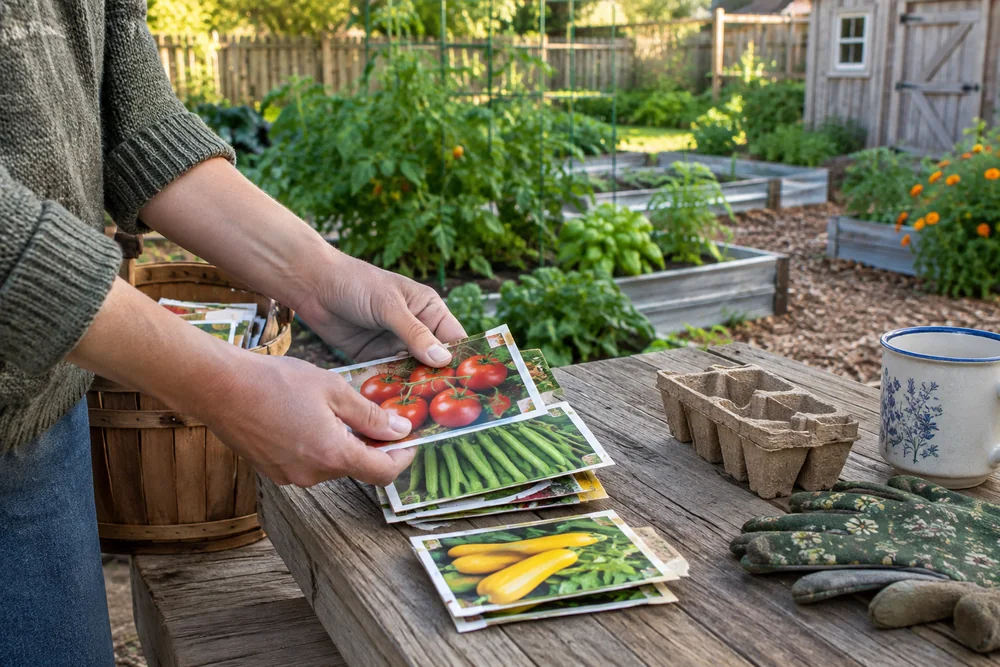
A catalog listing packs a lot into a few lines. Here’s what the key terms mean.
Days to maturity
This is the average time to first harvest under good conditions. For crops usually transplanted (tomatoes, peppers, eggplant), it typically counts from the day you set transplants outside, not from sowing, so add 6-8 weeks of indoor growing. For direct-sown crops (beans, carrots, squash), it counts from sowing. Short-season gardeners in zones 3-5 should favor lower numbers; Southern gardeners racing summer heat do the same with lettuce and peas.
Disease resistance codes
Letters after a variety name tell you which diseases it resists. Common examples: V (Verticillium wilt), F (Fusarium wilt; F1, F2 or FF for multiple races), N (root-knot nematodes), TMV/ToMV (tobacco or tomato mosaic virus), TSWV (tomato spotted wilt virus), LB (late blight), PM and DM (powdery and downy mildew). Some catalogs add HR (high resistance) or IR (intermediate resistance). Resistance is not immunity: heavy disease pressure can still cause symptoms. Each catalog prints its own code key, so check it.
F1 hybrid vs. open-pollinated vs. heirloom
- F1 hybrid: a cross of two selected parent lines. Often more uniform, vigorous and disease-resistant. Seed saved from hybrids won’t grow true to type.
- Open-pollinated (OP): pollinated naturally and stable, so saved seed produces plants like the parent (if you prevent cross-pollination).
- Heirloom: an open-pollinated variety passed down for generations, valued for flavor, color and history. Many heirlooms have less disease resistance than modern hybrids.
Organic, untreated and treated seed
Certified organic seed was produced on certified organic farms. Treated seed is coated with a fungicide or insecticide to protect it during germination, often dyed a bright color so you can spot it; catalogs say “untreated” when it isn’t. Pelleted seed is coated in clay to make tiny seeds (carrots, lettuce) easier to sow.
What “non-GMO seeds” means
Searches for “non GMO seeds” are huge, but the label tells you very little on garden seed. Genetically engineered vegetable seed has almost never been sold to home gardeners: the few GE sweet corn and squash varieties are licensed to commercial growers. The notable exception is the genetically engineered Purple Tomato, sold to home gardeners since 2024 and clearly labeled as bioengineered. Every heirloom, open-pollinated and hybrid variety in the catalogs above is non-GMO, whether the packet says so or not.
Watch out: “Heirloom” and “non-GMO” don’t mean disease-resistant or better adapted to your garden. If you’ve lost tomatoes to wilt or blight before, look for resistance codes first, then choose flavor.
Gear that helps
- Seed storage organizer box with dividers: Keeps leftover packets sorted, dry and easy to inventory before the next catalog order.
As an Amazon Associate we earn from qualifying purchases. Check current prices and reviews on Amazon.
When to order seeds: timeline by zone
Order in December or January for the best selection, and at least 2-3 weeks before your first indoor sowing date. Use this as a rough guide; your own date depends on your average last frost, so check your frost dates by zone. Microclimates vary, so confirm with your local extension office.
| Zone | Typical last spring frost | Order seeds by | First indoor sowing (onions, leeks) | Order fall crops by |
|---|---|---|---|---|
| 3-4 | Late May to early June | Late January | Late February to March | May |
| 5 | Early to mid-May | Mid-January | Mid-February | Late May |
| 6 | Late April to early May | Early January | Early February | June |
| 7 | Early to mid-April | Late December | Late January | June to July |
| 8 | Mid to late March | Mid-December | Early January | July |
| 9-10 | February or frost-free | Early December; again in summer | Fall and winter crops in late summer | July to August (main season) |
In zones 8-10, fall and winter are prime growing seasons, so a second seed order in midsummer for lettuce, broccoli, carrots and onions is normal. For exact indoor timing crop by crop, see when to start seeds indoors.
Garden hack: Before you order, inventory last year’s leftovers. Stored cool and dry, most vegetable seed stays viable for 2-5 years (onions and parsnips are shorter-lived). A quick paper-towel test with 10 seeds tells you the germination rate in a week.
The Year-Round Vegetable Garden (2027 Edition)
Plan the whole season in one place: a 225-page month-by-month guide with calendars for six US growing regions, 50 plant profiles (tomatoes included), 5 copy-ready garden plans and 7 printable pages.
Tomato lover? Add Tomato Mastery, our seed-to-harvest tomato blueprint, for just $10 at checkout.
Get the guide ($27)Gear that helps
- Garden planner journal: Helps readers record varieties ordered, sowing dates and results to plan next year's order.
As an Amazon Associate we earn from qualifying purchases. Check current prices and reviews on Amazon.
Common mistakes to avoid
- Ordering too late and finding the best varieties sold out.
- Buying long-season varieties (100-day melons, late tomatoes) for a short zone 3-4 summer.
- Ignoring packet seed counts; a hybrid tomato packet may hold only 10-30 seeds, while lettuce packets hold hundreds.
- Choosing by photo instead of disease resistance and days to maturity.
- Paying extra for “non-GMO” claims that apply to virtually all garden seed.
- Ordering more varieties than your beds can hold. Plan the space first.
FAQ
Which seed companies send free catalogs?
Many do, including Johnny’s, Baker Creek, Territorial, Southern Exposure, Fedco, Seed Savers Exchange, Botanical Interests, Park Seed and Pinetree. Availability changes each year, so request through each company’s website.
When do seed catalogs come out?
Most new catalogs mail between late November and January, and online catalogs usually go live first. Requesting in October or November puts you on the list for the first mailing.
Are heirloom seeds better than hybrids?
Neither is better overall. Heirlooms offer flavor, diversity and seed you can save; hybrids often offer more disease resistance and uniform yields. Many gardeners grow both.
Do I need to buy non-GMO seeds?
No special effort is needed. Almost no genetically engineered vegetable seed is sold to home gardeners, so standard heirloom, open-pollinated and hybrid garden seeds are all non-GMO.
What does days to maturity mean on a seed packet?
It is the average number of days to first harvest. For transplanted crops like tomatoes and peppers, it usually counts from transplanting outdoors; for direct-sown crops, from sowing.
Can I save seeds from hybrid plants?
You can, but the plants won’t grow true to the parent. Save seed from open-pollinated or heirloom varieties if you want the same variety next year.
Keep reading
Sources
- Understanding Your Seed Catalog – West Virginia University Extension
- Deciphering Seed Catalog Lingo – Purdue Extension
- How to Read a Seed Catalog – Washington State University Extension
- List of Plant Disease Resistance Codes – Johnny’s Selected Seeds
- Translating the Language of Seed Packets – The Garden Professors
- A new GMO tomato that home gardeners can grow – Vermont Public
- Garden Seed Catalogs and Online Plant Sources – The Old Farmer’s Almanac