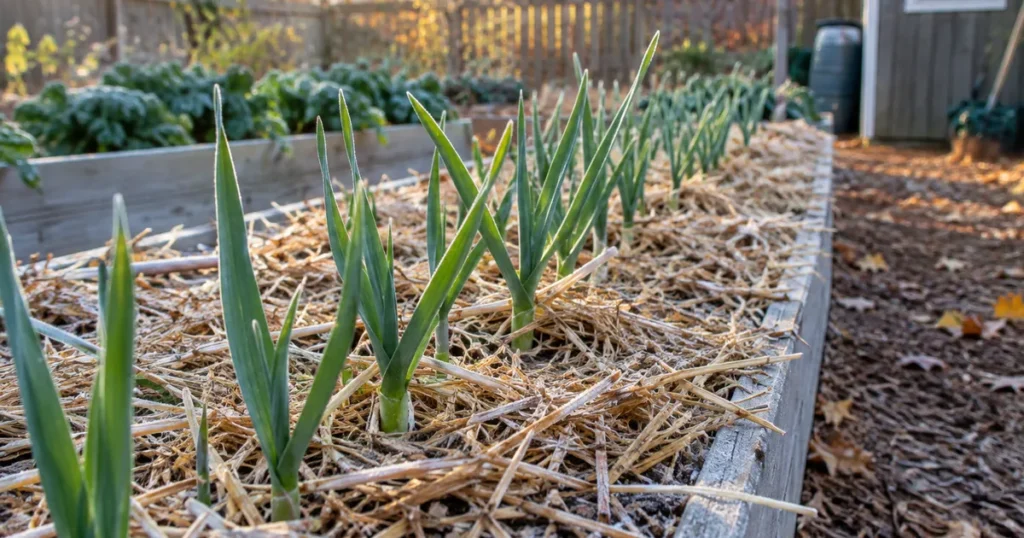
Plant garlic in fall, about 1 to 3 weeks after your first killing frost, when the soil has cooled to around 50°F. That works out to mid-September in the coldest northern zones, October to early November across the middle of the country, and November through early January in the Deep South and warm West. Spring planting is possible, but the bulbs come out smaller.
Quick answer
- Rule of thumb: plant 4-6 weeks before the ground freezes, or 1-3 weeks after the first killing frost.
- Zone 5: early to late October. Zone 6: mid-October to early November. Zone 7: mid-October to mid-November.
- Zones 8-10: November to early January, ideally with pre-chilled cloves in zones 9-10.
- December planting still works where the soil is not frozen; spring planting gives smaller bulbs.
In this guide
- Why timing matters for garlic
- When to plant garlic: zone-by-zone table
- When to plant garlic in zone 5
- When to plant garlic in zone 6
- When to plant garlic in zone 7
- When to plant garlic in Michigan
- When to plant garlic in Ohio
- When to plant garlic in Texas
- Is it too late to plant garlic in December?
- Can you plant garlic in spring?
- Pre-chilling garlic in warm climates
- Common mistakes to avoid
- FAQ
Want every planting date for your region in one place? Get The Year-Round Vegetable Garden (225 pages, $27).
Why timing matters for garlic
Garlic cloves need a cold period before they will divide into a full bulb. Texas A&M AgriLife lists the requirement as 6 to 8 weeks below 40°F, and Oregon State notes that some strains need less. Once chilled, garlic starts bulbing when spring days pass about 13 hours and the soil warms above 60°F.
The goal of fall planting is to get roots growing before winter while keeping leaf growth minimal. Plant too early and a warm fall pushes tall leaves that winter cold can burn. Plant too late in the North and the cloves never root before the ground locks up, which leaves them prone to frost heaving.
When to plant garlic: zone-by-zone table
USDA hardiness zones are based on the average coldest winter temperature, not on frost dates. Use this table as a starting window, then adjust it with your own first frost date and soil temperature.
| USDA zone | Planting window | Example states and areas | Best garlic types |
|---|---|---|---|
| 3 | Mid-September to early October | Northern Minnesota, northern North Dakota, northern Maine, high-elevation Montana | Hardneck (porcelain, purple stripe, rocambole) |
| 4 | Late September to mid-October | Most of Minnesota and North Dakota, northern Wisconsin, Michigan’s Upper Peninsula, northern Vermont and New Hampshire | Hardneck |
| 5 | Early to late October | Iowa, Nebraska, southern Wisconsin, northern Illinois, northern Lower Michigan, upstate New York | Hardneck, hardy softneck |
| 6 | Mid-October to early November | Ohio, Indiana, Pennsylvania, southern Michigan, Kansas, Massachusetts, Connecticut | Hardneck or softneck |
| 7 | Mid-October to mid-November | Virginia, Maryland, Kentucky, Tennessee, Oklahoma, North Carolina Piedmont, New Jersey, Texas Panhandle | Hardneck or softneck |
| 8 | November to early December | Georgia, South Carolina, Alabama, Mississippi, North and Central Texas, western Oregon and Washington | Softneck, Creole, some hardnecks |
| 9 | Mid-November to December | Houston and South Texas, southern Louisiana, north and central Florida, much of coastal and inland California, southern Arizona | Softneck, Creole, Asiatic; pre-chill cloves |
| 10 | October to December in Southern California and the low desert; November to January in South Florida | South Florida, coastal Southern California | Softneck, Creole; pre-chill cloves |
Elevation, lakes and coastlines can shift these dates by several weeks, and many states span three or more zones. Look up your exact zone on the USDA map, then check your local frost dates or ask your county extension office. Our frost dates by zone guide explains how to find yours.
Garden hack: Push a cheap soil thermometer 4 inches into the bed at about 8 a.m. for a few days in a row. When morning readings sit around 50°F, it is garlic time, whatever the calendar says.
Gear that helps
- Soil thermometer: Planting is timed to soil around 50°F; a thermometer takes the guesswork out.
As an Amazon Associate we earn from qualifying purchases. Check current prices and reviews on Amazon.
When to plant garlic in zone 5
Zone 5 gardeners usually plant in October. Aim for 1 to 2 weeks after the first killing frost, which for most of Iowa, Nebraska and northern Illinois lands in early to mid-October. Mulch with 4 to 6 inches of straw once the soil begins to freeze.
When to plant garlic in zone 6
In zone 6, mid-October to early November is the sweet spot. Hardnecks such as Music and softnecks such as Inchelium Red both do well. If a warm spell is forecast, wait a week rather than planting into warm soil.
When to plant garlic in zone 7
Zone 7 has a longer window: mid-October through mid-November. NC State Extension gives September 15 to November 15 for North Carolina, so the earlier end suits cooler mountain areas and the later end suits the Piedmont and warmer pockets. Mulch lightly, 3 to 4 inches, mostly for weed control.
When to plant garlic in Michigan
Michigan spans roughly zones 4 to 6. In the Upper Peninsula and the northern Lower Peninsula, plant from late September to mid-October. In southern Michigan, including the Detroit, Lansing and Grand Rapids areas, mid-October to early November usually works. Heavy straw mulch is worth it statewide.
When to plant garlic in Ohio
Most of Ohio falls in zone 6. Ohio State University Extension recommends planting in late fall, after the rest of the garden is cleared, so the cloves root but grow very little before going dormant. In practice that means mid-October to early November, with 4 inches of clean straw over the bed.
When to plant garlic in Texas
Texas runs from zone 7 in the Panhandle to zone 10 near the Rio Grande, so dates vary a lot. Texas A&M AgriLife gives a simple signal: plant once soil at a 2-inch depth is below 85°F.
- Panhandle and North Texas: October.
- Central Texas (Austin, San Antonio area): October to November.
- Houston, the Gulf Coast and South Texas: November to December, preferably with pre-chilled cloves.
AgriLife lists California Early and California White softnecks, plus elephant garlic, among its suggested varieties for Texas gardens.
Is it too late to plant garlic in December?
Often not. If you can still dig the soil, you can plant. Late cloves may barely root before winter and finish smaller, but they generally still form bulbs. University of Arkansas Extension puts the latest workable date there at mid-January; cloves planted later tend to form a single round clove instead of a divided bulb.
For late planting in the North:
- Plant as soon as you can work the soil, even if it is cold.
- Set cloves at the normal depth (2-3 inches to the base).
- Mulch right away with 6 inches of straw or shredded leaves to slow freezing and reduce heaving.
- In spring, pull the mulch back as soon as shoots show to help the soil warm.
If the ground is already frozen solid, store your seed garlic cool and dry and plant as early as possible in spring.
Gear that helps
- Weed-free straw mulch: Late plantings need heavy mulch right away.
As an Amazon Associate we earn from qualifying purchases. Check current prices and reviews on Amazon.
Can you plant garlic in spring?
Yes, but expect smaller bulbs. Ohio State and Utah State both note that spring-planted garlic yields smaller heads than fall-planted garlic. The cloves still need cold: South Dakota State says spring garlic needs about a month of temperatures near 40°F, and University of Illinois Extension suggests chilling cloves for about 8 weeks before a spring planting.
How to give spring garlic the best shot:
- Chill first. Keep cloves (still in their skins) in a paper bag in the refrigerator for 4 to 8 weeks before planting.
- Plant early, as soon as the soil can be worked, often March or early April in zones 4-6.
- Choose softneck types, which tend to be more forgiving of short seasons.
- Feed and water steadily, since the plants have fewer weeks to build leaves.
Spring garlic sometimes forms single-clove rounds. Replant those in fall and they will make full bulbs the following summer.
The Year-Round Vegetable Garden (2027 Edition)
Plan the whole season in one place: a 225-page month-by-month guide with calendars for six US growing regions, 50 plant profiles (tomatoes included), 5 copy-ready garden plans and 7 printable pages.
Tomato lover? Add Tomato Mastery, our seed-to-harvest tomato blueprint, for just $10 at checkout.
Get the guide ($27)Pre-chilling garlic in warm climates
In zones 9 and 10, winters may not deliver 6 to 8 weeks of soil below 40°F. Without that chill, garlic grows leaves but forms poor or undivided bulbs. Two fixes help:
- Grow adapted types. UF/IFAS recommends softneck types such as Artichoke and Creole for Florida, and Clemson notes Creole garlic tolerates hard weather well. Asiatic types also suit mild winters.
- Pre-chill the cloves. Put whole bulbs or cloves in a paper bag in the refrigerator (about 40°F) for 6 to 8 weeks before planting, then plant them straight into cool soil. Keep them away from fruit and do not freeze them.
Time the chill so planting lands in November or December, once soil temperatures drop.
Watch out: Do not move chilled cloves into warm soil above 85°F or leave them on a warm counter after chilling. Heat can cancel part of the cold treatment, and the cloves may sprout weakly or rot.
Gear that helps
- Breathable paper or mesh produce storage bags: Used to pre-chill cloves in the refrigerator without trapping moisture.
As an Amazon Associate we earn from qualifying purchases. Check current prices and reviews on Amazon.
Common mistakes to avoid
- Planting by a calendar date from another region instead of your local frost date.
- Planting in warm soil in September in zones 6-8, which leads to tall fall leaves and winter burn.
- Waiting until the ground freezes in zones 3-5.
- Skipping the chill in zones 9-10 or for spring plantings.
- Choosing hardneck varieties for Gulf Coast or South Florida without checking that they suit mild winters.
- Forgetting mulch after a late planting.
For depth, spacing, soil prep and mulching details, follow our step-by-step guide on how to plant garlic, and pick a variety that fits your zone with our hardneck vs softneck garlic guide.
FAQ
What month do you plant garlic?
October for most of the northern half of the US, November for zones 7-8, and November to early January in zones 9-10. The coldest zones plant from mid-September.
Can I plant garlic in November?
Yes. November is ideal in zones 7 and 8 and still works in zone 6 if the ground is not frozen. In zones 3-5, plant only if the soil is still workable and mulch heavily right away.
What happens if you plant garlic too early?
Warm fall weather pushes tall leaves before winter. Hard freezes can then damage the foliage and weaken the plants, which often means smaller bulbs. Waiting until soil is near 50°F avoids this.
Is it OK if garlic sprouts before winter?
Yes. A few inches of green in fall is normal. Keep the bed mulched, and do not cut the shoots.
Can you plant garlic in spring and harvest the same year?
Yes. Spring-planted garlic is usually harvested in mid to late summer, a few weeks after fall-planted garlic, and bulbs are smaller. Chill the cloves first.
Keep reading
Sources
- Garlic crop guide – Texas A&M AgriLife Extension
- Fall Vegetable Gardening Guide for Texas – Texas A&M AgriLife Extension
- Growing Garlic in the Garden – Ohio State University Extension
- Planting and Growing Garlic – University of Illinois Extension
- Garlic: How to Grow It – South Dakota State University Extension
- Home Gardening Series: Garlic – University of Arkansas Cooperative Extension
- Let’s Plant Some Garlic – NC State Extension
- Garlic – UF/IFAS Gardening Solutions
- Garlic – Oregon State University Horticulture
- 2023 USDA Plant Hardiness Zone Map – USDA Agricultural Research Service