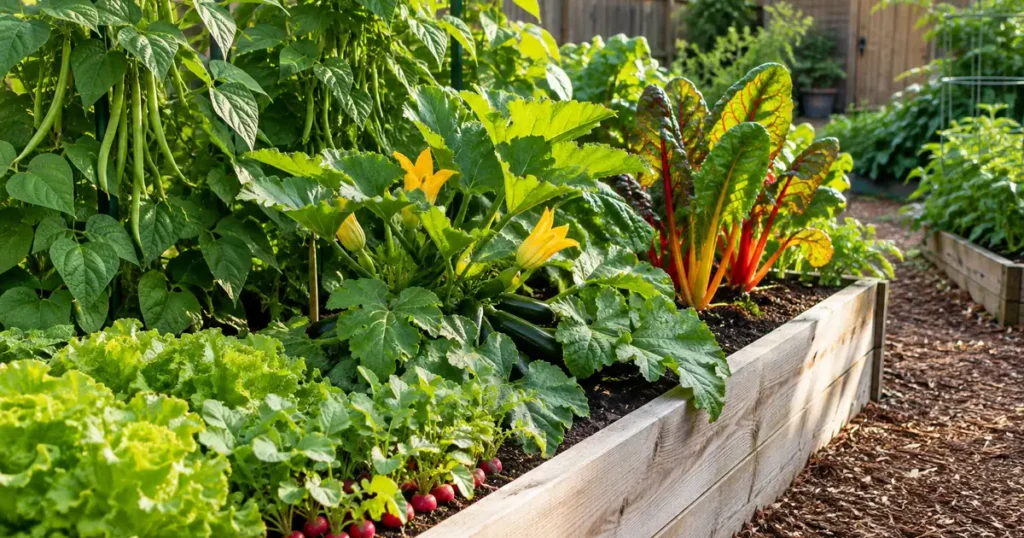
The easiest vegetables to grow for beginners are fast, forgiving crops like radishes, leaf lettuce, bush beans, zucchini, cucumbers, cherry tomatoes, kale, Swiss chard and garlic. Most can be sown straight into the garden, and several are ready to pick in 30 to 60 days. Below you’ll find 15 easy vegetables with days to maturity, the right season for each, and when to plant them in your zone.
Quick answer
- Fastest wins: radishes (about 30 days), spinach and leaf lettuce (about 35 to 60 days).
- Most productive warm-season picks: bush beans, zucchini, cucumbers and cherry tomatoes.
- Low-maintenance greens: kale and Swiss chard keep producing for months if you pick outer leaves.
- Plant cool-season crops before your last spring frost and warm-season crops after it.
- In zones 8-10, grow the cool-season list in fall and winter.
In this guide
 Every planting date for your region in one place: The Year-Round Vegetable Garden ($27, PDF).
15 easiest vegetables to grow at a glance
Days to maturity below are typical ranges from extension planting guides. Your seed packet gives the exact number for your variety. For transplanted crops, the count starts on the day you set plants in the garden.
| Crop | Sow or transplant | Days to maturity | Season | Beginner tip |
|---|---|---|---|---|
| Radishes | Sow directly | About 30 | Cool | Sow small batches every 1 to 2 weeks in spring and fall |
| Leaf lettuce | Sow directly or transplant | 40-60 | Cool | Pick outer leaves; give afternoon shade as it warms |
| Spinach | Sow directly | 35-50 | Cool | Plant early; it bolts as days get long and hot |
| Peas | Sow directly | About 65 | Cool | Give vining types a trellis at planting time |
| Kale | Sow directly or transplant | 40-65 | Cool | Harvest lower leaves; flavor sweetens after frost |
| Swiss chard | Sow directly | 40-60 | Cool to warm | Tolerates summer heat better than spinach |
| Beets | Sow directly | 50-70 | Cool | Each “seed” is a cluster; thin seedlings to 3 inches |
| Green onions | Sow directly or plant sets | 60-70 | Cool | Pull as needed once pencil-thick |
| Garlic | Plant cloves in fall | About 8-9 months (fall to early summer) | Cool | Almost no care besides mulch and weeding |
| Potatoes | Plant seed potatoes | About 70-125, early to late varieties | Cool | Hill soil over stems so tubers stay covered |
| Bush beans | Sow directly | 45-65 | Warm | No trellis needed; pick every 2 to 3 days |
| Zucchini | Sow directly | About 50-60 | Warm | One or two plants are enough for most households |
| Cucumbers | Sow directly | 55-70 | Warm | Grow on a trellis to save space and keep fruit clean |
| Cherry tomatoes | Transplant | About 65 from transplant (varies by variety) | Warm | Stake or cage at planting; one plant gives a steady supply |
| Peppers | Transplant | About 70 from transplant | Warm | Wait for warm soil; plants stall in cold weather |
Sources: days to maturity ranges compiled from Colorado State University, Penn State and University of Minnesota extension planting guides.
Gear that helps
- Beginner vegetable seed assortment: Covers several of the easy crops on this list in one purchase so you can sow in small batches.
As an Amazon Associate we earn from qualifying purchases. Check current prices and reviews on Amazon.
Easy cool-season vegetables
Cool-season crops grow best below about 70°F, according to NC State Extension. They handle light frost, so you can plant them early in spring, and again in late summer for a fall harvest.
1. Radishes
Radishes are the fastest crop in the garden. Colorado State and Penn State both list about 30 days to maturity for spring types. Sow seeds 1/2 inch deep as soon as soil can be worked, and pick them promptly: radishes left too long turn woody and hot. UF/IFAS Extension calls them easy and fast-growing in Florida’s cool season too.
2. Leaf lettuce
Loose-leaf lettuce is far easier than heading types. Sow seed just 1/4 inch deep and keep the surface moist until it sprouts. Harvest outer leaves as soon as they’re big enough to eat. University of Minnesota lists 40 to 60 days to maturity.
3. Spinach
Spinach is quick (35 to 50 days) and very cold-tolerant, but it bolts, or goes to seed, as days lengthen and heat up. Plant it as early as possible in spring, or in late summer for fall. In the South, it’s a winter crop.
4. Peas
Sow peas 1 inch deep in early spring, 2 to 4 weeks before your last frost. Snap and snow peas are the most rewarding for beginners since you eat the whole pod. Vining types need a trellis; dwarf types need little or none.
5. Kale
Kale handles cold, heat and neglect better than most greens. Pick the lowest leaves and let the center keep growing, and one planting can feed you from late spring into winter in many areas. Light frost improves its flavor.
6. Swiss chard
Chard is a beet relative grown for its leaves and colorful stems. It handles summer heat better than spinach and keeps producing if you cut outer leaves 1 to 2 inches above the soil.
7. Beets
Beets give you two crops: greens and roots. Each wrinkled “seed” holds several seeds, so thin seedlings to about 3 inches apart. Penn State notes beets can stay in the ground after maturing and be pulled as needed.
8. Green onions
Bunching onions (scallions) are nearly foolproof from seed or small sets. Pull them once they reach pencil thickness. They tuck into gaps between larger crops.
9. Garlic
Garlic is planted in fall and harvested the next summer, with almost no work in between. University of Minnesota Extension advises planting cloves 2 to 3 inches deep, about 1 to 2 weeks after the first killing frost in cold climates, then mulching with 3 to 4 inches of straw or leaves. Harvest when the lower leaves brown while about half the upper leaves are still green. Our guide on how to plant garlic gives dates for every zone.
10. Potatoes
Iowa State Extension lists potatoes among its five easiest vegetables. Plant seed potato pieces about 4 inches deep and 1 foot apart in early spring, then hill soil around stems as they grow. Dig “new” potatoes early, or wait until the tops die back for storage potatoes. Step-by-step details are in our guide on how to plant potatoes.
Easy warm-season vegetables
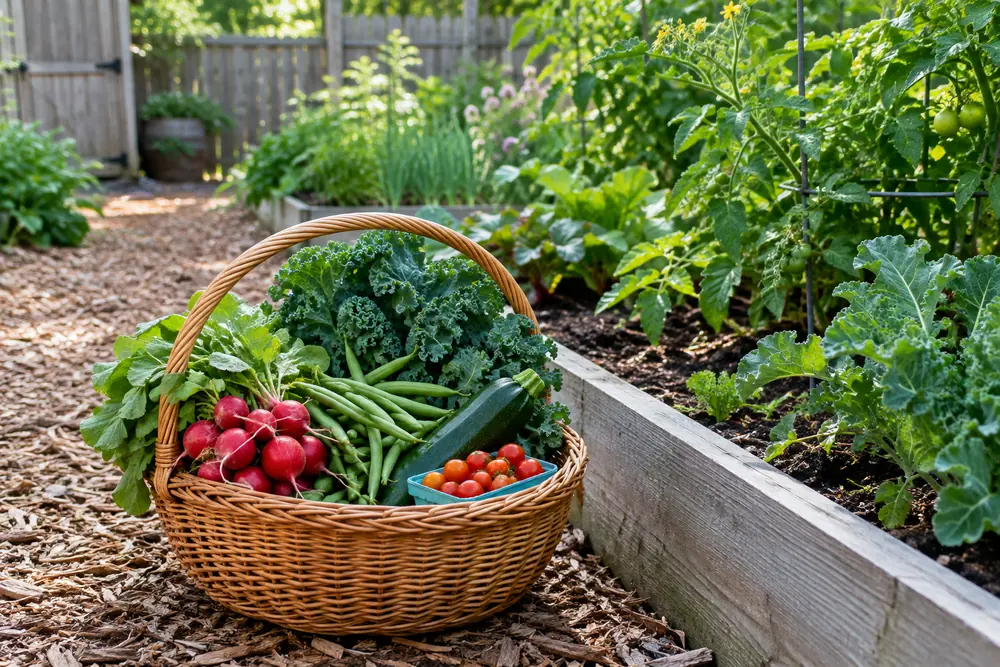
Warm-season crops are killed by frost and need warm soil to grow. Plant them after your last frost date, when soil reaches at least 55 to 60°F.
11. Bush beans
Bush beans need no support and produce heavily. Sow seeds 1 inch deep after the last frost. Iowa State Extension recommends picking every couple of days when pods are about pencil-thick; regular picking keeps plants producing for weeks. Sow a new row every two weeks until midsummer for a steady supply.
12. Zucchini
Zucchini and other summer squash grow fast and yield a lot from one plant. University of Minnesota Extension recommends direct seeding after the last frost, once the soil is about 70°F at 2 inches deep. Pick fruit small and often, every day or two at peak season.
13. Cucumbers
Sow cucumbers 1 inch deep in warm soil, or set out young transplants no more than 2 to 3 weeks old, as Colorado State advises. A simple trellis keeps fruit straight and off the ground. Bush varieties suit containers.
14. Cherry tomatoes
Cherry tomatoes start bearing earlier than big slicers and keep going until frost. Buy a stocky transplant, plant it after the last frost and add a cage or stake right away. Find variety ideas in our guide to growing cherry tomatoes, or the full process in how to grow tomatoes.
15. Peppers
Peppers are slow starters but low-maintenance once the weather heats up. Set out transplants after nights stay warm, about two weeks after your last frost. Iowa State notes you can pick bell peppers green, or wait a few more weeks for red, yellow or orange.
Garden hack: Plant one extra zucchini or cucumber “hill” a few weeks after the first. If squash bugs or vine borers take out the early plants, the backup keeps your harvest going.
Gear that helps
- Tomato cage or plant stake set: Cherry tomatoes and peppers need support from planting day.
As an Amazon Associate we earn from qualifying purchases. Check current prices and reviews on Amazon.
Best vegetables for beginners by zone
Use this table to time your planting. Dates are general; check your local frost dates or extension office, since microclimates vary.
| Zone | Cool-season crops (radishes, lettuce, peas, kale) | Warm-season crops (beans, zucchini, tomatoes) | Garlic |
|---|---|---|---|
| 3-4 | Late April to May; again late July-August | Early to mid-June | Late September to early October |
| 5 | Mid-April to early May; again August | Mid- to late May | October |
| 6 | Late March to April; again August | Early to mid-May | Mid-October to early November |
| 7 | March to early April; again late August-September | Late April to early May | Late October to November |
| 8 | February to March; again September-October | April | November |
| 9-10 | October to February (main season) | February-March; again August-September | November to December |
In zones 8-10, summer heat makes lettuce, spinach and peas bolt or stall, so treat fall and winter as their main season. UF/IFAS Extension, for example, lists lettuce, carrots and spinach from roughly September to March in Florida. For detailed timing, see frost dates by zone.
Low-maintenance vegetables for small spaces
Short on room? Lettuce, radishes, green onions, bush beans, Swiss chard, peppers and cherry tomatoes all grow well in containers or a single raised bed. Clemson Extension recommends containers at least 6 to 8 inches deep for most crops, deeper for tomatoes, and notes that fruiting crops need at least 5 hours of direct sun and do better with 8 to 10. See growing tomatoes in pots for container sizes, or raised garden beds if you want a bed that drains well and warms early.
Watch out: Containers dry out fast. Clemson Extension says you may need to water daily, even twice a day, on a hot patio. Check the soil with your finger every morning in summer.
Gear that helps
- Fabric grow bags: An inexpensive way to grow peppers, cherry tomatoes and greens on a patio.
As an Amazon Associate we earn from qualifying purchases. Check current prices and reviews on Amazon.
How to get a good harvest from easy vegetables
- Full sun: at least 6 hours a day, more for tomatoes, peppers and squash.
- Good soil: mix 2 to 3 inches of compost into the top of the bed before planting.
- Water: about 1 inch a week, counting rain. Water deeply rather than daily sprinkles.
- Mulch: straw or shredded leaves around plants once the soil warms.
- Pick often: beans, zucchini and cucumbers keep producing when you harvest them young.
Our guide on how to start a vegetable garden walks you through site, soil and timing step by step.
Common mistakes to avoid
- Planting the whole seed packet at once. Sow radishes, lettuce and beans in small batches every 1 to 3 weeks.
- Skipping thinning. Crowded radishes, beets and carrots never form good roots.
- Setting out tomatoes and peppers too early. Cold soil stunts them. Wait until about 2 weeks after your last frost.
- Growing spinach and lettuce into summer. They bolt in heat. Switch to chard or beans.
- Letting zucchini and cucumbers get huge. Big fruit is seedy and slows the plant down.
- Too many crops in year one. Five to eight crops are easier to learn and keep up with.
FAQ
What is the easiest vegetable to grow for beginners?
Radishes are usually the easiest: they sprout in days, need no special care and are ready in about 30 days. Bush beans and zucchini are the easiest warm-season choices.
What vegetables grow the fastest?
Radishes (about 30 days), spinach (35 to 50 days), leaf lettuce and kale (about 40 to 60 days) and bush beans (45 to 65 days) are among the fastest from seed.
What vegetables can I plant from seed directly in the garden?
Radishes, lettuce, spinach, peas, beets, carrots, beans, zucchini and cucumbers all grow well from seed sown directly outdoors. Tomatoes and peppers are best planted as transplants.
What are the most low-maintenance vegetables?
Garlic, kale, Swiss chard, bush beans and green onions need little care beyond water, mulch and occasional weeding.
Can I grow easy vegetables in containers?
Yes. Lettuce, radishes, green onions, chard, bush beans, peppers and cherry tomatoes all do well in containers with good potting mix, drainage holes and daily moisture checks in summer.
Keep reading
Sources
- Vegetable Planting Guide – Colorado State University Extension
- Vegetable Seed Planting Guide – Penn State Extension Master Gardeners
- Planting vegetables in midsummer for fall harvest – University of Minnesota Extension
- Five Easy to Grow Vegetables – Iowa State University Extension
- Growing summer squash and zucchini in home gardens – University of Minnesota Extension
- Growing garlic in home gardens – University of Minnesota Extension
- Container Vegetable Gardening – Clemson Cooperative Extension HGIC
- Florida Vegetable Gardening Guide – UF/IFAS Extension