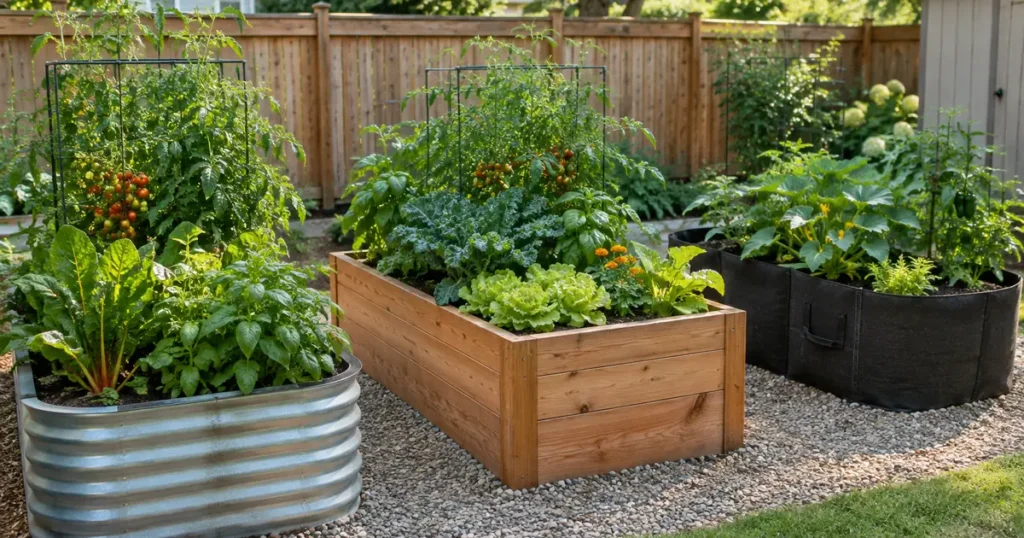
The best raised garden bed for most vegetable gardeners is a sturdy galvanized or Aluzinc metal bed or a cedar bed at least 11 to 17 inches tall, with an open bottom and a width you can reach across. Metal lasts the longest, cedar looks natural and stays cooler, fabric is the cheapest and easiest to move, and elevated beds on legs save your back. This guide compares each type by lifespan, heat, cost and best use, answers the safety questions, and gives you a checklist to shop with.
Quick answer
- Longest-lasting: galvanized or Aluzinc steel, often described as rust-resistant for decades.
- Natural look, cooler soil: cedar or redwood, which resist rot far longer than pine.
- Cheapest and portable: fabric raised beds and grow bags, but they dry out fastest and wear out in a few seasons.
- Easiest on your back: elevated beds on legs, though their shallow soil limits what you can grow.
- Look for at least 11 to 17 inches of height, an open bottom when it sits on soil, rounded or rolled edges on metal, and a width of 4 feet or less.
In this guide
- Raised garden bed types compared
- Metal raised garden beds: galvanized and Aluzinc
- Are galvanized raised beds safe for vegetables?
- Cedar raised garden beds and other wood
- Composite raised beds
- Fabric raised beds and grow bags
- Elevated raised garden beds on legs
- Tiered raised beds
- Raised garden bed buying checklist
- Which raised bed is best for your zone?
- Common mistakes to avoid
- FAQ
 Every planting date for your region in one place: The Year-Round Vegetable Garden ($27, PDF).
Raised garden bed types compared
Here’s how the main types stack up. Lifespans are broad ranges that depend on climate, soil moisture and build quality. Cost is relative for a bed of the same size.
| Type | Lifespan | Heat in summer | Cost level | Best for |
|---|---|---|---|---|
| Galvanized or Aluzinc metal | Long: decades with a quality coating | Walls warm in full sun; soil near edges heats up most | Medium | Most gardeners, tall beds, long-term setups |
| Cedar or redwood | Long: much longer than pine, many seasons | Wood insulates; stays cooler | Medium to high | Natural look, hot climates, DIY builds |
| Untreated pine or fir | Short: a few years before rot | Cooler | Low | Tight budgets, temporary beds |
| Composite (wood-plastic) | Long: does not rot | Moderate; dark colors warm more | Medium to high | Low-maintenance wood look |
| Fabric beds and grow bags | Short: a few seasons, less in strong sun | Breathable walls, but soil dries fast | Low | Renters, patios, trying out gardening |
| Elevated beds on legs | Varies with material | Shallow soil heats and dries fast | Medium to high | Bad backs, wheelchair users, decks |
| Tiered beds | Varies with material | Top tier dries fastest | Medium | Small yards, herbs, greens, strawberries |
For the basics of why raised beds help (faster drainage, earlier warming in spring, better soil from day one) see our guide to raised garden beds.
Metal raised garden beds: galvanized and Aluzinc
Metal raised garden beds are the most popular kit style today, and for good reason. Panels are thin, so you get more growing space inside the same footprint, and they don’t rot. University of Minnesota Extension notes that galvanized steel is often described as rust-resistant for upwards of 50 years, and that metal generally costs more than wood but can last longer.
- Galvanized steel is steel coated with zinc. The zinc corrodes slowly in place of the steel.
- Aluzinc (also sold under names like Galvalume) is steel coated with an aluminum-zinc alloy. It’s widely marketed as more corrosion-resistant than plain galvanized coating.
- Powder-coated or painted metal adds a color layer on top of the coating, which some buyers like for looks.
Most metal kits are modular: corrugated panels bolt together into rectangles, ovals or L-shapes. Corrugation stiffens the panels, but long sides on taller beds can still bow outward once filled with wet soil, so look for cross-braces on beds longer than about 6 feet.
Garden hack: In hot climates, choose a light-colored metal bed or plant a row of tall crops like pole beans along the sunny side. Shading the west-facing wall keeps the soil next to it cooler in the afternoon.
Gear that helps
- Galvanized metal raised garden bed: Long-lasting modular panels with thin walls that leave more room for soil.
As an Amazon Associate we earn from qualifying purchases. Check current prices and reviews on Amazon.
Are galvanized raised beds safe for vegetables?
For most gardens, yes, with a few conditions. Zinc is a plant micronutrient, and the concern extension experts raise is mainly plant health over time, not an immediate risk:
- Acidic soil speeds leaching. University of Minnesota Extension notes zinc may leach in soils with a pH below 5, but most garden soils are near neutral. Keep your bed’s pH in the normal vegetable range of about 6.0 to 7.0; our guide on how to test soil pH shows how.
- Buildup takes years. An extension vegetable specialist answering on Ask Extension cautions that excess zinc can eventually be toxic to plants and block uptake of other micronutrients, mostly in soil right against the walls, and that it could take several years to become a problem.
- Want extra caution? UMN suggests a liner or stainless steel if zinc concerns you. Testing soil every few years catches any buildup early.
- Check the coating. UMN also warns that some prefabricated metal beds sold online have been found to contain lead. Buy from sellers who state what the coating is made of.
Watch out: Don’t use old metal of unknown origin, like scrap roofing or painted farm troughs, for food crops. Old paint can contain lead, and you can’t tell what coating it carries.
Cedar raised garden beds and other wood
Wood is the classic choice and the easiest to build yourself. Oregon State University Extension calls cedar and redwood more expensive but long-lasting and safe. University of Minnesota Extension adds that rot-resistant woods like cedar cost more than pine or fir but last much longer, while Utah State University Extension notes untreated fir can rot within a few years.
A cedar raised garden bed kit usually uses 1- to 2-inch-thick boards with slotted corners. Thicker boards last longer and bow less. Keep boards 6 feet or shorter, or brace longer sides, to limit warping. If you’d rather build your own, see how to build a raised garden bed.
Is treated or painted wood safe?
Modern pressure-treated lumber sold for home use no longer contains arsenic. Oregon State University Extension tested beds built from today’s copper-based treated wood rated for ground contact and found copper rose only in soil within about an inch of the wood, with no increase in the vegetables over four seasons. Older wood is a different story:
- Old pressure-treated lumber (more than about 20 years old) may be CCA-treated, which contains arsenic. UMN and Oregon State both advise against reusing it.
- Railroad ties carry creosote or other industrial preservatives and are not recommended for food gardens.
- Old painted wood may contain lead paint. Skip it for vegetable beds.
Gear that helps
- Cedar raised garden bed kit: Rot-resistant wood with a natural look that keeps soil cooler in hot sun.
As an Amazon Associate we earn from qualifying purchases. Check current prices and reviews on Amazon.
Composite raised beds
Composite boards blend wood fibers and plastic. They don’t rot, need no sealing, and usually come in snap-together kits. They cost more than pine and tend to flex more than solid wood, so tall composite beds need corner posts or braces. Choose lighter colors in hot, sunny yards.
Fabric raised beds and grow bags
Fabric raised beds are the cheapest way to start, fold flat for storage and let excess water drain through the walls. University of Minnesota Extension says to manage them like containers: they dry out quickly and need frequent watering in summer. UMN also notes they’re made from engineered plastics and that research on microplastics from them is limited. Expect them to last a few seasons; UV light breaks down the fabric fastest in full sun.
Gear that helps
- Fabric raised garden bed: A low-cost, foldable option for patios, renters or a first season.
As an Amazon Associate we earn from qualifying purchases. Check current prices and reviews on Amazon.
Elevated raised garden beds on legs
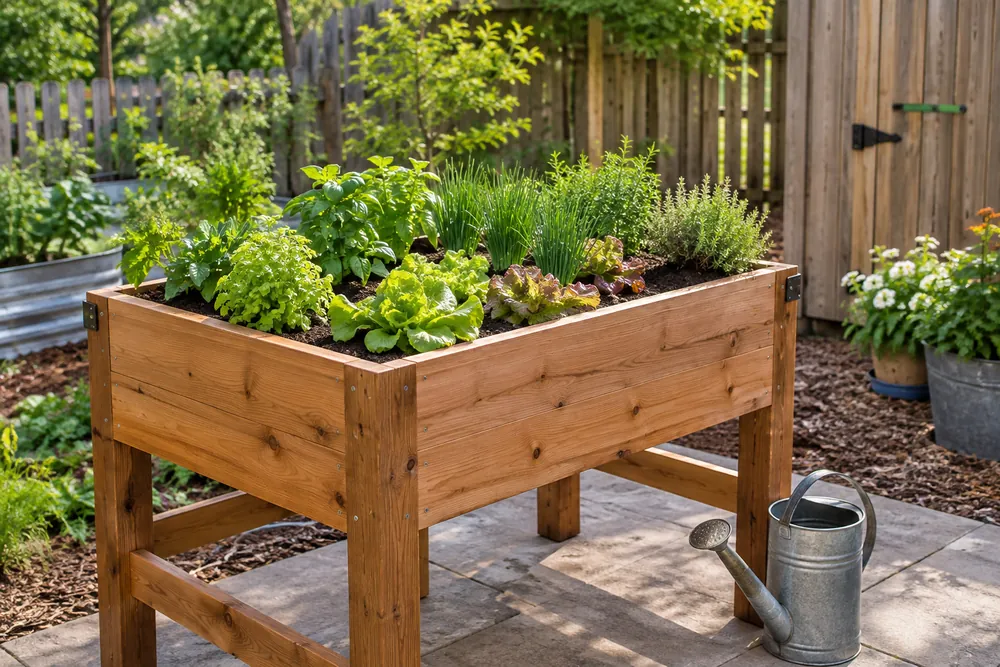
An elevated raised garden bed sits on legs at waist height, so you can garden standing up or from a chair. UMN notes about 27 inches is generally comfortable for wheelchair users. The tradeoff is soil depth: many elevated planters hold only 8 to 12 inches of soil, which suits lettuce, herbs, radishes, green onions and strawberries but not large tomatoes or potatoes. Shallow soil also heats and dries quickly, so check moisture daily in summer and make sure the tray has drainage holes.
Watch out: Wet soil is heavy. Before you put an elevated bed on a deck or balcony, check the manufacturer’s load rating and confirm your deck can support it once the soil is saturated.
Gear that helps
- Elevated raised garden bed with legs: Lets you plant greens and herbs at waist height without bending.
As an Amazon Associate we earn from qualifying purchases. Check current prices and reviews on Amazon.
Tiered raised beds
Tiered beds stack two or three levels in a step shape. They fit a lot of planting into a small corner and look good with herbs, greens and strawberries. The top tier dries out first and the bottom tier may get shaded, so put sun-loving, drought-tolerant herbs up top and leafy greens below.
Raised garden bed buying checklist
- Height: 11 to 17 inches suits most vegetables and keeps fill costs reasonable. Taller beds (24 inches or more) save your back but need more soil; UMN notes beds over 2 feet often use cheaper fill materials in the bottom layer.
- Width: 4 feet or less if you can reach both sides, about 2 to 3 feet if it sits against a fence. Oregon State recommends a maximum of 4 feet for adults.
- Panel thickness or gauge: compare specs between metal kits. Thicker steel resists bowing; on wood, thicker boards last longer.
- Bracing: internal cross-supports on beds longer than about 6 feet or taller than about 18 inches.
- Open vs. closed bottom: on soil, choose an open bottom so roots can grow down and water drains. UMN suggests hardware cloth under the bed to block burrowing rodents. On a patio, use a closed or lined bed with drainage.
- Edges: rolled or capped edges on metal beds prevent cuts.
- Coating and materials: look for a stated coating type (galvanized, Aluzinc) and food-garden use. Avoid unknown paints and treatments.
- Size and soil volume: a 4×8-foot bed 12 inches deep holds about 32 cubic feet of soil. Work out the fill before you buy with our guide on how to fill a raised garden bed.
Which raised bed is best for your zone?
Climate changes which material works best. Check your local frost dates and extension office for your own conditions, since microclimates vary.
| Zone | What matters most | Good choices |
|---|---|---|
| 3-4 | Short season; you want soil to warm early in spring | Metal or wood beds 12 inches or taller, which warm and drain quickly |
| 5-6 | Freeze-thaw cycles, wet springs | Galvanized or Aluzinc metal, thick cedar; open bottom for drainage |
| 7 | Hot summers, mild winters | Any type; mulch the soil surface in summer |
| 8 | Long, hot summers; fall and winter is a main season | Cedar or light-colored metal; deeper beds hold moisture longer |
| 9-10 | Intense sun and heat; growing year-round | Cedar, composite or light-colored metal at least 17 inches deep; drip irrigation; avoid shallow elevated beds in full afternoon sun |
University of Minnesota Extension notes that raised beds warm faster in spring, and Oregon State adds that they heat up and cool down faster than in-ground beds. That’s a plus in zones 3-5 and a reason to choose deeper, well-mulched beds in the hot South.
Common mistakes to avoid
- Buying too shallow. Beds under 8 inches dry out fast and limit root crops unless you loosen the soil underneath.
- Going wider than you can reach. Stepping on the soil packs it down.
- Laying plastic under the bed. It blocks drainage. Use cardboard or landscape fabric if you need a weed barrier.
- Reusing old treated wood, railroad ties or painted lumber for food crops.
- Filling with bagged potting mix only. It’s expensive in large beds and dries out fast. Use a topsoil and compost blend.
- Forgetting irrigation. Raised beds need water more often than in-ground gardens, especially metal and elevated beds in summer.
FAQ
Are metal or wood raised beds better?
Metal beds last longer and take up less space with thin walls, while cedar stays cooler, looks natural and is easy to build or repair. In very hot climates, cedar or light-colored metal is the safer choice for soil temperature.
How long do galvanized raised beds last?
A quality galvanized or Aluzinc bed can last for decades. University of Minnesota Extension notes galvanized steel is often described as rust-resistant for upwards of 50 years.
Do galvanized raised beds leach zinc?
Small amounts of zinc can move into soil over time, more in acidic soil below pH 5. Keep your soil pH near neutral and test every few years. Use a liner if you want extra protection.
How tall should a raised garden bed be?
For most vegetables, 11 to 17 inches works well. Choose 24 inches or more if you want to avoid bending, and about 27 inches for wheelchair access.
Should a raised garden bed have a bottom?
Not when it sits on soil. An open bottom lets roots grow down and water drain. Add hardware cloth if burrowing rodents are a problem, and use a drained, closed bottom only on patios or decks.
Is cedar safe for raised garden beds?
Yes. Oregon State University Extension calls cedar and redwood a long-lasting, safe choice for food gardens, though they cost more than pine.
Sources
- Raised bed gardens – University of Minnesota Extension
- Pressure-treated wood for raised bed construction in Oregon – Oregon State University Extension
- Raised bed gardening (FS 270) – Oregon State University Extension
- Raised Bed Gardening – Utah State University Extension
- Galvanized steel garden beds – Ask Extension
- Raised Bed Gardening – Penn State Extension Master Gardeners